Walking through our module manufacturing facility at Websol Energy System Ltd., visitors are often surprised by the level of precision and automation involved. “It’s just assembling cells into a frame, right?” they ask. If only it were that simple! Manufacturing high-quality solar modules that will perform reliably for 25+ years outdoors requires sophisticated processes, stringent quality control, and meticulous attention to detail at every step.
Today, I want to share exactly how we manufacture our Bifacial PERC 525-550 Wp solar modules. This is our actual process – the result of significant investment in equipment, years of process refinement, and learning from thousands of installations across India’s diverse climate conditions.
Incoming Quality Control: It Starts with Great Cells
Our module manufacturing process begins before we even touch a single cell. As both a solar cell manufacturer in India and a solar module manufacturer in India, we have the advantage of controlling cell quality from the very beginning. However, we never take anything for granted.
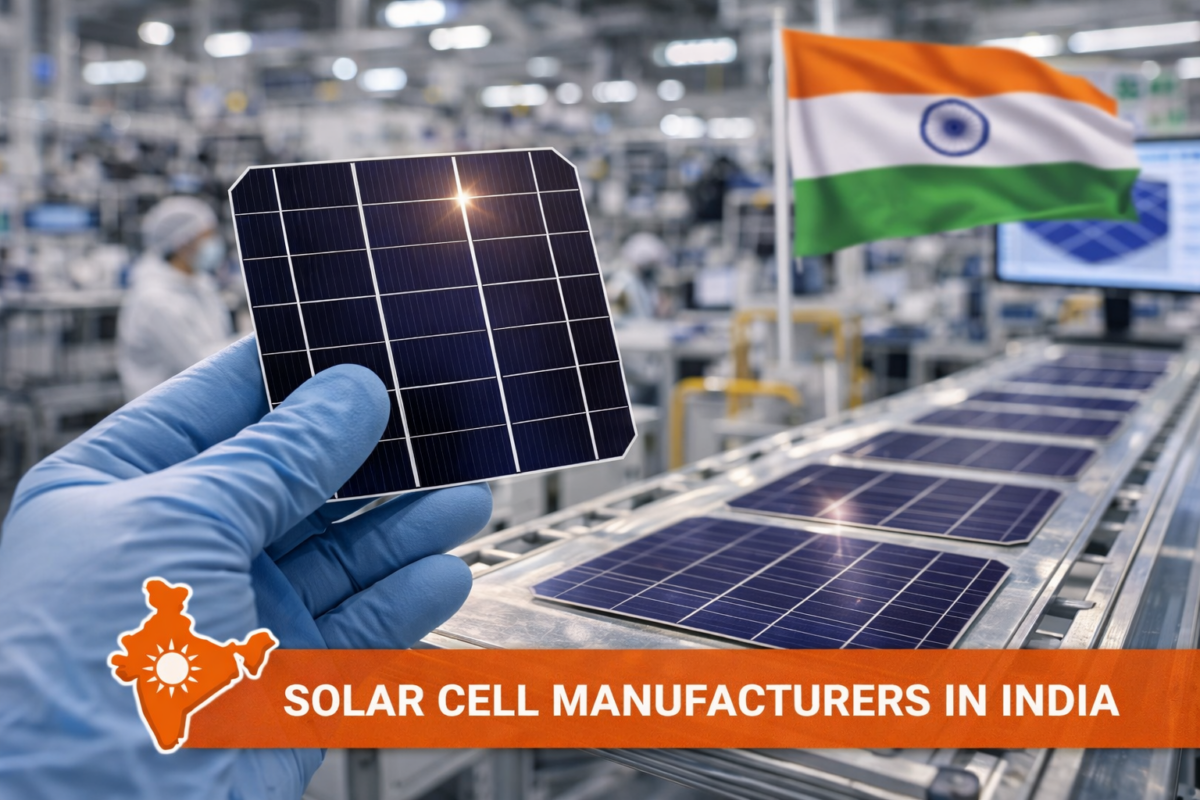
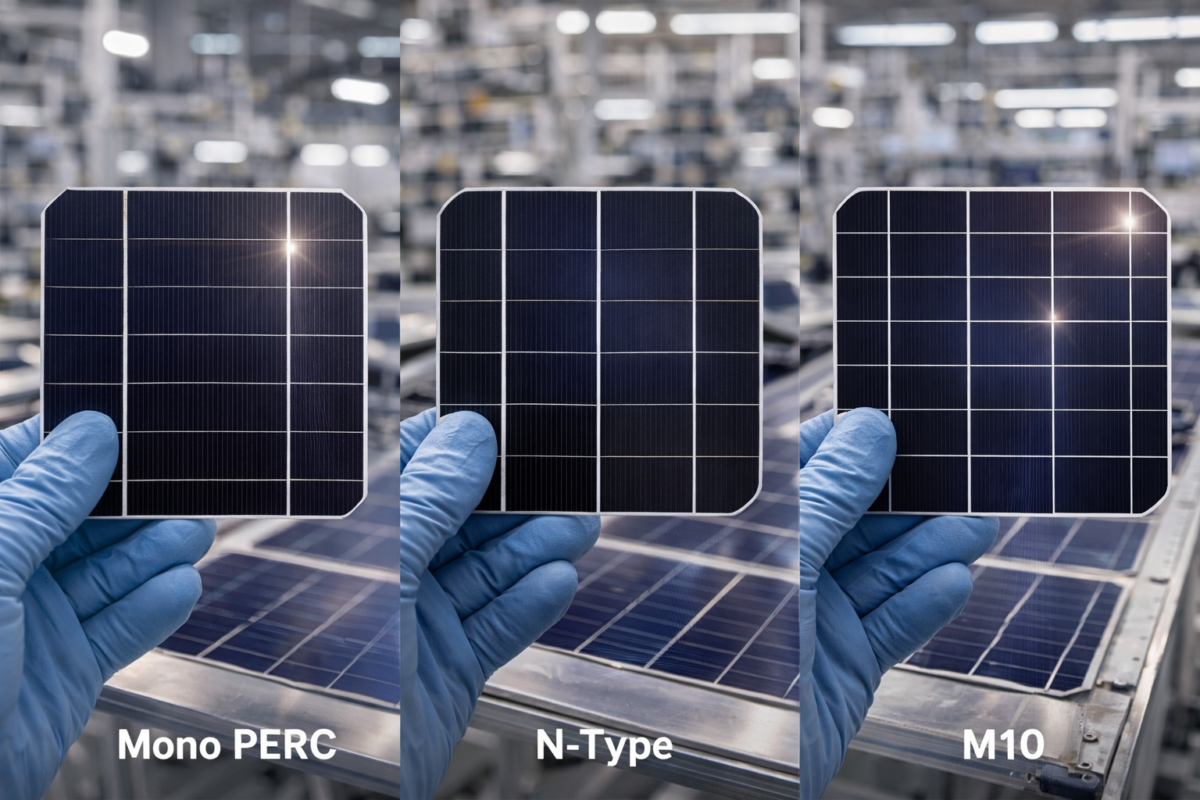
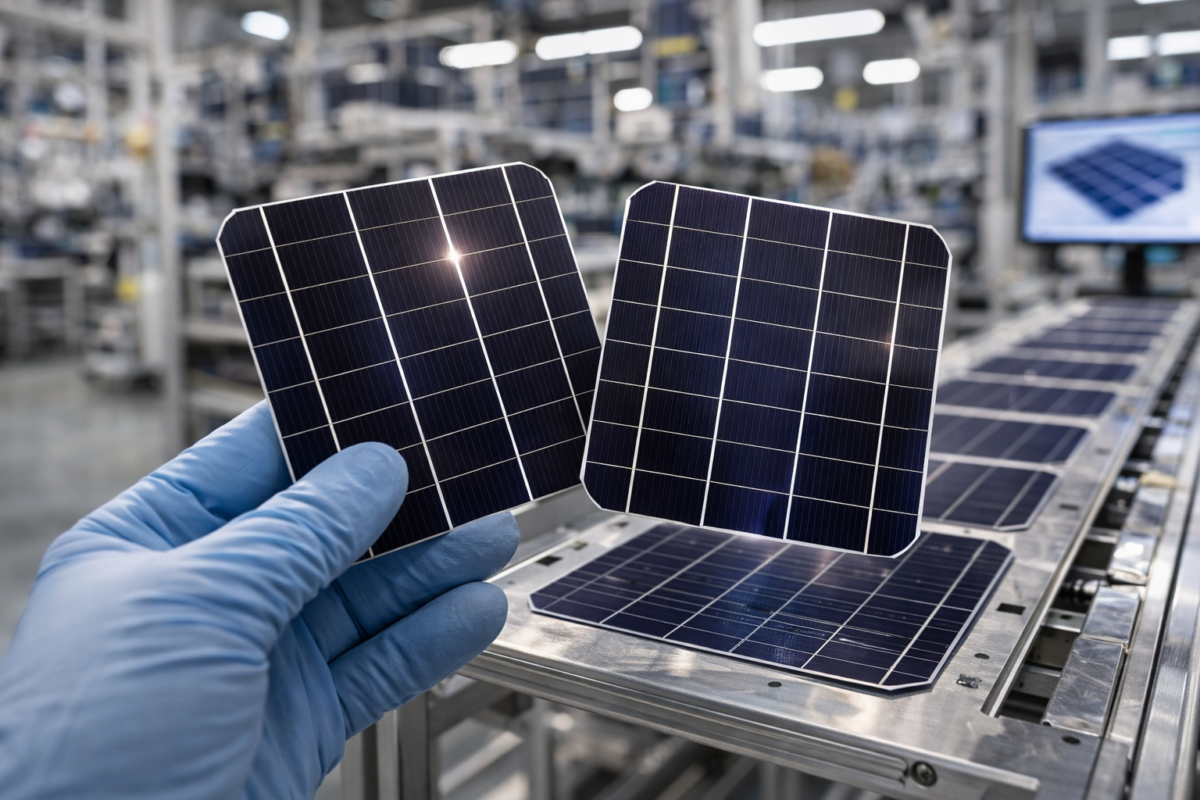
Every batch of M10 bifacial mono-PERC cells arriving at our module facility undergoes incoming inspection. Our quality team verifies cell dimensions, visual appearance, and most importantly, electrical parameters. We use flash testers to measure each cell’s power output, efficiency, voltage, and current characteristics.
This testing serves multiple purposes. First, it verifies that the cells meet our specifications. Second, it allows us to sort cells into narrow efficiency bins. Mixing cells with different outputs in the same module creates electrical mismatches that reduce overall performance, so careful sorting is crucial.
We also perform electroluminescence (EL) imaging on sample cells from each batch. EL imaging reveals microcracks, broken fingers, and other defects that might not affect immediate performance but could propagate over time, causing premature failure. Any batch showing concerning defect rates triggers investigation and potentially rejection of the entire batch.
Besides cells, we receive glass, encapsulant materials, backsheets (or rear glass for glass-glass modules), junction boxes, frames, and various smaller components. All these materials undergo incoming inspection. Glass is checked for thickness uniformity, optical transmission, and surface defects. Encapsulant is tested for optical properties and gel content. Junction boxes are inspected for correct terminals, cables, and bypass diodes.
Cell Sorting and Matching: Building Consistent Modules
Even though cells are pre-sorted into efficiency bins during cell manufacturing, we perform additional sorting at the module level. For 144-cell modules (using half-cut cells, so technically 288 cell pieces), we need all cells within a module to have very similar electrical characteristics.
Our automated cell sorters measure short-circuit current (Isc), open-circuit voltage (Voc), and maximum power point (Pmp) for each cell. Advanced sorting algorithms then group cells that will work harmoniously together. The tolerance is tight – typically cells within a module are matched to within ±2% of power output.
This matching process significantly impacts module performance. A module built with well-matched cells can be 1-2% more efficient than a module using cells with wider performance variations, even if the average cell efficiency is identical. Over 25 years, this difference translates to significant energy generation.
Half-cut cells require special handling because each M10 cell is cut in half lengthwise before reaching us. These half-cells are more fragile than full cells, so our handling equipment uses vacuum suction and gentle mechanical grippers to avoid breakage. Damaged cells are rejected immediately – better to catch defects now than have field failures later.
String Interconnection: Joining Cells Electrically
Once cells are sorted and grouped, we begin the interconnection process. This is where individual cells are electrically connected together to form strings (rows of connected cells). Our 144-cell modules use half-cut cell technology, arranged in 6 strings of 24 half-cells each.
Modern interconnection uses automated soldering robots rather than manual labor. These machines are incredibly sophisticated – they must position each cell precisely, apply the correct amount of solder and ribbon, maintain optimal temperature, and apply appropriate pressure, all while avoiding any damage to delicate silicon.
For our high-power modules, we use multi-busbar (MBB) technology with ultra-thin copper ribbons instead of traditional flat busbars. The M10 cells have 9-12 busbars, and the ribbons connect adjacent cells. This MBB approach reduces shadowing losses (thinner ribbons cast less shadow) and improves current collection across the cell surface.
The soldering process parameters – temperature, pressure, dwell time – are precisely controlled. Too much heat risks cell cracking or solder seeping underneath the busbar, creating defects. Too little heat produces weak solder joints with high electrical resistance. Our robots maintain temperature control within ±5°C and pressure within ±0.1N.
After interconnection, automated optical inspection systems check every solder joint. The system captures high-resolution images and uses machine learning algorithms to detect defects like insufficient solder, misalignment, or contamination. Strings with defect rates above threshold are rejected or sent for manual rework.
String Testing: Ensuring Electrical Performance
Before proceeding to lamination, we test each string electrically. This might seem redundant since we already tested individual cells, but it catches soldering defects that could affect performance.
Strings pass through another flash tester that measures I-V curves under simulated sunlight. We verify that string performance matches predictions based on individual cell parameters. Any significant deviation indicates problems – perhaps a poor solder joint creating high resistance, or a cell damaged during handling.
This string-level testing is one area where we go beyond standard industry practice. Some manufacturers skip this step to save time and cost, but we’ve found it catches defects that would otherwise make it into finished modules. The cost of this testing is far less than the cost of warranty claims or customer dissatisfaction from underperforming modules.
Layup: Assembling Module Components
With tested strings ready, we begin the layup process – arranging all module components in the correct sequence for lamination. This is where the module sandwich gets built, and precision in component placement is critical.
For glass-glass bifacial modules (our preferred construction for maximum rear-side performance), the layup sequence is:
- Bottom glass sheet (typically 2mm tempered low-iron glass)
- Encapsulant film (EVA or POE)
- Cell strings (front side facing up)
- Encapsulant film
- Top glass sheet (typically 3.2mm tempered low-iron glass)
For glass-backsheet modules (lighter weight option):
- Backsheet material (white reflective film with multiple layers)
- Encapsulant film
- Cell strings (front side facing down)
- Encapsulant film
- Front glass sheet (3.2mm tempered low-iron glass)
The layup is performed on a large clean table under controlled lighting. Our automated layup systems position each component with millimeter precision. The strings must be centered properly with correct spacing between them. Any misalignment would be visible in the finished module and could indicate poor quality control.
Junction boxes are positioned on the rear (or front for glass-backsheet orientation), with cables connected to the appropriate string terminals. The junction box contains bypass diodes that protect strings from reverse current during partial shading. We use high-quality diodes from qualified suppliers, tested to handle the full string current plus safety margin.
Lamination: Bonding Everything Together
The layup assembly moves to the lamination chamber, where heat and vacuum bond all components together into a unified structure. Lamination is absolutely crucial – it must create perfect adhesion between layers, eliminate all air bubbles, and avoid thermal stress that could crack cells.
Our lamination chambers are large vacuum systems with precise temperature and pressure control. The process typically follows this sequence:
First, the chamber evacuates air to prevent bubble formation. Then, the assembly is heated to approximately 140-150°C (specific temperature depends on encapsulant material). This causes the encapsulant to melt and flow, filling all gaps between components.
Pressure is applied (either atmospheric pressure after vacuum evacuation, or additional pressure from heated platens) to compress the assembly and ensure good contact between layers. The assembly is held at lamination temperature for 10-15 minutes, allowing complete encapsulant cross-linking.
Finally, the assembly is cooled in a controlled manner. Too rapid cooling creates thermal stress that can crack cells. Our systems use water-cooled platens and controlled cool-down profiles to minimize stress.
The lamination parameters vary slightly depending on module construction. Glass-glass modules require different profiles than glass-backsheet because the thermal mass is different. Our process engineers have optimized these profiles through extensive testing and in-service performance data.
After lamination, modules undergo visual inspection for lamination defects. We check for bubbles, delamination, cell displacement, or encapsulant discoloration. Even tiny bubbles can indicate lamination problems that might worsen over time, so we’re very critical at this stage.
Trimming and Cleaning: Preparing for Framing
After lamination, excess encapsulant material extends beyond the glass edges and must be trimmed away. We use automated trimming systems with precision-controlled blades that remove excess material without damaging the glass edges.
The trimmed modules undergo cleaning to remove any residue, fingerprints, or contaminants from the glass surfaces. Both front and rear glass are cleaned using automated systems with deionized water and cleaning solutions. Clean glass maximizes light transmission to cells and makes modules more attractive to customers.
For glass-glass modules, edge sealing is applied around the perimeter. This seal prevents moisture ingress between the glass sheets and provides additional mechanical strength. The sealant must be compatible with all module materials and maintain its integrity for 25+ years outdoors.
Framing: Structural Support and Mounting Interface
Most modules use aluminum frames that provide structural strength and mounting points for installation. Our frames are made from high-quality extruded aluminum profiles, cut to precise lengths and mitered at corners for perfect fit.
The framing process uses automated equipment that applies structural adhesive/sealant to the frame channel, positions the frame around the glass laminate, and presses everything together. The adhesive serves two purposes: it bonds the frame to the glass, and it creates a seal preventing moisture ingress at the edges.
Corner keys or brackets are inserted at frame corners to maintain alignment and provide additional structural strength. These are typically secured with stainless steel screws. The frame assembly must withstand specified mechanical loads – our modules are tested to handle static loads of 5,400 Pa and dynamic loads of 4,000 Pa, simulating snow and wind loading.
Mounting holes are pre-drilled in the frame at standard positions for compatibility with mounting systems. We also attach grounding hardware that ensures electrical safety when modules are installed in arrays.
The framing process might sound simple, but details matter. Frame alignment must be perfect – twisted or misaligned frames create installation difficulties and potential long-term reliability issues. We use automated systems with vision guidance to achieve consistent, precise framing on every module.
Junction Box Attachment and Wiring
The junction box houses critical electrical components – bypass diodes, terminal connections, and cable exits. For bifacial modules, junction box placement requires special consideration because it partially shades the rear surface.
We use optimized low-profile junction boxes positioned to minimize rear-side shadowing. The junction box attaches using structural adhesive that maintains adhesion through years of thermal cycling. The seal must be absolutely waterproof to protect electrical connections.
Inside the junction box, we connect cell string leads to terminals and bypass diodes. Each string has its own bypass diode that conducts current if that string is shaded, preventing the shaded string from limiting the entire module’s output. The diodes must be rated for the string’s maximum current with appropriate safety margin.
Output cables from the junction box use high-quality connectors (typically MC4 or compatible). These connectors must maintain low contact resistance through thousands of connect/disconnect cycles and remain waterproof even after years of UV exposure and temperature cycling.
Our assembly process includes pull testing on wire connections and connector pairs, ensuring they meet strength requirements. Weak connections are a common cause of module failures in the field, so we’re rigorous about this testing.
Flash Testing: Verifying Module Performance
Every single module undergoes flash testing before leaving our factory. This is non-negotiable – 100% testing, not statistical sampling.
Our flash testers use pulsed solar simulators that replicate the solar spectrum and intensity (1000 W/m², 25°C cell temperature, AM1.5 spectrum). In just seconds, the system measures the module’s complete I-V curve, determining:
- Maximum power output (Pmp)
- Short-circuit current (Isc)
- Open-circuit voltage (Voc)
- Fill factor (FF)
- Module efficiency
For bifacial modules, we perform front-side testing (rear side blocked) to measure nameplate power rating. Some modules also undergo bifacial testing where both front and rear are illuminated to verify bifacial gain, though this is typically done on sample modules rather than 100% production.
The flash test data determines which power bin the module falls into. We sort into 5W increments – 540W, 545W, 550W bins for example. This sorting ensures customers receive modules within specified tolerance ranges.
Modules that fail to meet minimum power thresholds are rejected and investigated. Root cause analysis determines whether the problem was cell quality, interconnection, lamination, or some other factor. This feedback helps improve upstream processes.
Electroluminescence Testing: Detecting Hidden Defects
In addition to electrical testing, sample modules from each production batch undergo electroluminescence (EL) imaging. This technique reveals defects invisible during visual inspection or flash testing.
EL imaging works by applying forward bias current to the module in a dark room while capturing images with a special camera. Active cell areas glow, while defects appear as dark regions. This reveals:
- Microcracks in cells (may not affect immediate performance but can propagate)
- Broken cell fingers (incomplete current collection)
- Solder joint defects (high resistance connections)
- Inactive cell areas (manufacturing defects)
We perform EL on approximately 5-10% of production, selected across different shifts and operators to capture process variations. If EL reveals concerning defect rates, we increase sampling or pause production for investigation.
Some customers request 100% EL testing, particularly for utility-scale projects where module reliability is critical. We offer this as an optional service, though it adds cost and production time.
Environmental Stress Testing: Ensuring Long-Term Reliability
Beyond testing every module electrically, we subject sample modules from each production batch to accelerated environmental stress tests. These simulate years or decades of outdoor operation in just weeks or months.
The main certification tests include:
Thermal Cycling (IEC 61215): Modules undergo 200 cycles between -40°C and +85°C. This simulates daily temperature variations over years of operation, testing solder joint integrity and lamination durability.
Damp Heat (IEC 61215): Modules spend 1,000 hours at 85°C and 85% relative humidity. This accelerated aging test simulates decades of operation in humid climates, testing for corrosion, delamination, and encapsulant degradation.
Humidity-Freeze (IEC 61215): Modules cycle between -40°C dry conditions and +85°C at 85% humidity. This tests for moisture ingress and subsequent freeze damage.
Mechanical Load Testing (IEC 61215): Modules are subjected to 5,400 Pa static loads and 4,000 Pa dynamic loads, simulating snow accumulation and wind forces.
Potential-Induced Degradation (PID) Testing: Modules operate at 85°C and 85% humidity with high voltage applied, testing for PID susceptibility – a degradation mode where high voltages between cells and frame cause performance loss.
We also conduct additional tests beyond certification requirements:
- Ammonia exposure (for agricultural environments)
- Salt-mist exposure (for coastal installations)
- Sand and dust resistance (for desert installations)
- UV exposure testing (for long-term front glass and backsheet durability)
Modules must pass these tests without exceeding specified degradation limits (typically 5% power loss). Failures trigger root cause investigation and process corrections. This testing is expensive and time-consuming, but it’s the only way to ensure modules will truly last 25+ years in the field.
Final Inspection and Quality Verification
After electrical testing and environmental testing (for samples), modules undergo final inspection before packaging. Inspectors check:
- Frame integrity and alignment
- Glass condition (any chips, cracks, or damage)
- Visual appearance (cell alignment, color uniformity, lamination quality)
- Junction box attachment and cable condition
- Label placement and information accuracy
Any cosmetic defects that don’t affect performance might result in modules being downgraded to “Grade B” and sold at discounted prices for applications where appearance is less critical. Modules with any defects affecting performance or long-term reliability are rejected.
We also verify that all quality documentation is complete – test reports, traceability records, certification documents. Every module has a unique serial number that links to complete manufacturing records, enabling traceability from finished product back through every process step to incoming raw materials.
Packaging and Logistics: Protecting Our Work
High-quality modules deserve high-quality packaging. Our modules are packed in custom-designed containers that protect them during transportation and storage.
Modules are stacked on edge in padded containers, separated by foam spacers to prevent glass-to-glass contact. The containers are designed to withstand the rigors of Indian logistics – truck transport on rough roads, multiple handling points, exposure to weather during loading/unloading.
Each container is labeled with complete information: module specifications, quantity, batch number, destination. We use RFID tags for inventory tracking, allowing real-time visibility of shipments.
For export shipments or large domestic projects, modules are palletized and wrapped for container shipping. We work closely with logistics partners to ensure modules reach customers in perfect condition, regardless of how far they travel.
Quality Management System: The Foundation
All these manufacturing processes operate within a comprehensive quality management system aligned with ISO 9001. We maintain detailed procedures for every process step, qualification requirements for operators and engineers, and calibration programs for test equipment.
Statistical Process Control (SPC) monitors key parameters across all manufacturing stages. We track cell sorting data, lamination temperature profiles, flash test results, and numerous other metrics. SPC charts identify trends before they become problems, enabling proactive corrections rather than reactive firefighting.
Regular internal audits verify that procedures are being followed and systems are working as designed. External certification audits by third-party agencies validate our compliance with international standards.
We also maintain a robust corrective action and preventive action (CAPA) system. When problems occur – customer complaints, internal defect detections, test failures – formal investigations determine root cause and implement corrections to prevent recurrence.
Continuous Improvement: Never Standing Still
Manufacturing excellence requires continuous improvement. We analyze production data, seek feedback from customers and installers, and benchmark against best practices globally.
Recent improvements include:
- Optimized lamination profiles that reduced cell breakage by 30%
- Upgraded EL imaging systems with AI-powered defect detection
- New low-profile junction boxes that reduce rear-side shadowing by 15%
- Improved frame adhesive formulation that enhanced edge seal durability
Our engineering team collaborates with equipment suppliers, participates in industry working groups, and monitors research developments. The solar industry evolves rapidly – manufacturing processes that were cutting-edge three years ago might be standard practice today.
Environmental Responsibility in Module Manufacturing
As a Bifacial PERC 525-550 Wp Solar Module Manufacturer in India, we recognize our environmental responsibility. Our facility implements multiple sustainability initiatives:
- Solar installation on factory roofs (currently 8 MW) provides 70% of our daytime manufacturing energy
- LED lighting throughout the facility reduces electricity consumption
- Recycling programs for packaging materials, scrap metal, and rejected modules
- Water conservation through closed-loop cooling systems
- Waste segregation and environmentally responsible disposal
We’re also preparing for the future by developing module recycling capabilities. When modules reach end-of-life in 25-30 years, they can be recycled to recover valuable materials – glass, aluminum, silicon, copper, and silver. Building this infrastructure now positions us for the circular economy future.
The Human Element
While automation plays a major role in our manufacturing, skilled people remain essential. Our production operators, technicians, quality inspectors, and engineers undergo extensive training and continuous skill development.
We invest significantly in training programs, cross-skilling initiatives, and creating a culture of quality consciousness. Every person in our facility understands that the modules we manufacture will power critical infrastructure – hospitals, data centers, water treatment plants, homes, businesses – for decades to come. That responsibility drives our commitment to excellence.
Manufacturing high-quality solar modules combines advanced technology, sophisticated equipment, rigorous processes, and skilled people working together. The result – our Bifacial PERC 525-550 Wp modules – represents some of the finest solar technology manufactured anywhere in the world. We’re proud to contribute to India’s solar revolution while demonstrating that Indian manufacturing can compete with the very best globally.











 ” and all products and logos denoted with trade mark are trademarks of Websol Energy System Limited. This trade mark may not be used in connection with any product or service that is not a Websol Energy System’s product, functions or service.