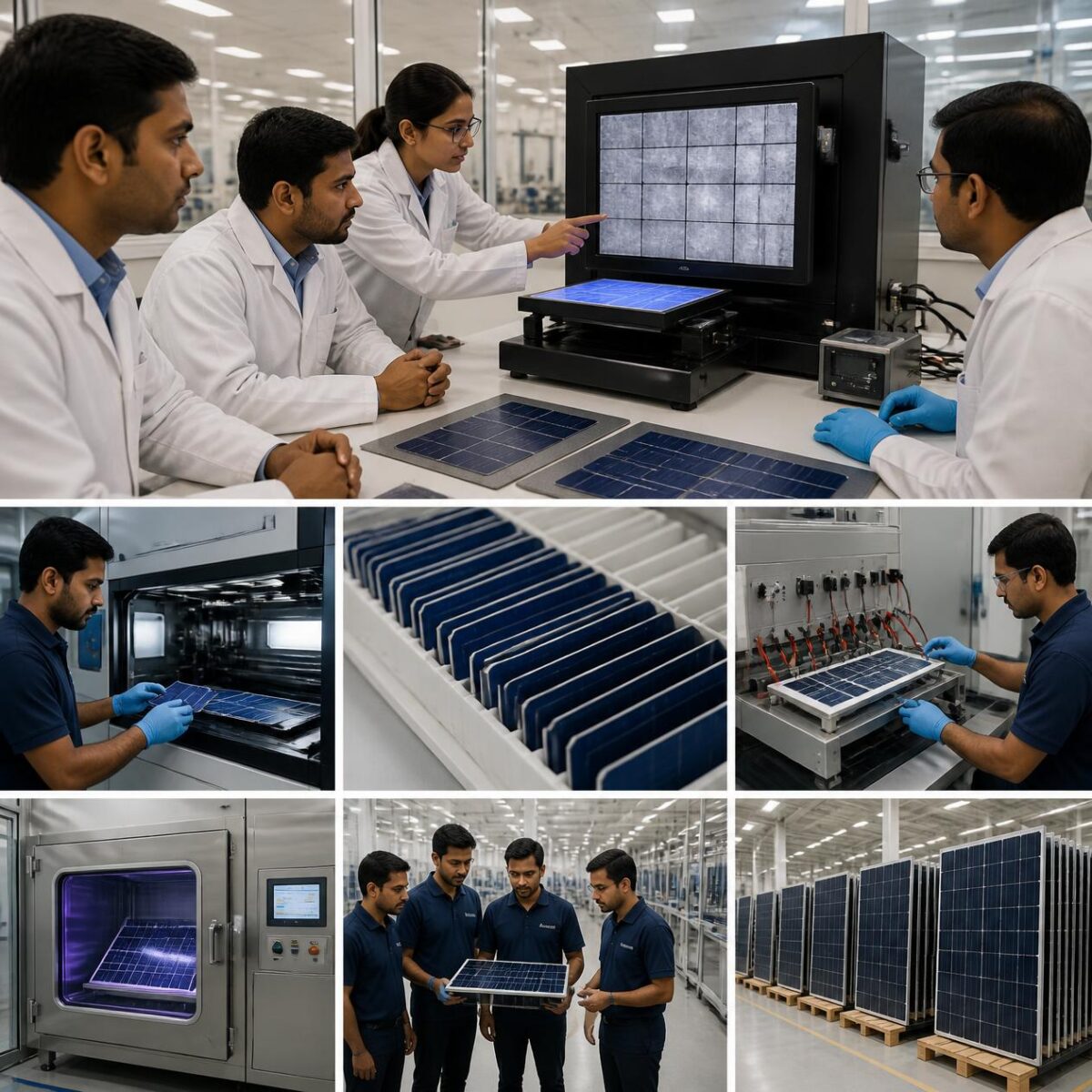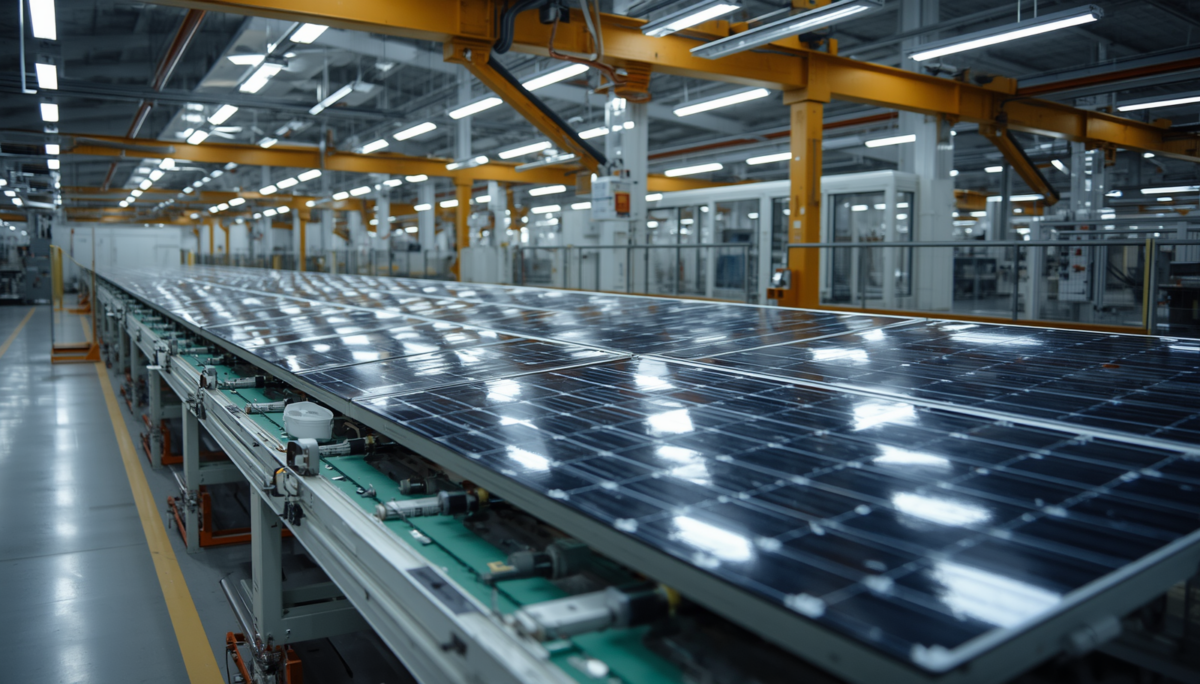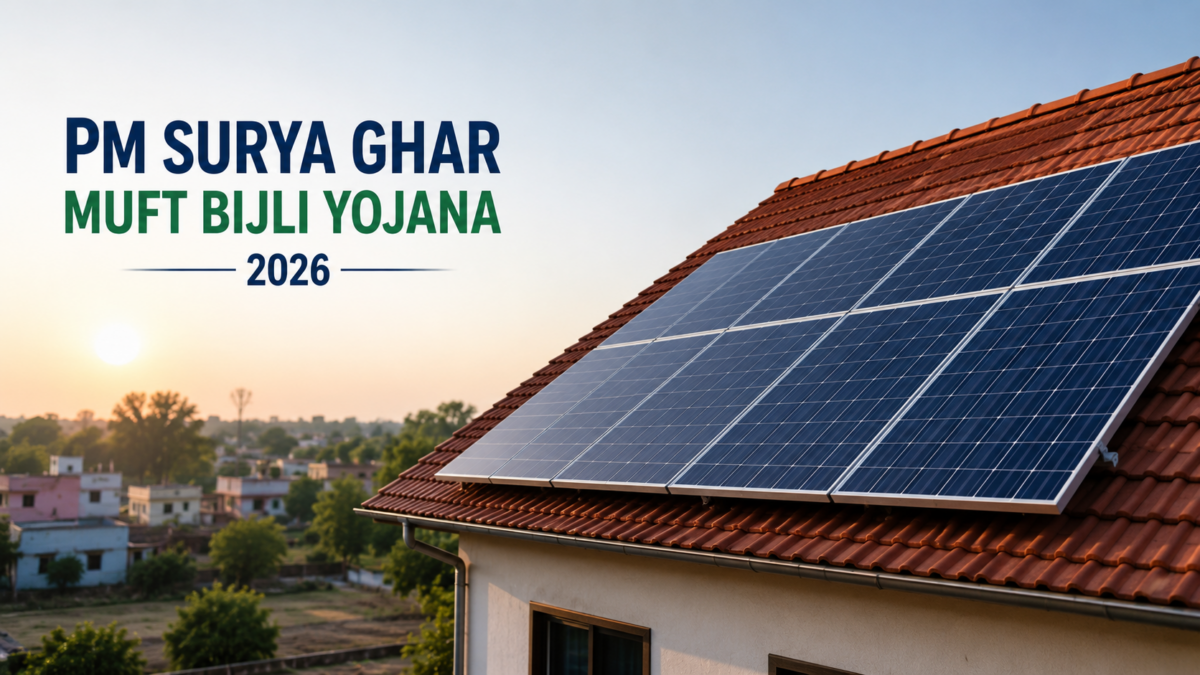
ALMM List 2026: The Complete Guide for Indian Solar EPCs and Developers

ALMM List 2026: The Complete Guide for Indian Solar EPCs and Developers

If you are procuring solar modules or cells for any project in India in 2026 — residential, commercial, or utility-scale — the ALMM (Approved List of Models and Manufacturers) is not optional reading. It is the central compliance requirement that determines whether your project qualifies for government subsidies, whether your contracts hold up under scrutiny, and whether your modules pass DISCOM inspection.

This guide explains what ALMM is, how it has evolved, what the June 2026 mandate means in practice, and what Indian EPCs and developers must do to stay compliant.

What Is the ALMM?

The Approved List of Models and Manufacturers (ALMM) is a mandatory registry maintained by the Ministry of New and Renewable Energy (MNRE). It lists solar PV modules (List-I) and solar PV cells (List-II) that have been verified for quality and domestic manufacturing compliance.

Only products on the ALMM list can be used in:

  • Government-funded solar projects (SECI, NTPC, state DISCOM tenders)
  • PM Surya Ghar Muft Bijli Yojana residential installations
  • Any net metering application in most states
  • Projects receiving central or state financial assistance

Using a non-ALMM-listed product in these contexts risks rejection of subsidy claims, cancellation of net metering approvals, or voiding of project contracts.

As of mid-2026, the ALMM List-I covers 80+ approved module manufacturers with a combined listed capacity exceeding 60 GW. The ALMM List-II for solar cells — introduced more recently — has been revised seven times since its launch in 2025, reflecting the rapid pace of Indian cell manufacturing expansion.

ALMM List-I vs List-II: What’s the Difference?

ALMM List-I — Solar PV Modules

This is the original ALMM list. It covers finished solar modules — the panel you see on a rooftop or in a solar park. To be listed, a module must:

  • Have front-side efficiency of 19% or above (threshold set by MNRE)
  • Carry valid BIS certification under IS 14286
  • Be manufactured at a verified domestic facility

ALMM List-II — Solar PV Cells

Introduced in 2025, List-II covers solar cells — the individual silicon wafers that are assembled into modules. This was a critical expansion of the ALMM framework, ensuring that not just the finished module but also its core component (the cell) meets domestic manufacturing requirements.

The June 1, 2026 deadline made ALMM List-II compliance mandatory for all project commissioning from that date onward. This means projects commissioned after June 2026 must use cells from a List-II approved manufacturer — regardless of when the contract was signed.

Websol Energy System is an ALMM List-II approved solar cell manufacturer, with its M10 Bifacial Mono-PERC cells verified for domestic manufacture at the Falta SEZ facility in West Bengal.

The June 2026 Mandate: What Changed

MNRE’s position has been unambiguous: no blanket extension of ALMM List-II compliance beyond June 1, 2026. This was reinforced by a series of advisory circulars issued between November 2025 and May 2026.

What this means practically:

  • Any project commissioned from June 2026 onward must use ALMM List-II approved cells — full stop
  • Case-by-case relief exists for projects with documented supply chain constraints but requires advance MNRE approval
  • Developers who relied on non-listed cells and missed the deadline face rejection of commissioning certificates in several states

For EPCs currently in procurement or mid-execution, this has forced rapid verification of entire Bills of Materials (BOMs) — particularly for projects that had contracted cells from manufacturers who were not yet listed.

How ALMM Connects to DCR

The DCR (Domestic Content Requirement) and ALMM are related but distinct frameworks. Understanding both is essential.

  • DCR mandates that cells and modules must be manufactured in India for certain government-linked projects. Not all projects carry DCR requirements — only those explicitly notified by MNRE or state agencies.
  • ALMM mandates that the modules and cells used must be on the approved list — regardless of whether DCR applies.

A module can be ALMM-listed but not DCR-compliant (if it uses imported cells). A module can be made with Indian cells but those cells might not be ALMM List-II listed.

For the strictest compliance — particularly under PM Surya Ghar and SECI tenders — you need both: ALMM-listed modules made with ALMM List-II listed domestic cells.

Our detailed guide on DCR cells and DCR module compliance explains how the two frameworks interact and how to structure procurement correctly.

PM Surya Ghar and ALMM: What Installers Must Know

The PM Surya Ghar Muft Bijli Yojana — India’s flagship residential rooftop solar scheme — has already facilitated over 40 lakh household installations as of mid-2026, with subsidies of up to ₹78,000 per household and a target of 75 lakh installations by December 2026.

But here is the critical detail: if your installation uses non-ALMM modules, the subsidy is not released. The National Portal checks module compliance at the point of application, and DISCOMs verify at the point of commissioning.

For installers, this means:

  • Always verify the specific model number on the MNRE ALMM portal (mnre.gov.in) — not just the manufacturer name. A manufacturer’s listing covers specific models, not their entire catalogue.
  • ALMM lists are updated frequently (the module List-I was updated as recently as May 2026). A module that was listed at the time of quotation may have its listing updated or extended — always recheck before commissioning.
  • Avoid newly listed manufacturers with no prior BIS renewal history — their listing maintenance is less predictable.

How to Verify ALMM Compliance in Your Procurement

Step 1: Get the module model number from your supplier
Do not accept manufacturer name alone. Get the exact model number as it appears on the datasheet.

Step 2: Check the MNRE ALMM portal
Visit mnre.gov.in/en/approved-list-of-models-and-manufacturers-almm/ and download the latest List-I (modules) and List-II (cells). Search for the model number.

Step 3: Verify the cell manufacturer
If your project requires DCR compliance or List-II cell compliance, ask your module supplier to confirm which cell manufacturer’s cells are used and verify that manufacturer’s List-II status.

Step 4: Check BIS validity
ALMM listing and BIS certification are linked. If a manufacturer’s BIS licence lapses, their ALMM listing is suspended. Verify BIS certificate validity — not just ALMM listing date.

Step 5: Document everything
For government projects, maintain documentary evidence of ALMM compliance at the time of procurement, commissioning, and subsidy claim. DISCOMs in several states have begun requiring this documentation as part of net metering applications.

Websol Energy System: ALMM-Listed Cell Manufacturer

Websol Energy System is one of India’s longest-running solar cell manufacturers, having started production in 1994. Its M10 Bifacial Mono-PERC solar cells are manufactured at the Falta Special Economic Zone in West Bengal under verified quality processes.

Websol’s ALMM List-II listing means that module manufacturers who source cells from Websol can use those modules in:

  • DCR-mandatory government tenders
  • PM Surya Ghar Yojana installations
  • All SECI/NTPC/state DISCOM bid projects with ALMM requirements

For module manufacturers looking for a reliable, ALMM-listed domestic cell supplier, contact Websol’s supply team to discuss sourcing and capacity.

The ALMM Landscape in 2026: Key Numbers

  • 80+ manufacturers on ALMM List-I (modules) as of mid-2026
  • Combined listed capacity: exceeding 60 GW
  • ALMM List-II for cells: 7 revisions since launch, with RenewSys added in the April 2026 7th revision
  • No Chinese manufacturers on either list — ALMM is explicitly a domestic manufacturing framework
  • Efficiency threshold: Minimum 19% front-side module efficiency for List-I enlistment

The absence of Chinese manufacturers is particularly relevant for Indian EPCs who previously sourced low-cost imported modules. Under ALMM compliance, the entire supply chain must be domestically anchored — a structural shift that benefits established Indian manufacturers.

Frequently Asked Questions

Q1. Is ALMM compliance required for private C&I solar projects with no government funding?

Not strictly, unless the project is connected to a DISCOM grid under net metering — in which case many state electricity regulatory commissions require ALMM-listed modules. For fully off-grid captive projects with no government funding or subsidy, ALMM is not mandatory — though it remains a quality benchmark worth applying.

For pure ALMM compliance (List-I), yes — the module must be listed but the cells are not required to be List-II listed unless DCR applies. However, for projects commissioned after June 2026 with DCR requirements or PM Surya Ghar subsidy eligibility, cells must also be List-II listed.

The MNRE updates List-I approximately monthly and List-II has been revised multiple times since its launch in 2025. Always download the latest version from mnre.gov.in before finalising procurement.

This is a real risk. MNRE has indicated that case-by-case relief may be available for documented circumstances, but there is no automatic protection. Best practice is to lock in ALMM-listed modules with long-dated listing validity and from manufacturers with consistent BIS renewal history.

Yes. Vertically integrated manufacturers who produce both cells and modules must have their cells listed under List-II if those modules are to qualify for ALMM compliance in government-linked projects.

Websol’s ALMM List-II status can be verified directly on the MNRE portal. For procurement inquiries and supply documentation, contact Websol.

Mono PERC Solar Cells Explained: Technology, Efficiency & Why Websol Leads India’s PERC Manufacturing

Mono PERC Solar Cells Explained: Technology, Efficiency & Why Websol Leads India's PERC Manufacturing

If you have been researching solar panels in the last five years, you have almost certainly encountered the term “Mono PERC.” Today, Mono PERC solar cells dominate new solar installations globally — from rooftop systems in suburban homes to gigawatt-scale solar farms in Rajasthan’s sun-drenched desert. But what exactly is Mono PERC technology? Why does it outperform older solar cell designs? And what makes Mono PERC solar panel efficiency the benchmark for modern solar projects?

This comprehensive guide answers these questions and explains why Websol Energy System Ltd. has invested massively in Mono PERC manufacturing to deliver high-efficiency solar cells and modules for India’s booming renewable energy market.

What Are Mono PERC Solar Cells?

Mono PERC stands for Monocrystalline Passivated Emitter and Rear Cell — combining two key technological elements:

  1. Monocrystalline silicon substrate: The cell is built on a single-crystal silicon wafer, offering superior electron mobility and lower recombination losses compared to polycrystalline alternatives.
  2. PERC architecture: A thin dielectric passivation layer is added to the rear surface of the cell, reflecting unabsorbed light back into the silicon for a second absorption opportunity and reducing surface recombination at the rear contact.

Together, these two features — monocrystalline purity and PERC rear passivation — deliver the efficiency leap that has made Mono PERC the industry’s dominant technology.

The Physics of PERC: Why Rear Passivation Matters

In a standard cell, the rear aluminium back surface field (Al-BSF) creates recombination centres that “trap” electrons, reducing current output. The PERC layer — typically aluminium oxide (Al₂O₃) or silicon nitride (SiNₓ) — passivates these surface states, dramatically reducing recombination.

The practical effect:

  • Higher Voc (open-circuit voltage): Fewer recombination losses mean more energy is preserved
  • Higher Isc (short-circuit current): Reflected rear light is re-absorbed, boosting photocurrent
  • Improved Fill Factor: Better passivation means the cell’s I-V curve is more “square,” extracting more power at real-world operating conditions
  • Better low-light performance: PERC cells maintain a higher proportion of rated power in diffuse light conditions — morning, evening, and overcast skies

The net result: Mono PERC solar panel efficiency of 21–23%+, compared to 16–18% for older multi-crystalline BSF cells.

Websol’s Mono PERC Cell Manufacturing: How It’s Done

At Websol Energy System’s Falta SEZ facility in West Bengal, Mono PERC cells are produced on a fully automated 600 MW production line (with a second 600 MW line bringing total capacity to 1.2 GW). The manufacturing process involves:

Step 1: Incoming Wafer Inspection

Premium M10 (182 mm) monocrystalline silicon wafers arrive and undergo automatic optical inspection, electrical sorting by resistivity and minority carrier lifetime, and physical dimension verification.

Step 2: Surface Texturisation

Wafers are chemically etched to create a random pyramid surface texture on the front face. This texture traps incoming light by creating multiple reflection opportunities, reducing surface reflectance from ~35% (polished silicon) to under 3%.

Step 3: Phosphorus Diffusion (Emitter Formation)

Wafers are placed in a diffusion furnace with phosphorus oxychloride (POCl₃) gas. Phosphorus diffuses into the top surface, creating the n-type emitter that forms the core p-n junction for electron separation.

Step 4: Edge Isolation

Laser or plasma etching removes parasitic emitter paths around the wafer edges, preventing current short-circuiting between front and rear contacts.

Step 5: Anti-Reflection Coating (ARC)

A silicon nitride (SiNₓ) layer is deposited by Plasma-Enhanced Chemical Vapour Deposition (PECVD), simultaneously serving as an anti-reflection coating (deep blue colour) and a hydrogen passivation agent for bulk defects.

Step 6: PERC Rear Passivation — The Key Innovation

The rear surface receives a dual-layer passivation stack — aluminium oxide (Al₂O₃) by atomic layer deposition (ALD) capped with silicon nitride — creating the passivation layer that defines the PERC architecture. Laser Contact Opening (LCO) then etches precise openings for rear metal contact.

Step 7: Screen Printing and Co-Firing

Front silver fingers and busbars, plus rear aluminium paste, are screen-printed with high precision. The assembly is then co-fired in a belt furnace to form ohmic contacts and complete the p-n junction.

Step 8: In-Line Testing and Sorting

Every cell undergoes automated I-V curve testing under Standard Test Conditions (STC: 1000 W/m², 25°C, AM1.5G spectrum). Cells are binned by power output into tight efficiency classes, ensuring matched cells for high-performance module assembly.

Mono PERC Solar Modules: From Cell to Panel

Websol’s Mono PERC solar modules are assembled at the company’s 550 MW module manufacturing line at Falta. The module assembly process transforms individual PERC cells into durable, weatherproof solar panels rated for 25+ years of outdoor operation.

Key features of Websol’s Mono PERC solar modules:

Feature

Specification

Cell technology

M10 Bifacial Mono PERC

Module power range

525 Wp – 660 Wp

Module efficiency

21%+

Construction

Glass-glass (bifacial models)

Junction box

IP68-rated, bypass diodes

Frame

Anodised aluminium alloy

Certifications

IEC 61215, IEC 61730, BIS IS 14286

Warranty

25-year linear power output

The glass-glass construction used in Websol’s bifacial Mono PERC modules offers superior moisture resistance, enhanced mechanical strength, and improved rear-side light transmission — extending operational life while improving energy yield.

Mono PERC Solar Panel Efficiency: Real-World Performance in Indian Conditions

Efficiency ratings on module datasheets are measured at Standard Test Conditions — but real solar installations operate under different, often harsher conditions. In India specifically:

High Temperature Effect Solar cells lose efficiency as temperature rises. The temperature coefficient of Pmax for Mono PERC cells is typically -0.35% per °C — better than older cell technologies. On a rooftop in Rajasthan reaching 60°C cell temperature, this matters significantly.

Low-Light Performance India’s monsoon season and morning/evening generation windows mean low-light performance is not an academic concern. Mono PERC cells demonstrate superior low-irradiance efficiency thanks to the rear passivation reducing recombination at low carrier injection levels.

Bifacial Gain Websol’s bifacial Mono PERC modules harvest reflected light from rear — delivering additional energy yield of 5–30% depending on ground albedo (reflectivity) and mounting height. Ground-mounted installations on white gravel or high-albedo soil see the largest gains.

Dust and Soiling High-efficiency Mono PERC modules have a smaller active area for the same output — meaning fewer modules per project, fewer mounting structures, and fewer module surfaces to accumulate dust — reducing O&M complexity.

Mono PERC vs. Earlier Technologies: The Case for Upgrading

Parameter

Multi-crystalline BSF

Mono PERC

Websol M10 Bifacial Mono PERC

Cell efficiency

17–18%

20–21%

21–23%+

Module power (std size)

~330–370 Wp

~400–450 Wp

525–660 Wp

Temperature coefficient

~-0.40%/°C

~-0.37%/°C

~-0.35%/°C

Low-light performance

Moderate

Good

Excellent

Bifacial gain

No

Limited

Yes (5–30%)

LCOE advantage

Baseline

~8% lower

~15–20% lower

The economic case for Mono PERC is compelling: lower Levelized Cost of Energy (LCOE) from higher yield per installed watt, fewer modules per project, and lower balance-of-system costs.

Applications: Where Websol’s Mono PERC Modules Excel

Utility-Scale Solar Farms Large solar parks from 10 MW to multi-GW scale benefit most from high-efficiency, high-wattage Mono PERC modules — fewer piles, fewer strings, faster installation, lower LCOE.

Commercial and Industrial Rooftops Limited roof area demands maximum power density. Websol’s 525–660 Wp Mono PERC modules deliver more kilowatts per square metre than any previous generation of solar technology.

PM-KUSUM Solar Pumps Websol has supplied 250 MW of Mono PERC DCR modules to CRI Pumps for solar-powered agricultural pumps under the PM-KUSUM scheme — demonstrating the technology’s suitability for India’s agricultural solar segment.

Floating Solar The durability of glass-glass construction makes Websol’s bifacial Mono PERC modules ideal for floating solar projects on reservoirs and water bodies.

Conclusion

Mono PERC solar cells represent the current mainstream of high-efficiency solar technology — and for good reason. The combination of monocrystalline silicon quality and PERC rear passivation delivers efficiency, reliability, and real-world performance that earlier solar cell generations could not match.

Websol Energy System Ltd. has positioned itself at the centre of India’s Mono PERC manufacturing landscape — with 1.2 GW of automated cell production capacity, internationally certified module lines, and a track record spanning three decades of photovoltaic manufacturing. For buyers seeking reliable, high-efficiency Mono PERC solar modules with full domestic compliance credentials, Websol is India’s trusted partner.

Frequently Asked Questions

Q1. What does PERC stand for in solar technology?

PERC stands for Passivated Emitter and Rear Cell. The passivation layer on the rear of the cell reduces electron recombination, boosting efficiency above standard solar cell designs.

Commercial Mono PERC solar cells achieve 20–23% efficiency. Websol’s M10 Bifacial Mono PERC cells achieve over 23% conversion efficiency.

With M10 (182mm) cell format, Mono PERC modules routinely achieve 525–660 Wp. Websol’s module range covers 500 Wp to 660 Wp.

High-quality Mono PERC modules from certified manufacturers carry 25-year linear power output warranties, guaranteeing at least 80% of rated output at year 25.

Yes. Websol’s Mono PERC modules are DCR-compliant, ALMM-listed, and BIS-certified — qualifying them for PM-KUSUM, PM Surya Ghar, and other government solar tenders.

Monofacial modules generate power only from the front side. Bifacial Mono PERC modules generate power from both front and rear, delivering 5–30% additional energy yield from reflected light.

Websol supplies M10 Bifacial Mono PERC cells to module manufacturers across India, including supplying 100 MW to Luminous Power Technologies in 2024–25.

High Wattage Solar Modules: Why 525 Wp–660 Wp Is the New Standard for Indian Solar Projects

High Wattage Solar Modules: Why 525 Wp–660 Wp Is the New Standard for Indian Solar Projects

A decade ago, a 250 Wp solar panel was considered high-performance. Five years ago, 400 Wp modules were the utility-scale benchmark. Today, India’s leading solar projects are specified with 525 Wp to 660 Wp high wattage solar modules — and the technology trajectory is still climbing. This dramatic power escalation is not marketing hyperbole; it is the outcome of genuine advances in cell technology, wafer sizing, and module engineering that are fundamentally transforming solar project economics.

Websol Energy System Ltd. manufactures some of India’s highest wattage solar modules — built on M10 Bifacial Mono PERC cell technology — at its Falta SEZ facility in West Bengal. This guide explains the technology driving the high wattage revolution, the economic case for specifying large-format modules, and what project developers and buyers need to know when evaluating high wattage solar module manufacturers.

What Is a High Wattage Solar Module?

There is no single industry standard definition, but in the current market context, high wattage solar modules typically refer to panels rated at 500 Wp and above. The current state of the art for bifacial Mono PERC modules based on M10 (182 mm) cells is 525–600 Wp, with G12 (210 mm) based modules pushing toward 660 Wp and beyond.

The progression of module wattage over time reflects cumulative advances in:

  • Cell efficiency (from ~17% for early PERC to 23%+ today)
  • Wafer size (from 156mm to 166mm to 182mm M10 to 210mm G12)
  • Cell count per module (typically 60, 66, or 72 cells)
  • Half-cut cell technology (splitting cells reduces resistive losses, improves partial shade tolerance)
  • Multi-busbar (MBB) interconnects (reducing silver content and resistive losses)

Each generation of advancement stacks on the previous, continuously pushing module wattage higher while maintaining or improving reliability.

The Economics of High Wattage: Why More Watts Per Module Matters

The single most important driver of high wattage module adoption is cost reduction — measured not in module price per unit but in the system-level cost per watt peak (₹/Wp) and the Levelized Cost of Energy (LCOE).

Here is why higher wattage reduces system cost:

Fewer Modules, Fewer Everything Else

A 500 MW solar project using 550 Wp modules requires approximately 909,000 modules. The same project using 400 Wp modules needs 1,250,000 modules — 37% more. That is 37% more module frames, 37% more junction boxes, 37% more mounting structures, 37% more inter-string wiring, 37% more labour for installation. These balance-of-system (BoS) costs — often 40–50% of total project cost — are dramatically reduced by high wattage modules.

Real Numbers: 550 Wp vs. 400 Wp Module Comparison

Parameter

400 Wp Module

550 Wp Module

Saving

Modules per MW

2,500

1,818

27% fewer

Mounting structures per MW

2,500

1,818

27% fewer

Strings per MW (16-module string)

156

114

27% fewer

DC cabling per MW

~5,000m

~3,600m

28% less

Installation man-hours per MW

Baseline

~20% lower

20% saving

At utility scale — 100 MW, 500 MW, 1 GW — these savings translate to tens of crores of rupees in BoS cost reduction per project.

Impact on LCOE

Indian solar auctions in 2024–25 achieved tariffs below ₹2/kWh — a historic milestone. The deployment of high-efficiency, high-wattage bifacial Mono PERC modules was a primary enabler of these ultra-low tariffs. Analysts project LCOE could fall further to ₹1.8/kWh by 2027–28 as module efficiency continues to climb.

Websol’s High Wattage Solar Module Range

Websol Energy System produces high wattage solar modules across multiple power classes, designed for the full range of solar project types:

Monofacial Mono PERC Modules (500–540 Wp)

  • Cell technology: M10 Mono PERC (182 mm)
  • Construction: Glass/EVA/Cells/EVA/Backsheet
  • Applications: PM-KUSUM pumps, constrained rooftops, cost-sensitive utility projects
  • DCR status: Fully compliant

Bifacial Mono PERC Modules (525–550 Wp)

  • Cell technology: M10 Bifacial Mono PERC (182 mm)
  • Construction: Glass-glass (3.2 mm front + 2.0 mm rear)
  • Bifacial gain: 5–30% additional yield
  • Applications: Ground-mount utility scale, agri-solar, single-axis tracking
  • DCR status: Fully compliant

High-Wattage Bifacial Modules (600–660 Wp)

  • Cell technology: M10/G12 Bifacial PERC
  • Applications: Large utility-scale projects, competitive tender bids
  • Advantage: Maximum BoS cost reduction, lowest LCOE

Technology Enablers: What Makes High Wattage Possible

1. Larger Wafer Format (M10)

The M10 wafer (182 mm × 182 mm) has 36% more area than the previous 156 mm standard. More silicon per cell means more photocurrent per cell — the foundation of higher module wattage without requiring a breakthrough in cell efficiency.

2. Half-Cut Cell Technology

Websol’s modules use half-cut cells — where standard M10 cells are laser-cut into two halves. This delivers:

  • 50% reduction in resistive (I²R) losses — smaller current per half-cell means less energy lost to resistance in the cell and interconnects
  • Better shade tolerance — half the module can continue generating if the other half is partially shaded
  • Lower operating temperature — reduced resistive heating extends cell life

3. Multi-Busbar (MBB) Interconnects

Replacing traditional 3-5 busbars with 9–12 fine wire busbars (or circular wires) reduces:

  • Silver paste consumption (lower cost)
  • Optical shading of active cell area
  • Current collection path length (lower resistance)

MBB modules consistently deliver 3–5 Wp more output than equivalent BB designs at the same efficiency.

4. Advanced Encapsulants

High-performance EVA or POE (Polyolefin Elastomer) encapsulants maintain optical transparency over decades, resist UV-induced yellowing, and provide superior adhesion — preserving module power output over the 25-year warranty period.

Websol’s Module Manufacturing Line: Engineered for High Wattage

Producing modules consistently rated at 525–660 Wp demands manufacturing precision that goes beyond simple assembly. Websol’s 550 MW module manufacturing line at Falta is equipped for high wattage production:

  • Precision tabber-stringer machines: Automated cell soldering with <0.1 mm alignment tolerance — critical for half-cut cell interconnects
  • Controlled lamination environment: Lamination at precisely calibrated temperature/pressure profiles ensures bubble-free, delamination-resistant encapsulation
  • In-line EL (electroluminescence) imaging: Post-lamination EL testing detects any microcracks introduced during the lamination process — catching defects invisible to the naked eye
  • High-accuracy flash testers: Module I-V testing at ±1% accuracy ensures power classes are accurately assigned and modules are not over- or under-rated
  • Statistical Process Control (SPC): Real-time monitoring of process parameters with automated alerts for process drift

The result is module power output that is accurate, consistent, and reproducible — essential for bankability in large project financing.

High Wattage Module Applications: Where Size Delivers Maximum Value

Utility-Scale Ground Mount The killer application for high wattage modules. Projects of 50 MW and above see the most dramatic BoS cost savings from large-format, high-wattage modules. Single-axis trackers pair perfectly with high-wattage bifacial modules for maximum energy yield.

Industrial Rooftops (Large Format) Large industrial facilities — automotive plants, warehouses, distribution centres — often have 10,000–50,000 sq.m of roof space. High wattage modules maximise installed capacity within this footprint.

Floating Solar Floating solar requires minimising the number of floating platforms (costly), making high wattage modules (fewer modules per MW) particularly valuable.

EPC Contractor Economics For EPC contractors, fewer modules means faster installation, fewer logistics trips, reduced site labour hours — directly improving project margin on fixed-price contracts.

What to Look for in a High Wattage Solar Module Manufacturer

When evaluating high wattage solar module manufacturers for large-project procurement, consider:

  1. Integrated Cell Manufacturing Manufacturers who produce their own cells (like Websol) offer better quality control consistency versus module-only assemblers using cells from variable external sources.
  2. Certifications IEC 61215, IEC 61730, BIS IS 14286 — non-negotiable for Indian project compliance. ALMM listing for government project eligibility.
  3. Flash Testing Accuracy Every module should be flash-tested at STC. Ask for power tolerance specifications — premium manufacturers guarantee +5W/-0W tolerance (modules are never rated below their label power).
  4. Mechanical Testing Wind load (2400 Pa), snow load (5400 Pa), and hail resistance testing confirm the module frame and glass can withstand real-world environmental stresses.

5. Warranty Terms 25-year linear power output warranty guaranteeing ≥80% of rated power at year 25 is the industry standard. Verify the financial standing of the manufacturer behind the warranty.

Conclusion

The shift to high wattage solar modules is not a trend — it is the inevitable outcome of continuous advances in cell efficiency, wafer size, and module engineering converging to create solar panels that do more with less. For every stakeholder in India’s solar value chain — developer, EPC, installer, or financier — high wattage modules deliver lower LCOE, simplified logistics, and stronger project economics.

Websol Energy System Ltd. is one of India’s premier high wattage solar module manufacturers, combining integrated cell-to-module production, advanced Bifacial Mono PERC technology, and internationally certified quality to deliver modules that meet the demands of India’s most competitive solar projects.

Frequently Asked Questions

Q1. What qualifies as a high wattage solar module?

In the current market context, modules rated 500 Wp and above are considered high wattage. The current mainstream for utility projects is 525–600 Wp with M10 cells, and 600–660 Wp with G12 cells.

Websol’s module range spans 500 Wp to 660 Wp, covering both monofacial and bifacial Mono PERC designs for various project applications.

Higher wattage per module means fewer modules per MW, reducing balance-of-system costs (structures, cabling, labour) by 20–30% — significantly lowering LCOE.

Yes. Higher module current (Isc) from larger M10 cells requires compatible combiner boxes and string inverters rated for the higher current. Mounting structures must accommodate larger module dimensions and weight.

Yes. Websol manufactures both cells and modules domestically at Falta SEZ, making all its modules fully DCR-compliant for eligible government scheme projects.

Websol’s 550 Wp M10 Bifacial Mono PERC module achieves a module efficiency of approximately 21%+ — among the highest available from Indian manufacturers.

Websol offers a 25-year linear power output warranty, guaranteeing progressive minimum output levels through year 25, and a product workmanship warranty.

DCR Cell and DCR Module: The Complete Guide for Indian Solar Project Compliance

DCR Cell and DCR Module: The Complete Guide for Indian Solar Project Compliance

If you are involved in any government-linked solar project in India — whether under PM-KUSUM, PM Surya Ghar, SECI/NTPC tenders, or state-level utility procurement — you have almost certainly encountered the terms “DCR cell” and “DCR module.” Understanding what these mean, which projects mandate them, and how to ensure supply chain compliance is critical for project developers, EPCs, and solar installers operating in India’s policy-driven solar market.

Websol Energy System Ltd. is one of India’s leading manufacturers of DCR-compliant solar cells and modules, with a fully domestic manufacturing base at Falta SEZ, West Bengal. This guide provides a comprehensive, up-to-date overview of India’s Domestic Content Requirement framework — and how Websol helps customers navigate it with confidence.

What Is DCR? The Domestic Content Requirement Explained

The Domestic Content Requirement (DCR) is a Government of India policy provision mandating that solar cells and/or modules used in eligible solar projects be manufactured domestically — within India. DCR provisions appear across multiple government scheme frameworks and procurement channels:

  • PM-KUSUM (Component A, B, C) — DCR mandatory for cells and modules
  • PM Surya Ghar Muft Bijli Yojana — ALMM listing mandatory; DCR applicable in many tenders
  • SECI and NTPC tenders — specified tender documents indicate DCR or non-DCR categories
  • State DISCOM tenders — many state procurement agencies include DCR provisions
  • Rooftop solar subsidies — Central Financial Assistance (CFA) linked to domestically manufactured panels

The rationale behind DCR is to promote India’s Atmanirbhar Bharat (self-reliant India) manufacturing mission, drive investment in domestic solar production capacity, and reduce India’s dependence on imported solar components — primarily from China.

What Qualifies as a DCR Cell?

A DCR cell is a photovoltaic solar cell that has been manufactured in India, using processes conducted on Indian soil. Imported cells — regardless of where they are subsequently assembled into modules — do not qualify as DCR cells.

For a cell to be considered DCR-compliant:

  1. Manufacturing location: The cell production facility must be located in India
  2. Process completion: The full DCR cell manufacturing process (from wafer to finished cell) must occur in India — wafer cutting, doping, metallisation, passivation, and testing
  3. MNRE recognition: The cell manufacturer should ideally appear on MNRE’s Approved List of Models and Manufacturers (ALMM) — increasingly required for project eligibility
  4. BIS certification: IS 14286 certification confirms compliance with Indian quality standards

Websol Energy System manufactures its M10 Bifacial Mono PERC solar cells entirely at its Falta SEZ, West Bengal facility — making every cell produced a genuine DCR cell. With over three decades of India-based manufacturing, Websol’s DCR credentials are unimpeachable.

What Qualifies as a DCR Module?

A DCR module goes a step further: not only must the cells be Indian-manufactured (DCR cells), but the module assembly — cell tabbing, stringing, lamination, framing, and testing — must also be performed in India.

The typical supply chain for a DCR module:

Indian Silicon Wafer/Imported Wafer

        ↓

Indian Cell Manufacturing (DCR Cell)

[WEBSOL – Falta SEZ, West Bengal]

        ↓

Indian Module Assembly (DCR Module)

[WEBSOL – Falta SEZ, West Bengal / Other Indian Module Manufacturers]

        ↓

Indian Solar Project Installation

Websol operates both cell manufacturing and module manufacturing at Falta SEZ — enabling fully integrated DCR module supply from a single, vertically integrated facility. This eliminates inter-vendor supply chain risk and simplifies DCR documentation for project developers.

ALMM: The Gateway to Government Solar Projects

The Approved List of Models and Manufacturers (ALMM) — maintained by the Ministry of New and Renewable Energy (MNRE) — is the operational mechanism through which DCR and domestic manufacturing requirements are enforced. As of late 2025:

  • ALMM List 1 covers module manufacturers and their approved models
  • ALMM List 2 (cell manufacturers) is expected to become mandatory, extending requirements upstream to the cell manufacturing stage

For project developers and EPCs, procuring modules from ALMM-listed manufacturers is essential for:

  • Subsidy disbursement under government schemes
  • Project commissioning approval from DISCOMs and state nodal agencies
  • Compliance with tender conditions in SECI/NTPC/state utility bids

Websol’s modules and cells are designed and manufactured to meet ALMM eligibility criteria — with relevant certifications (IEC 61215, IEC 61730, BIS IS 14286) in place.

Websol’s DCR Cell and Module Portfolio

Websol’s DCR-compliant product range for government scheme projects:

DCR Solar Cells

  • M10 Bifacial Mono PERC Cell (182 mm × 182 mm)
  • Efficiency: 22–23%+
  • Technology: Bifacial PERC with rear aluminium oxide passivation
  • Compliance: Fully Indian-manufactured at Falta SEZ

DCR Solar Modules

Product

Power Range

Technology

Application

Monofacial Mono PERC DCR Module

500–540 Wp

M10 PERC

PM-KUSUM pumps, rooftop

Bifacial Mono PERC DCR Module

525–550 Wp

M10 Bifacial PERC

Ground mount, utility

High-Wattage Bifacial DCR Module

600–660 Wp

M10/G12 Bifacial

Large utility projects

Websol’s 250 MW Mono PERC DCR module supply to CRI Pumps for PM-KUSUM solar pump installations (announced May 2025) is a testament to its DCR supply capability at scale. Modules rated 500 Wp, 520 Wp, 525 Wp, and 535 Wp were specified under this agreement.

Why DCR Compliance Requires More Than Just Labelling

Not all “DCR modules” in the market are equal. A genuinely DCR-compliant supply chain requires:

  1. Verified Indian Cell Manufacturing The cells inside the module must be manufactured in India. Assembling imported cells into frames in an Indian facility does not constitute a DCR cell — a distinction that MNRE audits and project compliance checks assess.
  2. ALMM-Listed Models The specific module model must appear on the current ALMM list — not just the company. Model additions and deletions happen quarterly; procurement teams should verify listing status before purchase orders.
  3. Proper Documentation DCR compliance documentation for project audits typically includes:
  • Cell manufacturer’s address and factory registration
  • Module manufacturer’s ALMM registration certificate
  • IEC 61215 and IEC 61730 test certificates
  • BIS certificate (IS 14286)
  • Declaration of conformity for DCR requirements

Websol provides complete documentation support for all regulatory and compliance requirements — a significant advantage for developers managing multiple government project audits simultaneously.

Financial and Strategic Benefits of DCR Module Procurement

Beyond regulatory compliance, procuring DCR cells and modules from a verified Indian manufacturer like Websol offers tangible strategic advantages:

Import Duty Savings India levies Basic Customs Duty (BCD) of 40% on imported solar modules and 25% on imported solar cells. DCR module procurement from domestic manufacturers sidesteps these duties entirely — a meaningful cost advantage for large-scale procurement.

Supply Chain Security Domestic procurement eliminates exposure to port congestion, shipping delays, currency fluctuations, and geopolitical supply disruptions — all factors that have affected import-dependent solar supply chains in recent years.

Faster Technical Support Local manufacturer presence enables faster resolution of technical queries, on-site assistance for installation support, and more responsive warranty claim handling compared to international suppliers.

Atmanirbhar Bharat Alignment For PSU developers, government-linked EPCs, and listed companies with CSR commitments, domestic procurement aligns with India’s national manufacturing priorities and ESG reporting goals.

PM-KUSUM and DCR: A Detailed Look

The PM-KUSUM (Pradhan Mantri Kisan Urja Suraksha evam Utthan Mahabhiyan) scheme is one of India’s largest applications of DCR requirements in solar. Under PM-KUSUM:

  • Component A (Ground-mounted solar plants near substations): DCR mandatory; both cells and modules must be Indian-manufactured
  • Component B (Standalone solar pumps for farmers): DCR mandatory; minimum MNRE efficiency standards apply
  • Component C (Grid-connected agricultural pumps): DCR applicable; ALMM listing required

Minimum module efficiency requirements under MNRE guidelines: typically 18.5%–20%+ for crystalline silicon modules — well within Websol’s >21% module efficiency capability.

Websol’s M10 Mono PERC modules — rated at 500–550 Wp with module efficiencies above 21% — provide a meaningful compliance buffer above minimum thresholds while delivering superior energy yield for farmers and project developers.

Module Manufacturing Line: Websol’s DCR Production Infrastructure

Websol’s module manufacturing at Falta SEZ covers the complete module assembly sequence:

  1. Cell incoming inspection — EL testing, I-V curve verification of Websol’s own cells
  2. String soldering — automated tabber-stringer machines for precise, low-resistance interconnects
  3. Lay-up and lamination — glass/EVA/cell/EVA/glass (or backsheet) stack assembled and laminated under vacuum at 150°C
  4. EL post-lamination inspection — electroluminescence imaging to detect any microcracks or connection defects introduced during lamination
  5. Framing and junction box attachment — aluminium alloy frame bonded with structural silicone; IP68-rated junction box with bypass diodes mounted
  6. Final flash testing — 100% I-V curve testing at STC conditions; power binning
  7. Visual and mechanical inspection — surface inspection, corner and edge check, label verification
  8. Packing and dispatch — pallet packing with anti-static protection for domestic and export shipment

This integrated, fully in-house module manufacturing line enables Websol to guarantee both DCR compliance and quality consistency across every module batch.

Conclusion

DCR compliance is not a bureaucratic hurdle — it is a fundamental supply chain requirement for any business participating in India’s government solar market. And with import duties of 40% on modules, it is a significant cost consideration for all solar procurement.

Websol Energy System Ltd. removes the complexity of DCR compliance with a fully integrated, India-based manufacturing platform: DCR cells manufactured at Falta SEZ, assembled into DCR modules at the same facility, with complete certification and documentation support. Whether you are supplying PM-KUSUM pumps, bidding SECI tenders, or installing PM Surya Ghar rooftop systems — Websol is your trusted DCR cell and module partner.

Frequently Asked Questions

Q1. What does DCR mean in Indian solar projects?

DCR stands for Domestic Content Requirement — a policy mandate requiring that solar cells and/or modules used in eligible government-supported projects be manufactured in India.

No. DCR projects require both cells and modules to be Indian-manufactured. Modules assembled in India using imported cells do not qualify as DCR-compliant.

Yes. Websol manufactures both solar cells and modules at its Falta SEZ facility in West Bengal — making its products fully DCR-compliant for eligible government projects.

Websol’s modules are designed and certified to meet ALMM eligibility requirements. Buyers should verify the current ALMM list at mnre.gov.in for the latest approved model details.

Websol’s DCR module range spans 500 Wp to 660 Wp, covering PM-KUSUM, PM Surya Ghar, utility-scale, and commercial applications.

Procuring from an Indian manufacturer avoids India’s Basic Customs Duty of 40% on imported solar modules and 25% on imported cells — a significant cost saving for large project procurement budgets.

Yes. Websol’s M10 Mono PERC modules meet MNRE’s efficiency and quality standards for PM Surya Ghar, and its domestic manufacturing credentials satisfy DCR requirements for eligible tenders.

Bifacial Solar Cells: How Dual-Sided Technology Is Redefining Energy Yield in Indian Solar Projects

Bifacial Solar Cells: How Dual-Sided Technology Is Redefining Energy Yield in Indian Solar Projects​

In the economics of solar energy, every additional kilowatt-hour matters. That is precisely why bifacial solar cells — capable of generating electricity from both their front and rear surfaces — have rapidly become the technology of choice for utility-scale and commercial solar projects globally, and increasingly in India.

Websol Energy System Ltd. has been at the forefront of bifacial solar cell manufacturing in India, producing M10 Bifacial Mono PERC solar cells at its Falta SEZ facility in West Bengal. This guide explores the technology, advantages, real-world performance data, and installation considerations for bifacial solar cells — and explains why more project developers are specifying bifacial technology for their next solar installation.

What Are Bifacial Solar Cells?

A bifacial solar cell is a photovoltaic cell designed to capture sunlight from both the front (illuminated) side and the rear side. Traditional monofacial cells only generate electricity from photons striking the front surface — any reflected or diffuse light reaching the rear is wasted. Bifacial cells eliminate that waste.

The rear of a bifacial cell is designed to be semi-transparent or passivated rather than opaque, allowing light to reach the active silicon layer from below. This rear-side illumination — primarily from albedo (ground-reflected light), diffuse sky radiation, and inter-row reflected light — generates additional current above and beyond what the front surface alone produces.

The additional energy generated by the rear side, expressed as a percentage of front-side generation, is called the bifacial gain — typically ranging from 5% to 30% depending on:

  • Ground surface albedo (reflectivity)
  • Module tilt angle and mounting height
  • Geographic latitude and sky diffuse fraction
  • Tracker vs. fixed-tilt mounting

The Technology Architecture: How Websol Engineers Bifacial Solar Cells

Websol’s bifacial cells are built on the Mono PERC (Passivated Emitter and Rear Cell) architecture — the same technology that has driven monocrystalline solar efficiency above 23%. What makes Websol’s cells bifacial is the engineering of the rear surface:

Front Side (Standard PERC)

  • Random pyramid texture surface for light trapping
  • Silicon nitride (SiNₓ) anti-reflection coating
  • Fine-line silver metallisation (front fingers + busbars)
  • n-type emitter formed by phosphorus diffusion

Rear Side (Bifacial-Specific Design)

  • Aluminium oxide (Al₂O₃) passivation layer — reduces surface recombination, enabling rear-side current generation
  • Laser-opened rear contacts — precise openings through the passivation layer for aluminium fingers
  • Rear silver/aluminium metallisation — transparent enough to allow light ingress while maintaining electrical contact
  • No full-area aluminium BSF — unlike standard cells, which block rear light with a continuous aluminium layer

This design enables the rear surface to function as a genuine photoactive area — capturing reflected photons and converting them to electricity — while maintaining all the efficiency advantages of the PERC front-side architecture.

📌 Explore Websol’s M10 Bifacial Mono PERC Cell specifications: websolenergy.com/solar-cell

Bifacial Gain: What Does It Actually Mean for Energy Production?

Bifacial gain is the incremental energy yield from the rear side as a percentage of front-side generation. In practice:

Installation Type

Typical Ground Albedo

Estimated Bifacial Gain

Desert/sandy ground

25–35%

15–25%

Concrete/light paving

30–40%

18–28%

Grass/vegetation

15–25%

8–18%

Dark soil

8–15%

5–10%

White gravel

50–70%

25–35%

Floating solar (water)

6–10%

4–8%

For a 100 MW solar farm in Rajasthan on sandy terrain, a 15% bifacial gain translates to the equivalent of an additional 15 MW of generation capacity — without any additional land, additional modules, or additional inverters. The economics are transformative.

Indian solar auctions in 2024–25 saw discovered tariffs fall below ₹2 per kWh — a milestone driven in significant part by the adoption of high-efficiency bifacial modules that maximise energy yield per rupee of capital investment.

Bifacial Solar Modules: Construction and Design Considerations

Bifacial cells require bifacial modules — module construction that allows light to reach the rear of the cells. Websol’s bifacial modules use glass-glass construction:

  • Front glass: 3.2 mm low-iron tempered glass with anti-reflection coating
  • Front EVA (Ethylene Vinyl Acetate) encapsulant: UV-stable, transparent
  • Cell string: M10 Bifacial Mono PERC cells, electrically interconnected
  • Rear EVA encapsulant: Transparent, UV-stable
  • Rear glass: 2.0–2.5 mm tempered glass (replacing the conventional opaque backsheet)

The glass-glass construction delivers multiple benefits beyond bifacial capability:

  • Superior moisture and humidity barrier
  • Better resistance to potential-induced degradation (PID)
  • Higher mechanical strength (snow load, wind load)
  • Longer operational lifetime (30+ years vs. 25 years for standard)
  • Fire resistance Class C (improved safety for rooftop installations)

Installation Best Practices to Maximise Bifacial Solar Cell Performance

Getting the maximum value from bifacial solar cells requires installation practices that optimise rear-side light capture:

1. Mounting Height

Increasing the gap between the module rear and the ground from 30 cm to 100 cm can improve bifacial gain by 3–8 percentage points by allowing more ground area to contribute reflected light.

2. Ground Treatment

For fixed-tilt installations, using white gravel, reflective membranes, or light-coloured concrete under and around the module row spacing can boost ground albedo from ~20% to 50%+, significantly increasing bifacial gain.

3. Single-Axis Trackers

Horizontal single-axis trackers (HSATs) are highly synergistic with bifacial modules. By tilting modules to follow the sun, trackers increase front-side generation; simultaneously, the changing orientation exposes the rear to reflected ground light from different angles throughout the day, improving average bifacial gain.

4. Row Spacing Optimisation

Increased inter-row pitch reduces shading of the rear side, allowing more sky and ground-reflected diffuse light to reach rear cells. Energy yield simulation (with tools like PVsyst) should be used to optimise the pitch-to-bifacial-gain trade-off.

5. Frame-Free or Narrow-Frame Modules

Some bifacial module designs use frameless or narrow-frame construction to reduce rear-side self-shading — marginally improving bifacial gain in low-mounting-height conditions.

Websol’s Bifacial Solar Cells in Real-World Indian Projects

Websol’s M10 Bifacial Mono PERC cells and modules have been deployed across India’s diverse solar landscape:

Utility-Scale Ground Mount (Rajasthan) India’s solar heartland — 300+ days of sun per year, desert soil albedo of 25–35% — is ideal bifacial territory. Websol’s modules have contributed to projects in this region, where bifacial gains consistently exceed 15%.

Commercial Rooftop (Industrial Zones) Light-coloured concrete or metal roofing common in industrial parks provides albedo of 30–40% — enabling meaningful bifacial gains even in rooftop contexts, typically 8–15%.

PM-KUSUM Agricultural Solar Pumps Websol supplied 250 MW of Mono PERC DCR modules (including bifacial variants) to CRI Pumps for PM-KUSUM solar pump projects. Agricultural field albedo varies seasonally — greener crops produce higher albedo — making bifacial modules particularly well-suited for agri-solar applications.

📌 Related: DCR Cell and Module Compliance for Government Schemes →

Bifacial vs. Monofacial: Making the Right Choice

Factor

Monofacial Mono PERC

Bifacial Mono PERC

Module cost

Lower

Marginally higher

Energy yield

Baseline

5–30% higher

LCOE

Baseline

8–20% lower at scale

Installation complexity

Standard

Slightly higher (mounting height, ground prep)

Best for

Space-constrained rooftops with low albedo

Ground mount, agri-solar, HSAT tracking

Lifespan

25 years

30+ years (glass-glass)

For most utility-scale and commercial ground-mount projects in India, bifacial technology offers a clear LCOE advantage. For constrained rooftop situations where mounting height and ground preparation cannot be optimised, the incremental benefit of bifacial is smaller but still positive.

Websol’s Commitment to Bifacial Technology: What’s Next

Websol has built bifacial capability into its manufacturing core — not as an add-on but as the standard architecture for M10 Mono PERC cells. The company’s expansion roadmap further deepens this commitment:

  • 1.2 GW current cell capacity — fully bifacial capable
  • TOPCon upgrade roadmap — N-type TOPCon cells deliver even higher bifacial factors (typically 85–90% vs. 75–80% for PERC), further boosting rear-side generation

4 GW expansion (Phases III & IV by 2028) — next-generation bifacial TOPCon at scale

Conclusion

Bifacial solar cells represent one of the most impactful advances in photovoltaic technology in the last decade — harvesting energy from light that conventional solar panels simply ignored. As India’s solar market matures and developers seek every possible LCOE advantage, bifacial technology has moved from premium option to mainstream standard.

Websol Energy System Ltd. has positioned itself as India’s leading bifacial solar cell manufacturer — combining advanced Mono PERC architecture, glass-glass module construction, and a 1.2 GW automated manufacturing platform to deliver bifacial solar products that meet international quality standards with full domestic compliance credentials.

Frequently Asked Questions

Q1. How much more electricity do bifacial solar cells generate compared to monofacial?

Bifacial solar cells generate 5–30% more electricity than equivalent monofacial cells, depending on installation conditions, ground albedo, and mounting configuration.

Yes, bifacial modules generate additional power from light reflected off the rooftop surface and diffuse sky light on the rear side. The gain is typically 5–15% for rooftop installations, less than ground-mount configurations.

Websol’s M10 Bifacial Mono PERC cells have a bifacial factor of approximately 75–80%, meaning the rear side generates 75–80% of the front-side output when equally illuminated.

Bifacial modules carry a small premium (typically 2–5%) over monofacial modules of equivalent front-side power. However, the additional energy yield delivers significantly lower LCOE over the system lifetime.

Websol’s bifacial modules use a glass-glass construction with 3.2 mm front tempered glass and 2.0–2.5 mm rear tempered glass, providing superior moisture resistance and longer operational life.

Yes. Websol manufactures its bifacial cells and modules domestically at Falta, West Bengal, making them fully DCR-compliant for eligible government solar projects.

Tools like PVsyst, SAM (NREL), and Heliios can model bifacial gain based on site-specific albedo, mounting configuration, and module parameters. Websol’s technical team can support energy yield analysis for projects using Websol bifacial modules.

CSR and Renewable Energy in India: How Websol Energy System Embeds Sustainability at Its Core

CSR and Renewable Energy in India: How Websol Energy System Embeds Sustainability at Its Core

Corporate Social Responsibility (CSR) in India’s renewable energy sector carries a unique dimension — companies in this space are not merely managing their social and environmental footprint; they are, by the very nature of their business, building the infrastructure of India’s clean energy future. But even within the solar industry, the depth and authenticity of CSR commitment varies enormously. For Websol Energy System Ltd., sustainability is not a reporting exercise or a branding strategy — it is embedded in the company’s manufacturing philosophy, community engagement, and long-term business model.

This article explores how Indian solar manufacturers are approaching CSR and sustainability, the specific initiatives that characterise responsible solar manufacturing, and how Websol’s approach aligns with both national policy goals and global ESG benchmarks.

Why CSR Matters for Solar Manufacturers in India

Solar manufacturers occupy a unique position in India’s sustainability ecosystem. Their products enable clean energy generation — displacing coal-fired electricity and reducing carbon emissions — but their manufacturing processes involve chemicals, energy, and waste streams that, if poorly managed, create environmental and social risks of their own.

The production of solar cells involves:

  • Hydrofluoric acid and other hazardous chemicals for surface etching
  • Significant water consumption for cleaning and cooling
  • High-temperature processes requiring substantial energy
  • Chemical waste streams requiring proper treatment and disposal
  • Semiconductor-grade materials requiring careful handling

For a solar company to credibly claim environmental leadership, its manufacturing processes must be as clean as the energy its products generate. This is the standard Websol holds itself to.

India’s CSR Regulatory Framework and Renewable Energy

Under Section 135 of the Companies Act 2013, companies meeting specified financial thresholds must spend 2% of average net profit on CSR activities. For profitable solar manufacturers, this creates a formal obligation to channel resources into social and environmental programmes.

SEBI’s Business Responsibility and Sustainability Report (BRSR) framework, mandatory for listed companies, further requires disclosure of environmental, social, and governance metrics — pushing solar manufacturers toward greater transparency in sustainability reporting.

India’s National Action Plan on Climate Change (NAPCC) and the Nationally Determined Contributions (NDCs) submitted under the Paris Agreement create a policy environment that rewards corporate action on renewable energy, energy efficiency, and emissions reduction — aligning CSR renewable energy initiatives with national climate strategy.

Websol’s Environmental Responsibility: Manufacturing That Walks the Talk

ISO-Certified Environmental Management

Websol Energy System holds ISO 14001:2015 certification for Environmental Management Systems — an independent, externally verified framework that requires the company to identify, monitor, and continuously improve its environmental performance. This covers:

  • Identification of environmental aspects and impacts across all manufacturing processes
  • Setting and tracking measurable environmental objectives (energy consumption, water use, waste generation, emissions)
  • Internal audit and management review processes
  • Legal compliance with all applicable environmental regulations

Effluent Treatment Plant (ETP)

Solar cell manufacturing generates chemical effluents — acidic and alkaline wastewater from etching, cleaning, and phosphorus diffusion processes. Websol’s dedicated Effluent Treatment Plant (ETP) at Falta treats and purifies all manufacturing wastewater, removing chemicals, suspended solids, heavy metals, and other impurities before discharge — ensuring compliance with pollution control standards.

The ETP is not optional infrastructure for responsible solar manufacturing — it is essential. Websol has invested in this infrastructure as a core part of its manufacturing commitment, not as a regulatory afterthought.

Energy Efficiency in Manufacturing

Producing solar cells requires significant electrical energy — for furnaces, PECVD systems, screen printing machines, flash testers, and auxiliary equipment. Websol’s manufacturing optimisation programme focuses on reducing specific energy consumption (kWh per cell produced) through:

  • Investment in high-efficiency production equipment
  • Waste heat recovery where technically feasible
  • LED lighting and energy management systems across the facility
  • Production scheduling to minimise peak demand charges

As a solar manufacturer, the company is also evaluating renewable energy procurement for its own manufacturing operations — a natural alignment between its product mission and its operational footprint.

Chemical Waste Management

Hazardous chemicals used in cell manufacturing are handled under strict protocols:

  • Closed-loop chemical management where possible
  • Segregated collection and storage of hazardous waste streams
  • Licensed disposal through authorised hazardous waste treatment facilities
  • Chemical inventory tracking to minimise consumption and loss

Social Responsibility: Community Impact Around Falta SEZ

Websol’s Falta SEZ facility is the economic anchor for the surrounding community. The company’s social responsibility extends beyond the factory fence:

Employment and Skill Development

Websol employs a substantial workforce at Falta — creating direct manufacturing employment in a region that has historically had limited industrial opportunities. The company invests in:

  • Technical skill development — training programmes for solar cell and module manufacturing skills, creating a pipeline of qualified workers for India’s growing solar manufacturing sector
  • Women’s empowerment — initiatives to increase participation of women in manufacturing roles
  • Apprenticeship and internship programmes — connecting local educational institutions with industry training opportunities

Community Development Initiatives

Aligned with Websol’s broader CSR mandate, the company supports community development initiatives in areas around its manufacturing facility, focusing on:

  • Education programmes — support for local schools and educational access
  • Health and hygiene — community health awareness and access programmes
  • Sustainable livelihood — initiatives to create economic opportunity beyond direct factory employment

ESG Governance: Transparency and Accountability

Governance Framework

Websol Energy System operates under the corporate governance standards required of NSE/BSE-listed companies, including:

  • Board-level oversight of sustainability and CSR matters
  • Independent directors providing oversight of management decisions
  • Transparent disclosure in annual reports and exchange filings
  • SEBI BRSR (Business Responsibility and Sustainability Report) compliance

Stakeholder Accountability

For a publicly listed company like Websol, sustainability accountability runs in multiple directions:

  • Investors expect ESG-aligned manufacturing practices (particularly important for ESG-focused FII investors)
  • Customers — particularly large PSU developers and multinational EPCs — conduct supply chain ESG audits
  • Lenders — sustainable finance frameworks increasingly link loan terms to environmental performance
  • Regulators — MNRE, PCB, and MCA compliance requirements create formal accountability structures

Websol’s Role in India’s Renewable Energy Mission

Beyond direct CSR activities, Websol’s core business makes a systemic contribution to India’s renewable energy mission:

Supporting India’s 500 GW Renewable Energy Target

India is targeting 500 GW of renewable energy capacity by 2030, with solar photovoltaics comprising the majority. Every megawatt of solar installed in India requires domestically manufactured cells and modules to meet DCR requirements. Websol’s production of high-efficiency Mono PERC cells and modules is a direct input into India’s clean energy infrastructure.

Reducing Import Dependence

India spent billions of dollars importing solar modules — primarily from China — in the early years of its solar expansion. Websol’s manufacturing capacity, combined with the broader industry expansion enabled by PLI incentives, is reducing this import dependence. Every cell manufactured at Falta is one less cell that needs to cross an international border — reducing India’s trade deficit and strengthening supply chain security.

Creating a Solar Manufacturing Ecosystem

Websol’s 30+ years of solar cell manufacturing has contributed to building the ecosystem of suppliers, technicians, engineers, and knowledge that India’s broader solar manufacturing sector benefits from. As a first mover, Websol has played a role in proving that Indian solar manufacturing can match international quality standards — opening the door for subsequent manufacturers and investors.

The Environmental Cost of Solar Manufacturing: Addressing the Full Picture

A credible CSR position in solar manufacturing requires acknowledging the full environmental picture — including the environmental costs of production, not just the benefits of the electricity the panels generate.

Key considerations that responsible solar manufacturers address:

Carbon Footprint of Manufacturing Producing a solar module generates CO₂ — primarily from energy used in manufacturing and from chemical processes. However, a typical solar module pays back its carbon footprint within 1–2 years of operation and then generates clean energy for 25+ years. The lifecycle carbon footprint of solar electricity is approximately 20–50 g CO₂/kWh — compared to ~900 g CO₂/kWh for coal power.

End-of-Life Module Management Solar panels will eventually reach end of life — and responsible manufacturers think ahead to recycling. Websol monitors developments in the solar panel recycling ecosystem — processes that can recover up to 95% of panel materials, including high-purity silicon and metals for new cell production.

Water Conservation Water is used extensively in solar cell manufacturing for wafer cleaning and chemical processes. Websol’s water management programme focuses on minimising consumption and maximising water recycling within manufacturing processes.

Conclusion

CSR and renewable energy are natural partners in India’s solar manufacturing sector — but only for companies willing to genuinely integrate sustainability into their manufacturing operations, not merely their marketing narratives. Websol Energy System Ltd. demonstrates this integration through ISO-certified environmental management, responsible chemical waste handling, community development around its Falta facility, and transparent ESG governance as a listed company.

As India’s solar industry scales toward its 500 GW ambition, the sustainability credentials of domestic manufacturers will increasingly matter — to investors, customers, regulators, and the communities that host these manufacturing facilities. Websol’s commitment positions it well for a future where responsible manufacturing is not a differentiator but a baseline expectation.

Frequently Asked Questions

Q1. Is CSR mandatory for solar manufacturers in India?

Yes. Companies meeting the threshold under Section 135 of the Companies Act 2013 (net worth ₹500 crore+, turnover ₹1,000 crore+, or net profit ₹5 crore+) must spend 2% of average net profit on CSR activities.

Websol holds ISO 14001:2015 (Environmental Management Systems), ISO 9001:2015 (Quality Management Systems), and ISO 45001:2018 (Occupational Health & Safety).

Websol operates a dedicated Effluent Treatment Plant (ETP) at Falta that treats all manufacturing wastewater. Hazardous chemical waste is handled under strict protocols with licensed disposal through authorised facilities.

Websol manufactures solar cells and modules that are components of India’s growing solar installed capacity. Its 1.2 GW cell capacity (expanding to 5.2 GW by 2028) directly supports India’s 500 GW renewable energy target through DCR-compliant domestic supply.

Websol is evaluating renewable energy procurement for its manufacturing operations as part of its sustainability roadmap — a natural alignment for a solar manufacturer.

As a listed company, Websol discloses Business Responsibility and Sustainability Report (BRSR) metrics as required by SEBI — covering environmental performance, social initiatives, and governance practices.

Websol’s community programmes focus on education support, health and hygiene awareness, skill development for local employment, and women’s empowerment initiatives in the communities surrounding the Falta SEZ facility.

India Solar Manufacturing in 2026: Inside Websol’s World-Class Module Manufacturing Line at Falta SEZ

India Solar Manufacturing in 2026: Inside Websol's World-Class Module Manufacturing Line at Falta SEZ

India’s solar manufacturing sector has undergone one of the most dramatic industrial transformations in the country’s post-independence economic history. From near-total import dependence just a few years ago, India is rapidly building a domestically integrated solar supply chain — spanning silicon wafers, solar cells, and solar modules — capable of supplying the country’s rapidly growing installed capacity and competing in global export markets.

Websol Energy System Ltd. stands at the heart of this transformation. As one of India’s oldest solar cell manufacturers — with a continuous manufacturing history dating to 1994 — Websol has evolved from a modest production unit to a 1.2 GW cell and 550 MW module manufacturing complex at Falta Special Economic Zone in West Bengal. With a ₹3,000 crore expansion to 5.2 GW underway, Websol’s growth story mirrors and drives the rise of Indian solar manufacturing.

This comprehensive guide explores the state of India’s solar manufacturing industry, the technology and processes behind a world-class module manufacturing line, and what Websol’s expansion means for developers, investors, and the broader renewable energy ecosystem.

The State of India Solar Manufacturing: 2026 Update

India’s solar manufacturing landscape has been fundamentally reshaped by a combination of policy interventions and market dynamics:

ALMM: The Demand-Side Catalyst

The Approved List of Models and Manufacturers (ALMM) maintained by MNRE restricts government-linked solar procurement to modules from listed manufacturers. This policy, which became increasingly enforced from 2023 onwards, has been the single most powerful demand-side driver for Indian solar manufacturing. By creating a guaranteed, protected market for ALMM-listed domestic manufacturers, it de-risked the massive capital investments required for GW-scale cell and module manufacturing.

Indian domestic module manufacturing capacity listed under ALMM crossed 144 GW by late 2026 — a 99% year-on-year increase — representing tens of thousands of crores of new manufacturing investment across India.

PLI: The Supply-Side Catalyst

The Production Linked Incentive (PLI) scheme for solar PV modules provided upfront investment rationale for manufacturers willing to build domestic capacity. While Websol’s expansion has been funded primarily through internal accruals and market-rate debt (without PLI support), the PLI scheme has catalysed industry-wide capacity additions that collectively strengthen the ecosystem.

Import Duties: Protecting Domestic Manufacturing

Basic Customs Duty of 40% on imported solar modules and 25% on solar cells creates a meaningful cost advantage for domestically manufactured products — particularly important as global (primarily Chinese) module prices have been at historic lows.

India’s 500 GW Target: The Market Pull

India’s target of 500 GW of renewable energy by 2030 creates sustained demand for solar cells and modules at a scale that justifies the massive capital investments required for GW-scale manufacturing. Domestic manufacturers like Websol are essential suppliers to this demand — particularly given DCR requirements for government scheme projects.

Websol’s Manufacturing Complex at Falta SEZ: An Overview

Falta Special Economic Zone, located approximately 50 km south of Kolkata in West Bengal, is home to Websol’s integrated solar manufacturing facility. The Falta site encompasses:

  • 7 acres of manufacturing footprint
  • 1.2 GW fully automated solar cell manufacturing capacity (Phase I: 600 MW + Phase II: 600 MW, commissioned October 2026)
  • 550 MW solar module manufacturing line
  • Quality control laboratories
  • Effluent Treatment Plant
  • Warehouse and logistics infrastructure

The facility’s location within the Falta SEZ provides:

  • Duty-free import of manufacturing equipment and raw materials
  • Streamlined export documentation
  • Infrastructure support from SEZ authorities
  • Favourable regulatory environment for manufacturing operations

Inside the Cell Manufacturing Line: How Monocrystalline Solar Cells Are Made

Websol’s cell manufacturing lines at Falta are fully automated, operating with minimal human intervention in the production process. The automation eliminates human handling errors, ensures process consistency, and enables the high throughput required for GW-scale manufacturing.

Stage 1: Incoming Wafer Inspection and Sorting

Premium M10 (182 mm × 182 mm) monocrystalline silicon wafers arrive from verified suppliers and pass through:

  • Automatic optical inspection for surface defects, cracks, and contamination
  • Electrical testing for resistivity (bulk doping level) and minority carrier lifetime
  • Dimensional verification for thickness, total thickness variation, and bow

Only wafers meeting Websol’s incoming specifications enter the production line. Rejected wafers are returned to suppliers — ensuring no compromised material enters the cell.

Stage 2: Surface Texturisation

Wafers are immersed in heated alkaline solution (KOH or NaOH with additives) that selectively etches the silicon crystal planes to create a random pyramid surface texture. This textured surface dramatically reduces front-surface light reflection — from ~35% for polished silicon to under 3% — trapping photons that would otherwise be lost.

Stage 3: Emitter Diffusion

Wafers are loaded into a horizontal tube diffusion furnace with phosphorus oxychloride (POCl₃) gas at ~820°C. Phosphorus diffuses into the wafer surface, creating a thin n-type emitter layer (~200 nm) on the p-type wafer. This p-n junction is where photon-generated electron-hole pairs are separated to produce electrical current.

Stage 4: Phosphorous Silicate Glass (PSG) Removal

Diffusion deposits a glassy phosphosilicate layer on the wafer surface — this is removed by a brief HF acid dip, exposing clean silicon for subsequent processing.

Stage 5: Edge Isolation

Phosphorus diffuses around the wafer edges during the diffusion step, creating parasitic p-n junctions that would short-circuit front and rear contacts. Laser edge isolation removes these edge emitters, defining the active cell area precisely.

Stage 6: Anti-Reflection Coating (ARC)

Plasma-Enhanced Chemical Vapour Deposition (PECVD) deposits a silicon nitride (SiNₓ) layer on the front surface. This layer serves dual purposes:

  • Optical: Refractive index graded to minimise reflection (responsible for the characteristic blue colour of monocrystalline cells)
  • Passivation: Hydrogen atoms in the SiNₓ diffuse into the silicon bulk during a subsequent firing step, passivating defects and improving bulk carrier lifetime

Stage 7: PERC Rear Passivation (Critical Differentiator)

The PERC rear passivation is what distinguishes Websol’s cells from standard BSF designs:

  1. Aluminium oxide (Al₂O₃) deposition by Atomic Layer Deposition (ALD) — the primary passivation layer, with strong field-effect passivation
  2. Silicon nitride (SiNₓ) capping layer by PECVD — providing mechanical protection and additional passivation
  3. Laser Contact Opening (LCO) — a pulsed laser ablates precise openings (typically 50–100 μm wide) through the passivation stack where rear aluminium contacts will be formed

Stage 8: Screen Printing Metallisation

Conductive silver and aluminium pastes are screen-printed onto front and rear surfaces using precision screen printers:

  • Front: Fine silver fingers (30–35 μm wide) and busbars
  • Rear: Aluminium paste in inter-LCO areas + silver for busbar pads

Stage 9: Co-Firing

The printed cell passes through a belt furnace at ~800°C for a few seconds. The rapid thermal cycle:

  • Burns off organic binders in the paste
  • Forms ohmic contacts between silver/aluminium and silicon
  • Drives aluminium into the silicon at LCO openings to form the rear contacts
  • Fires the front silver through the SiNₓ ARC to contact the emitter

Stage 10: Automated Testing and Binning

Every cell undergoes:

  • I-V curve measurement under simulated AM1.5G illumination at STC
  • Electroluminescence (EL) imaging to detect internal defects invisible to the eye
  • Colour and visual inspection

Cells are automatically sorted into efficiency bins — ensuring matched cells within each module lot for optimal module performance.

Inside the Module Manufacturing Line: Cells to Finished Panels

Websol’s 550 MW module manufacturing line transforms individually tested solar cells into weatherproof, electrically complete solar modules rated for 25 years of outdoor operation.

Module Assembly Process

  1. Cell Pre-Inspection Selected, binned cells are visually inspected and EL-tested before entering the module line — a second quality gate before assembly.
  2. Tabbing and Stringing Automated tabber-stringer machines solder copper ribbon tabs to cell busbars and connect individual cells in series to form strings. Soldering parameters (temperature, pressure, speed) are continuously monitored and controlled.
  3. Matrix Layout (Lay-Up) Cell strings are laid out on the front glass (3.2 mm low-iron tempered) in the precise cell matrix configuration. Front EVA encapsulant sheet and cell strings are positioned, then rear EVA and rear glass (for bifacial) or backsheet (for monofacial) are placed.
  4. Lamination The glass-encapsulant-cell-encapsulant-glass stack enters a vacuum laminator. Under vacuum and controlled heat (typically 145–155°C), the EVA melts and cross-links, permanently bonding all layers into a monolithic laminate. Lamination parameters are tightly controlled to prevent voids, bubbles, or incomplete cross-linking.
  5. Post-Lamination EL Inspection Every laminate undergoes electroluminescence imaging to detect any microcracks, solder failures, or interconnect defects introduced during the lamination process. Detected defects trigger rejection before further value is added.
  6. Framing An anodised aluminium alloy frame is bonded to the laminate using structural silicone, providing mechanical rigidity and enabling standard mounting system compatibility.
  7. Junction Box An IP68-rated junction box is adhered to the rear surface and electrically connected to the cell strings. Bypass diodes in the junction box protect against hotspot formation under partial shading.
  8. Final Flash Testing Every completed module is tested at a solar simulator (flash tester) calibrated to IEC standards. The I-V curve at STC conditions is measured, and power output is recorded. Only modules meeting or exceeding their rated power are passed.
  9. Visual and Mechanical Inspection Final inspection covers: glass surface, frame, junction box, connectors, labels, and overall appearance.
  10. Packing and Dispatch Modules are packed in anti-static cartons, palletised, and prepared for dispatch to domestic or export destinations.

Websol’s Expansion: The Path to 5.2 GW

Websol’s approved expansion plans will transform the company’s manufacturing scale:

Phase

Cell Capacity

Module Capacity

Target Date

Technology

Phase I

600 MW

2023 (complete)

Mono PERC

Phase II

+600 MW (total: 1.2 GW)

550 MW

Oct 2026 (complete)

Mono PERC

Phase III

+2 GW (total: 3.2 GW)

+2 GW (total: 2.55 GW)

June 2027

TOPCon

Phase IV

+2 GW (total: 5.2 GW)

+2 GW (total: 4.55 GW)

June 2028

TOPCon

This expansion trajectory will make Websol one of India’s largest vertically integrated solar cell and module manufacturers — with a manufacturing platform capable of supplying the equivalent of 5 GW of solar power capacity per year.

Conclusion

India’s solar manufacturing story is one of the most important industrial narratives of our time — and Websol Energy System Ltd. has been writing it since 1994. From a small facility in Kolkata to a 7-acre, GW-scale manufacturing complex at Falta SEZ, Websol’s journey mirrors India’s own transition from solar import dependency to manufacturing self-reliance.

With 1.2 GW of automated Mono PERC cell capacity, 550 MW of module manufacturing, and an approved ₹3,000 crore expansion to 5.2 GW of TOPCon cell capacity by 2028, Websol is investing in India’s solar future with conviction. For developers, EPCs, and investors seeking a trusted, certified, domestically manufactured solar partner with the capacity to supply at scale — Websol is India’s answer.

Frequently Asked Questions

Q1. Where is Websol's manufacturing facility located?

Websol’s manufacturing facility is located at Falta Special Economic Zone (SEZ), Sector II, West Bengal — approximately 50 km south of Kolkata.

Websol currently has 1.2 GW of solar cell manufacturing capacity and 550 MW of solar module manufacturing capacity at Falta SEZ.

Websol’s module line uses automated tabber-stringers, vacuum laminators, post-lamination EL inspection, and precision flash testing — producing M10 Bifacial Mono PERC modules rated 500–660 Wp.

Yes. Both Websol’s cell and module manufacturing lines are fully automated, with human intervention limited to supervision, quality inspection, and maintenance roles.

ISO 9001:2015, ISO 14001:2015, ISO 45001:2018, IEC 61215, IEC 61730, UL 1703, BIS IS 14286, and TÜV Rheinland certifications.

Websol’s Board has approved expansion to 5.2 GW of solar cell capacity and 4.55 GW of module capacity by June 2028, using TOPCon technology for new phases.

Websol’s manufacturing meets IEC and UL international standards and has been certified by TÜV Rheinland (Germany), Underwriters Laboratories (USA), and EuroTest (Italy) — confirming its products meet global quality benchmarks.

N-Type Solar Cells: The Next Frontier in High-Efficiency Solar Technology

N-Type Solar Cells: The Next Frontier in High-Efficiency Solar Technology — Websol's TOPCon Roadmap

The solar industry is on the cusp of its next major technology transition. While Mono PERC (p-type) cells have dominated the market through the early 2020s, a new generation of n-type solar cells — led by TOPCon (Tunnel Oxide Passivated Contact) technology — is rapidly emerging as the next efficiency benchmark for high-performance solar modules.

Websol Energy System Ltd. has been at the forefront of p-type Mono PERC manufacturing for years. Now, with a ₹3,000 crore capacity expansion approved and TOPCon-based technology selected for its next-generation 4 GW manufacturing platform, Websol is positioning itself at the leading edge of India’s n-type solar manufacturing future.

This guide explains what n-type solar cells are, how they differ from p-type PERC cells, the TOPCon technology that makes them work, and why the transition matters for solar project developers and investors.

Understanding the Difference: P-Type vs. N-Type Solar Cells

All crystalline silicon solar cells are built on a silicon wafer doped with impurities to create semiconductor properties. The type of dopant determines whether the cell is p-type or n-type:

P-Type Silicon (Mono PERC)

P-type silicon is doped with boron — an element with 3 valence electrons that creates “holes” (positive charge carriers) as the majority carrier. Mono PERC cells use p-type wafers with an n-type emitter layer on the front surface created by phosphorus diffusion.

Limitation: Boron-oxygen (B-O) complexes form when the silicon is exposed to light, creating defects that temporarily reduce carrier lifetime — a phenomenon called Light Induced Degradation (LID). While modern p-type PERC manufacturing has reduced LID significantly, it remains a characteristic of boron-doped p-type silicon.

N-Type Silicon (TOPCon, HJT, IBC)

N-type silicon is doped with phosphorus — which has 5 valence electrons, creating free electrons as majority carriers. Critically, n-type silicon does not contain boron, so it is immune to the B-O defect mechanism responsible for LID.

N-type silicon also typically has higher bulk minority carrier lifetime — the time an electron survives before recombining — which translates directly to higher cell efficiency potential.

What Is TOPCon Technology?

TOPCon (Tunnel Oxide Passivated Contact) is the leading n-type solar cell architecture for large-scale manufacturing. The technology was pioneered by Fraunhofer ISE and has been industrialised rapidly by leading global cell manufacturers.

The TOPCon cell structure adds a critical innovation to the n-type PERC concept: a tunnel oxide + doped polysilicon layer on the rear surface that provides near-perfect passivation of the rear contact.

TOPCon Cell Architecture

Front Side (Similar to PERC):

  • N-type silicon wafer substrate
  • Boron-doped p-type emitter (front surface field)
  • Silicon nitride anti-reflection coating
  • Fine-line silver metallisation

Rear Side (TOPCon-Specific):

  • Ultra-thin silicon oxide layer (~1.5 nm) — the “tunnel oxide”
  • In-situ phosphorus-doped polysilicon layer (~150 nm)
  • Silicon nitride capping layer
  • Full-area rear metal contact (no need for laser contact openings)

The tunnel oxide + polysilicon stack creates a passivating contact that is simultaneously:

  • Electrically conductive (electrons tunnel through the ultra-thin oxide)
  • Passivating (the polysilicon layer creates a field effect that repels minority carriers from the contact, reducing recombination)

This dual functionality — the defining innovation of TOPCon — is what enables efficiencies of 24%–25.5% in production, compared to 21–23% for optimised PERC.

N-Type vs. P-Type: A Technical Comparison

Parameter

P-Type Mono PERC

N-Type TOPCon

Base dopant

Boron

Phosphorus

LID (Light Induced Degradation)

Present (managed)

Absent

Cell efficiency (production)

21–23%

23.5–25.5%

Bifacial factor

75–80%

85–90%

Temperature coefficient (Pmax)

~-0.35%/°C

~-0.30%/°C

Annual degradation rate

~0.5%

~0.4%

Manufacturing complexity

Moderate

Higher

Relative cost

Established baseline

5–10% premium

The higher bifacial factor of n-type TOPCon cells (85–90% vs. 75–80% for PERC) is particularly valuable for ground-mount installations where bifacial gain is a significant energy yield driver.

The lower temperature coefficient (-0.30% vs. -0.35%/°C) means n-type TOPCon cells lose less efficiency on hot Indian summer days — a real performance advantage in the Indian climate where cell temperatures routinely exceed 60°C.

The lower annual degradation rate (~0.4% vs ~0.5%) means n-type cells generate more cumulative energy over a 25-year project life — an important consideration for project NPV calculations and power purchase agreement terms.

Websol’s N-Type TOPCon Roadmap

Websol Energy System has made a strategic commitment to n-type solar cell technology as the foundation of its next growth phase:

Current Position (2025)

  • 1.2 GW of p-type Mono PERC cell manufacturing at Falta SEZ
  • 550 MW module manufacturing line
  • TOPCon technology piloting underway on existing PERC lines (PERC lines have inherent upgrade compatibility with TOPCon architecture)

Phase III (by June 2027)

  • Addition of 2 GW TOPCon solar cell line
  • Addition of 2 GW solar module line
  • New capacity to be developed through Websol’s wholly owned subsidiary
  • Investment: Part of ₹3,000 crore total Phase III + IV budget

Phase IV (by June 2028)

  • Additional 2 GW TOPCon solar cell line
  • Additional 2 GW solar module line
  • Total capacity post-expansion: 5.2 GW cells + 4.5 GW modules

The selection of TOPCon technology for Websol’s expansion reflects the industry consensus that n-type TOPCon offers the optimal balance of efficiency advantage, manufacturing scalability, and cost economics for the next decade of solar deployment.

Why N-Type Cells Matter for Indian Solar Projects

India’s ambitious 500 GW renewable energy target by 2030 means solar projects must maximise energy yield from every hectare of land and every rupee of capital. N-type TOPCon cells deliver advantages that compound across the 25-year project lifecycle:

Higher Energy Yield

A 100 MW solar farm using 24.5% efficiency TOPCon modules versus 22% efficiency PERC modules generates approximately 11% more electricity annually from the same land area — without any additional capital cost beyond the marginal module premium.

Better Performance in Indian Heat

India’s solar irradiance is high — but so are temperatures. The lower temperature coefficient of n-type cells (-0.30%/°C vs -0.35%/°C for PERC) translates to less power loss on hot days — precisely when peak demand often occurs and grid tariffs are highest.

Lower Degradation = More 25-Year Revenue

A 0.4%/year degradation rate vs. 0.5%/year means an n-type system retains significantly more output by year 25. For a 100 MW project, this cumulative difference in energy generation translates to crores of rupees in additional revenue over the plant’s operating life.

Stronger Bifacial Performance

N-type TOPCon’s 85–90% bifacial factor extracts more value from ground-reflected light compared to PERC’s 75–80% bifacial factor — meaningful at scale.

The Transition from PERC to TOPCon: What It Means for Buyers

The good news for project developers is that n-type TOPCon modules are electrically compatible with the same inverters, mounting systems, and BOS components used with PERC modules. There is no system-level redesign required to switch from PERC to TOPCon specification.

For buyers, the transition means:

  • Specifying module efficiency ≥ 23.5% opens the door to TOPCon technology
  • Requesting bifacial factor ≥ 85% effectively selects n-type over p-type
  • Energy yield simulations should use TOPCon-specific parameters (lower temp coefficient, lower degradation, higher bifacial factor) for accurate LCOE modelling
  • Warranty terms: look for manufacturers offering ≥80% at 30 years (some TOPCon manufacturers have extended to 30-year warranties given the lower degradation profile)

Monocrystalline Solar Cells: The Common Thread

Both p-type Mono PERC and n-type TOPCon cells share one fundamental characteristic: they are built on monocrystalline silicon wafers — single-crystal silicon with minimal grain boundary defects. This is what distinguishes them from polycrystalline cells and gives them their efficiency advantage.

Websol has specialised in monocrystalline solar cell manufacturing since the 1990s — developing deep expertise in monocrystalline wafer characterisation, surface texturisation, diffusion, and contact formation that applies across both PERC and TOPCon cell architectures. This institutional knowledge base is a key enabler of Websol’s confident move into n-type TOPCon manufacturing.

Conclusion

N-type solar cells — particularly TOPCon technology — represent the next chapter in the monocrystalline silicon efficiency story. Higher cell efficiency, zero LID, lower temperature coefficient, lower degradation, and superior bifacial performance make n-type TOPCon the technology of choice for high-performance solar projects targeting low LCOE and maximum 25-year energy yield.

Websol Energy System Ltd. is investing ₹3,000 crore to build a 4 GW TOPCon manufacturing platform — ensuring that India has a domestic, technologically advanced n-type solar cell manufacturer capable of supporting the country’s solar ambitions through 2030 and beyond.

Frequently Asked Questions

Q1. What is the difference between n-type and p-type solar cells?

N-type solar cells use phosphorus-doped silicon (majority carrier: electrons) while p-type cells use boron-doped silicon (majority carrier: holes). N-type cells are immune to Light Induced Degradation (LID) and typically achieve higher efficiency.

Commercial n-type TOPCon cells achieve 23.5–25.5% efficiency in production, compared to 21–23% for optimised p-type Mono PERC cells.

Websol has approved 4 GW of TOPCon cell capacity expansion in two phases — 2 GW by June 2027 and an additional 2 GW by June 2028 — with a total investment of ₹3,000 crore.

Yes. TOPCon modules use the same voltage, current, and connector standards as PERC modules. They are compatible with standard string inverters, mounting structures, and DC cabling.

Yes. N-type TOPCon cells have a lower temperature coefficient (~-0.30%/°C vs ~-0.35%/°C for PERC), meaning they lose less efficiency on hot days — an advantage in India’s high-temperature solar environment.

N-type TOPCon cells typically degrade at ~0.4%/year vs ~0.5%/year for PERC — generating meaningfully more cumulative energy over a 25-year project lifetime.

Yes. TOPCon modules are electrically and mechanically compatible with PERC specifications. Websol will continue supplying Mono PERC products while TOPCon capacity is ramped up — ensuring seamless continuity for existing customers.

India’s Trusted Photovoltaic Cells Manufacturer: Inside Websol Energy System’s 30-Year Solar Legacy

India's Trusted Photovoltaic Cells Manufacturer: Inside Websol Energy System's 30-Year Solar Legacy

India’s solar energy ambition is one of the most remarkable industrial stories of the 21st century. From less than 10 GW of installed capacity a decade ago, the country is racing toward 500 GW of renewable energy by 2030, with solar photovoltaics at the heart of that mission. Behind every megawatt of solar power lies a critical, often invisible component: the photovoltaic cell — the semiconductor unit that converts sunlight directly into electricity.

At Websol Energy System Ltd., we have been manufacturing photovoltaic cells in India since 1994 — making us one of the country’s earliest and most experienced solar cell producers. This article explores the science of photovoltaic cells, the state of India solar manufacturing, and why the choice of your photovoltaic cells manufacturer matters profoundly for long-term energy generation performance.

What Is a Photovoltaic Cell and How Does It Work?

A photovoltaic (PV) cell is a semiconductor device, typically made from silicon, that converts photons from sunlight into direct current (DC) electricity via the photovoltaic effect. When photons strike the silicon material, they excite electrons, causing them to flow through an external circuit — generating electricity.

Modern high-efficiency solar cells are far more sophisticated than the simple p-n junction devices of the 1960s. Today’s monocrystalline solar cells use:

  • Passivated Emitter and Rear Cell (PERC) architecture to reduce recombination losses
  • Bifacial designs that harvest light from both front and rear surfaces
  • Advanced anti-reflection coatings to maximise photon absorption
  • Fine-line metallisation printed with precision to reduce shading losses

The efficiency of a photovoltaic cell — the percentage of sunlight it converts to electricity — has climbed from around 6% in early commercial cells to over 23% in today’s premium monocrystalline solar cells. Every percentage point of efficiency gain translates directly into more electricity from the same roof area or land footprint.

Websol Energy System: A Photovoltaic Cells Manufacturer Built on Three Decades of Expertise

Websol Energy System Ltd. was incorporated in February 1990 and began commercial solar cell production in 1994. Founded through a collaboration between WEBEL (a West Bengal Government undertaking), S.L. Industries, and Helios Technology of Italy, Websol was conceived from the outset as a technologically driven photovoltaic manufacturer with global standards.

Over three decades, the company has evolved from a modest production unit to an advanced, fully automated solar manufacturing complex at Falta Special Economic Zone (SEZ), West Bengal — spread across seven acres and equipped with state-of-the-art process technology.

Key Milestones in Websol’s Solar Manufacturing Journey

Year

Milestone

1990

Company incorporated; collaboration with Helios Technology, Italy

1994

Commercial photovoltaic cell production begins at Falta SEZ

2005

Awarded the prestigious PV GAP mark

2011

Renamed Websol Energy System Limited

2023

Commissioned 600 MW Mono PERC bifacial cell line + 550 MW module line

2025

Second 600 MW cell line commissioned; total cell capacity reaches 1.2 GW

2028

Planned total capacity of 5.2 GW cells + 4.5 GW modules (TOPCon-based expansion)

This trajectory reflects not just corporate growth but the maturing of India’s solar manufacturing ecosystem — from early-stage, import-dependent assembly to integrated, export-quality domestic production.

The Science Behind Monocrystalline Solar Cells

All photovoltaic cells are not equal. The crystal structure of the silicon determines how efficiently it converts light to electricity. Monocrystalline solar cells — Websol’s specialisation — are grown from a single, continuous crystal lattice using the Czochralski process. This gives them:

  1. Higher purity — fewer grain boundaries mean fewer sites where electrons recombine and are lost
  2. Higher efficiency — typically 21–23.5% for modern M10 Mono PERC cells
  3. Better temperature performance — lower power degradation at high temperatures, crucial for Indian climates
  4. Longer operational life — superior cell-level consistency translates to predictable module-level output over 25+ years

At Websol, every batch of incoming monocrystalline wafers undergoes rigorous incoming quality inspection — measuring resistivity, thickness, total thickness variation, and minority carrier lifetime — before a single cell is processed. This upstream quality discipline is what separates a world-class photovoltaic cells manufacturer from commodity producers.

Websol’s Advanced Solar Technology: The M10 Bifacial Mono PERC Cell

The flagship product in Websol’s photovoltaic cell portfolio is the M10 Bifacial Mono-PERC Solar Cell — engineered to the 182 mm × 182 mm wafer standard that has emerged as the industry’s preferred format for high-wattage module manufacturing.

Key specifications and features of Websol’s M10 cell include:

  • Conversion efficiency: Up to 23%+
  • Bifacial design: Captures reflected and diffuse light from the rear side, delivering 5–30% additional energy yield depending on ground albedo and installation conditions
  • PERC architecture: Rear passivation layer reduces surface recombination, boosting Voc and FF
  • M10 wafer format: Enables module power classes of 525 Wp to 660 Wp, reducing balance-of-system (BoS) costs per watt
  • DCR compliance: Fully compliant with India’s Domestic Content Requirement regulations for government scheme projects

The combination of M10 size, bifacial design, and PERC architecture makes these cells ideal for utility-scale solar plants, commercial rooftops, and industrial solar applications across India’s diverse geographic and climatic conditions.

India Solar Manufacturing: The Strategic Context

India’s push to become a major solar manufacturing hub is backed by significant policy support. The Production Linked Incentive (PLI) scheme for solar PV modules, the Domestic Content Requirement (DCR) framework mandating Indian-made cells and modules for government projects, and the Approved List of Models and Manufacturers (ALMM) have collectively transformed the investment landscape for domestic solar manufacturers.

For project developers, installers, and EPCs, procuring from a verified domestic photovoltaic cells manufacturer like Websol is not merely a compliance necessity — it is a strategic advantage:

  • Supply chain security: No exposure to import duties, currency fluctuation, or port logistics delays
  • ALMM compliance: Websol’s cells and modules appear on MNRE’s approved list, enabling smooth project approvals
  • DCR eligibility: Critical for PM-KUSUM, PM Surya Ghar, and other government tenders
  • Technical support: Local manufacturer presence means faster resolution of technical queries and warranty claims

India’s domestic module manufacturing capacity listed under ALMM crossed 144 GW by late 2025 — a 99% year-on-year increase — signalling a historic shift toward self-reliance in solar technology.

Quality Certifications: What Sets a World-Class Solar Cell Manufacturer Apart

Websol Energy System’s photovoltaic cells and modules carry certifications from the world’s leading testing and certification bodies:

  • ISO 9001:2015 — Quality Management Systems
  • ISO 14001:2015 — Environmental Management Systems
  • ISO 45001:2018 — Occupational Health & Safety
  • IEC 61215 — Crystalline silicon terrestrial PV modules
  • IEC 61730 — PV module safety qualification
  • UL 1703 — Standard for flat-plate PV modules
  • TÜV Rheinland (Germany) — Performance and safety
  • BIS certification under IS 14286

These certifications are more than badges — they represent the manufacturing process controls, materials traceability, and testing protocols that guarantee consistent photovoltaic cell quality across every production batch.

Websol’s Manufacturing Infrastructure at Falta SEZ

The Falta SEZ facility is Websol’s technological heart. The manufacturing infrastructure includes:

  • Fully automated Mono PERC cell line (600 MW + 600 MW = 1.2 GW)
  • Solar module manufacturing line (550 MW)
  • In-line quality control systems at every production stage
  • Effluent Treatment Plant (ETP) for responsible chemical waste management
  • Advanced solar-powered utilities to reduce the facility’s own carbon footprint

The automation level at Falta ensures batch-to-batch consistency — a critical quality parameter for large solar projects where module-level mismatch can meaningfully reduce system output.

Why Websol for Your Solar Project?

Choosing the right photovoltaic cells manufacturer impacts every downstream metric: module power output, energy yield, degradation rate, warranty reliability, and project bankability. Websol’s value proposition rests on four pillars:

  1. Technology Leadership Advanced M10 Mono PERC bifacial cells with >23% efficiency, with TOPCon upgrade roadmap already approved.
  2. Manufacturing Scale and Reliability 1.2 GW cell capacity (expanding to 5.2 GW by 2028), operating at 90%+ utilisation — meaning consistent supply without lead time uncertainty.
  3. Compliance and Certification Full ALMM listing, DCR compliance, IEC/UL certifications — removing procurement risk for government and private projects alike.

4. Legacy and Trust Three decades of Indian solar manufacturing, with a track record of delivering to domestic and international customers across utility, C&I, and residential segments.

Conclusion

India’s solar revolution runs on photovoltaic cells — and the quality, efficiency, and reliability of those cells determine the long-term value of every solar installation. As one of India’s most experienced and technically advanced photovoltaic cells manufacturers, Websol Energy System brings three decades of manufacturing expertise, globally certified quality, and a continuous technology upgrade roadmap to every cell it produces.

Whether you are a project developer building utility-scale solar, an EPC contractor sourcing DCR-compliant modules, or an industrial buyer seeking reliable high-efficiency solar technology, Websol’s made-in-India photovoltaic cells are engineered to deliver.

Frequently Asked Questions

Q1. What is the difference between a photovoltaic cell and a solar panel?

A photovoltaic cell is the individual semiconductor unit that generates electricity from sunlight. A solar panel (or module) consists of multiple PV cells electrically connected and laminated together in a weatherproof assembly. Websol manufactures both the cells and the finished modules.

Monocrystalline cells offer higher efficiency (21–23%+ vs 17–18% for poly), better temperature coefficient performance, and longer operational reliability — making them the preferred choice for space-constrained installations and high-performance projects.

Websol’s M10 Bifacial Mono PERC cells enable module power classes of 525 Wp to 660 Wp, making them ideal for high-wattage module manufacturing.

Yes. Websol manufactures cells at its Falta, West Bengal facility in India, making them fully eligible for DCR-compliant government projects including PM-KUSUM and PM Surya Ghar.

Websol’s M10 Bifacial Mono PERC solar cells achieve conversion efficiencies of over 23%, with ongoing technology roadmap targeting TOPCon-based cells exceeding 24%.

Through fully automated production lines, in-line electroluminescence testing, automated optical inspection, and rigorous incoming material quality control — all aligned with ISO 9001:2015 and IEC standards.

Currently 1.2 GW of solar cell manufacturing capacity and 550 MW of module capacity, with expansion plans approved to reach 5.2 GW cells and 4.5 GW modules by 2028.

Rooftop Solar System Design for PM Surya Ghar Installers: A Technical Guide to Panel Selection and System Sizing

Rooftop Solar System Design for PM Surya Ghar Installers: A Technical Guide to Panel Selection and System Sizing

Designing a rooftop solar system that maximises energy yield, meets PM Surya Ghar subsidy eligibility criteria, satisfies DISCOM net-metering requirements, and delivers excellent customer experience is a multi-dimensional challenge. For solar installers operating at volume in the government scheme space, having a standardised, technically sound system design protocol is the difference between profitable, repeat-business operations and costly rework, warranty claims, and subsidy rejections.

This technical guide covers every step of rooftop solar system design for PM Surya Ghar installers — from roof assessment and load analysis to panel selection, system sizing, and documentation.

Step 1: Site Assessment and Roof Evaluation

Structural Capacity

Before any system design begins, the roof structure must be assessed for load-bearing capacity. Standard M10 Mono-PERC bifacial modules weigh approximately 22–25 kg per module. A 3 kW system using 540 Wp modules requires 6 modules — approximately 140–150 kg of panel dead load, plus mounting structure. In older residential buildings, a structural assessment may be necessary before installation can proceed.

Shading Analysis

Shade is the single largest yield killer in residential rooftop solar. A shadow covering even 5% of a panel’s area can reduce its output by 30–50% due to current mismatch in series-connected cells. Installers must conduct a shading analysis using a solar pathfinder or digital tools, accounting for shadows from water tanks, parapets, AC units, antennas, and neighbouring buildings at the winter solstice sun angle — when shadows are longest.

Selecting M10 half-cut Mono-PERC modules significantly mitigates shading losses because each module operates as two independent half-strings. A shadow on one half does not proportionally affect the other half’s output — a critical advantage for urban rooftops with partial shading.

Step 2: Load Analysis and System Sizing

Determining Eligible Capacity Under PM Surya Ghar

Under PM Surya Ghar, the maximum subsidised capacity is linked to sanctioned load. The MNRE guidelines recommend system capacity sizing at 1 kW per 150 units (kWh) of monthly consumption, subject to DISCOM approval and available roof space. The maximum subsidised capacity is 3 kW for individual households, though larger systems can be installed with the incremental cost borne by the beneficiary.

Beneficiaries and installers can calculate eligible capacity and subsidy through the official PM Surya Ghar national portal at pmsuryaghar.gov.in.

Panel Count and Array Configuration

System sizing formula: System kW capacity ÷ Module Wp rating = Number of modules. For a 3 kW system using Websol’s 540 Wp M10 Mono-PERC bifacial modules: 3000 ÷ 540 = 5.56 → 6 modules (3,240 Wp installed). The slight over-sizing (3.24 kW vs 3 kW) is standard practice — it compensates for system losses including DC cable resistance, inverter efficiency, and soiling.

Step 3: Inverter Selection and String Configuration

The inverter must be appropriately sized to the array. A general rule: inverter AC output capacity should be 80–100% of array DC capacity. For a 3.24 kW array, a 3 kW or 3.3 kW grid-tie inverter is appropriate. For PM Surya Ghar installations, only grid-tie inverters with anti-islanding protection are permissible — essential for the safety of DISCOM line workers during grid outages.

String configuration must ensure that module Voc (open-circuit voltage) × number of modules in series does not exceed inverter maximum DC input voltage. For standard 540 Wp M10 modules with Voc ≈ 49 V, a 2-string configuration of 3 modules each is typical for 3 kW systems with string inverters.

Step 4: Selecting the Right Solar Module for PM Surya Ghar

Panel selection for PM Surya Ghar must balance four criteria: ALMM compliance, efficiency for available roof area, bifacial suitability for the specific installation type, and supplier reliability.

For a comparison of cell technology options relevant to residential rooftop design, review our guide on MonoPERC vs N-Type vs M10 cell technology selection.

Websol Energy System manufactures M10 Bifacial Mono-PERC cells optimised for Indian rooftop conditions. As a leading solar module manufacturer in India, Websol’s modules offer consistent efficiency, ALMM-eligible manufacturing, and comprehensive product documentation for government scheme installations.

Step 5: Net-Metering Application and DISCOM Coordination

All PM Surya Ghar installations must be connected to the grid through a net-metering arrangement. Installers are responsible for filing the net-metering application with the local DISCOM, along with system drawings, inverter specifications, and module datasheets. Processing times vary by state and DISCOM — plan for 4–12 weeks between installation completion and meter commissioning.

Document checklist for DISCOM and subsidy submission typically includes: module datasheets and ALMM certificate, inverter datasheet and CEC certification, single-line diagram, earthing and lightning protection documentation, installation photographs from multiple angles, and the signed net-metering agreement.

Step 6: Commissioning and Yield Verification

Post-installation, every PM Surya Ghar system should be commissioned with a system performance check: verify string voltages and currents with a DC clamp meter, confirm inverter is grid-connected and exporting, check monitoring portal for real-time generation data, and document the commissioning reading for subsidy claim purposes.

As a best practice, provide every customer with a projected monthly generation chart based on the site’s GPS coordinates and system size — this sets clear expectations and is a powerful tool for generating referrals.

Frequently Asked Questions

Q1: How many solar panels are needed for a 3 kW PM Surya Ghar installation?

Using 540 Wp M10 Mono-PERC modules: 3000 ÷ 540 = 5.56 panels → 6 panels for a 3.24 kW system. Using 400 Wp older generation modules: 3000 ÷ 400 = 7.5 panels → 8 panels. M10 modules allow fewer panels for the same capacity, reducing mounting structure complexity and cost.

A 3 kW system using 6 standard M10 540 Wp modules (each approximately 2.2 m²) requires approximately 14–16 m² of usable shadow-free roof area, accounting for spacing between rows and access clearances.

Bifacial modules can provide 5–10% additional yield from reflected light on light-coloured rooftops. They are recommended for installations with elevated mounting (50+ cm above roof surface) on white or light-grey roof surfaces. For flush-mounted dark roof installations, monofacial Mono-PERC performs comparably.

Only grid-tie (grid-connected) inverters with anti-islanding protection and MNRE/BIS approval are permitted for PM Surya Ghar installations. Off-grid and hybrid inverters are not eligible for the scheme’s subsidy disbursement process.

No. Subsidy disbursement under PM Surya Ghar requires confirmation of grid connectivity and net-meter commissioning by the DISCOM. Installers should track DISCOM application status through the scheme portal at pmsuryaghar.gov.in and follow up proactively with the local DISCOM for timely meter installation.

Privacy Policy

We at Websol Energy System Limited respect the privacy of everyone who visits this website and are committed to maintain the privacy and security of the personal information of all visitors to this website.

Our policy on the collection and use of personal information and other information is outlined below.

In case of visiting this website to read or download information, it must be known that Websol Energy System Limited collects and stores a standard set of internet-related information, such as an Internet Protocol (IP) address, the date and time, the type of browser and operating system used, the pages(s) visited. All information is collected to help Websol Energy System Limited for making this site more useful to its customer(s) and only used for statistical purposes.

Websol Energy System Limited collects and uses information such as name, telephone number, email address, etc. in order to:

  • 1. Respond to queries and requests submitted by you
  • 2. Process bids etc.

Except as set out in this privacy policy, Websol Energy System Limited will not disclose any personally identifiable information without permission, unless Websol Energy System Limited is legally entitled or required to do so or if Websol Energy System Limited believes that it is necessary to protect and/or defend it’s rights, property or personal safety etc.

Change of Privacy Policy

Websol Energy System Limited reserves the full rights to change/alter/amend/modify the contents of the privacy policy from time to time without any prior notice or intimation.

Terms and Conditions

VISITORS TO THIS WEB SITE ARE BOUND BY THE FOLLOWING TERMS AND CONDITIONS (“TERMS”). SO, PLEASE READ THE TERMS CAREFULLY BEFORE CONTINUING TO USE THIS SITE. IF YOU DO NOT AGREE WITH ANY OF THESE TERMS, PLEASE DO NOT USE THIS SITE.

The use of this website is subject to the following terms of use:

  • The content of the pages of this website is for your general information and use only. It is subject to change without notice.
  • This website uses cookies to monitor browsing preferences. If you do allow cookies to be used, personal information may be stored by us for use by third parties.
  • Neither Websol Energy System Limited nor any third parties provide any warranty or guarantee as to the accuracy, timeliness, performance, completeness or suitability of the information and materials found or offered on this website for any particular purpose. You acknowledge that such information and materials may contain inaccuracies or errors and we expressly exclude liability for any such inaccuracies or errors to the fullest extent permitted by law.
  • Your use of any information or materials on this website is entirely at your own risk, for which Websol Energy System Limited shall not be liable. It shall be your own responsibility to ensure that any products, services or information available through this website meet your specific requirements.
  • This website contains material which is owned by or licensed to us. This material includes, but is not limited to, the design, layout, look, appearance and graphics. Reproduction is prohibited other than in accordance with the copyright notice, which forms part of these terms and conditions.
  • The  trade mark “” and all products and logos denoted with trade mark are trademarks of Websol Energy System Limited. This trade mark may not be used in connection with any product or service that is not a Websol Energy System’s product, functions or service.

  • Unauthorized use of this website may give rise to a claim for damages and/or be a criminal offence.
  • From time to time this website may also include links to other websites. These links are provided for your convenience to provide further information. They do not signify that Websol Energy System Limited endorse the website(s).
  •  
  • Applicable Law and Jurisdiction of this WEBSITE are governed by and to be interpreted in accordance with laws of India, without regard to the choice or conflicts of law provisions of any jurisdiction. The user/site visitor agrees that in the event of any dispute arising in relation to this Disclaimer or any dispute arising in relation to the web site whether in contract or tort or otherwise, to submit to the jurisdiction of the courts located at Kolkata (W.B.) only for the resolution of all such disputes.

Legal Disclaimer​

Copyright Notice

Websol Energy System Limited retains copyright on all the text, contents, graphics and trademarks displayed on this site. All the text, graphics and trademarks displayed on this site are owned by Websol Energy System Limited.

General Information Disclaimer

The information on this site has been included in good faith and is for general purpose only and should not be relied upon for any specific purpose. The user shall not distribute text or graphics to others without the express written consent of Websol Energy System Limited. The user shall also not, without Websol Energy System Limited’s  prior permission, copy and distribute this information on any other server, or modify or reuse text or graphics on this or any another system.

Accuracy of Information

Although Websol Energy System Limited tries to ensure that all information and recommendations, whether in relation to the products, services, offerings or otherwise (hereinafter “information”), provided as part of this website is correct at the time of inclusion on the web site, Websol Energy System Limited does not guarantee the accuracy of the Information. Websol Energy System Limited makes no representations or warranties as to the completeness or accuracy of Information. Certain links in this site connect to other Web Sites maintained by third parties over whom Websol Energy System Limited has no control. Websol Energy System Limited makes no representations as to the accuracy or any other aspect of information contained in such other Web Sites.

Third-Party Links

Certain links in this site connect to other websites maintained by third parties over whom Websol Energy System Limited has no control. Websol Energy System Limited makes no representations as to the accuracy or any other aspect of information contained in such other websites.

Warranty Disclaimer

Websol Energy System Limited hereby disclaims all warranties and conditions with regard to this information, including all implied warranties and conditions of merchantability, fitness for any particular purpose, title and non-infringement.

Limitation of Liability

In no event will Websol Energy System Limited, agents or employees thereof be liable for any decision made by the user and/or site visitor for any inference or action taken in reliance on the information provided in this site or for any consequential, special or similar damages.

Applicable Law and Jurisdiction

Applicable Law and Jurisdiction of this Disclaimer are governed by and to be interpreted in accordance with laws of India, without regard to the choice or conflicts of law provisions of any jurisdiction. The user/site visitor agrees that in the event of any dispute arising in relation to this Disclaimer or any dispute arising in relation to the website whether in contract or tort or otherwise, to submit to the jurisdiction of the courts located at Kolkata (West Bengal) (India) only for the resolution of all such disputes.

Forward-Looking Statements

Except for the historical information herein, statements in this website, which include words or phrases such as “will”, “aim”, “will likely result”, “would”, “believe”, “may”, “expect”, “will continue”, “anticipate”, “estimate”, “intend”, “plan”, “contemplate”, “seek to“, “future”, “objective”, “goal”, “likely”, “project”, “should”, “potential”, “will pursue”, and similar expressions or variations of such expressions may constitute “forward-looking statements”. These forward-looking statements involve a number of risks, uncertainties and other factors that could cause actual results to differ materially from those suggested by the forward-looking statements. These risks and uncertainties include, but are not limited to our liability to successfully implement our strategy, our growth and expansion plans, obtain regulatory approvals, our provisioning policies, technological changes, investment and business income, cash flow projections, our exposure to the market risks as well as other risks. The company does not undertake any obligation to update forward-looking statements to reflect events or circumstances after the date thereof.