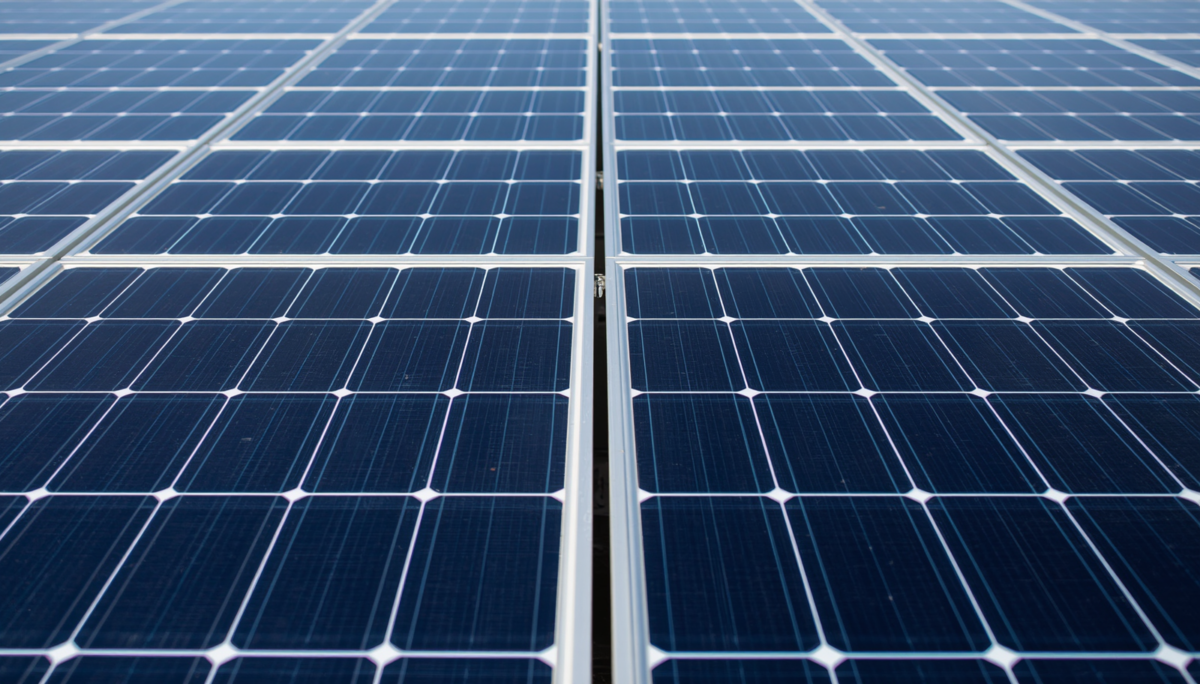
India’s Solar Manufacturing Renaissance: What PM Surya Ghar and PM Kusum Mean for Domestic Cell and Module Producers

India's Solar Manufacturing Renaissance: What PM Surya Ghar and PM Kusum Mean for Domestic Cell and Module Producers

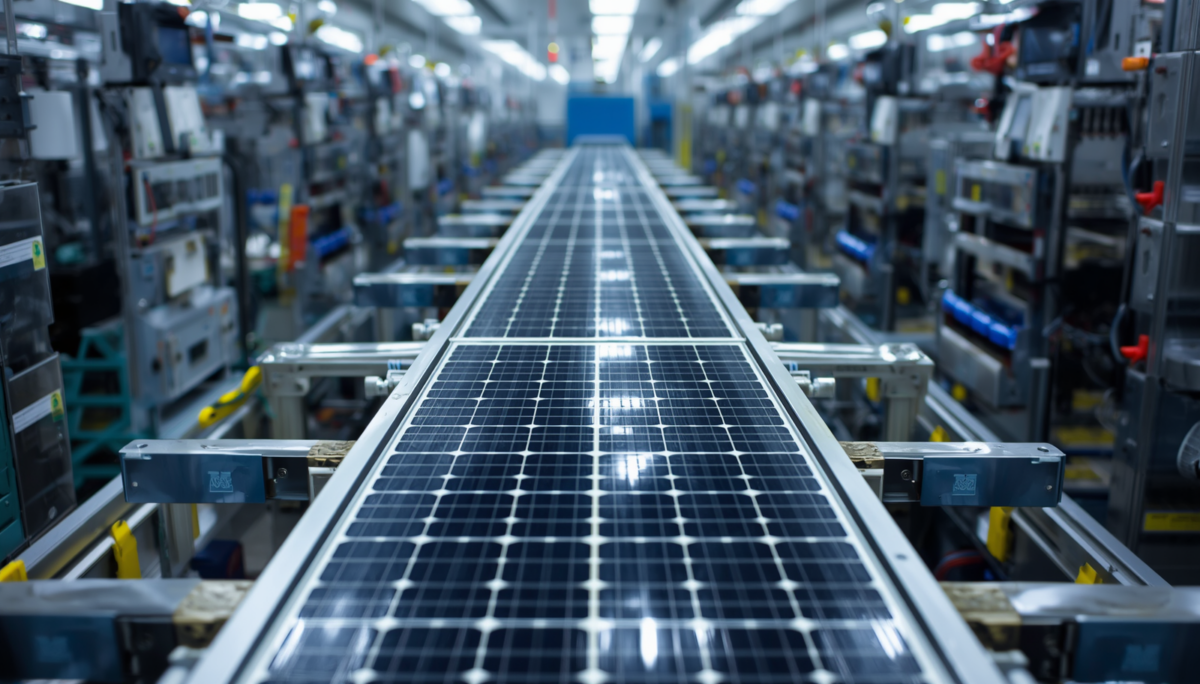
India is experiencing a solar manufacturing renaissance. The combination of policy support — through the PLI scheme, ALMM framework, Basic Customs Duty (BCD) on imported modules, and the Domestic Content Requirement — alongside a demand surge from flagship schemes like PM Surya Ghar Muft Bijli Yojana and PM Kusum Yojana has created conditions for India’s solar cell and module manufacturing sector to scale at unprecedented speed.

For solar distributors and installers, this is not just background industry news. The expansion of domestic manufacturing directly affects supply availability, pricing, quality standards, and the long-term reliability of the modules they install. Understanding this transformation is essential for strategic sourcing and business planning.

The Policy Architecture Driving Manufacturing Growth

Basic Customs Duty (BCD) on Imported Modules

Since April 2022, India has imposed a 40% Basic Customs Duty on imported solar modules and 25% on imported solar cells. This tariff barrier has made imported Chinese modules uncompetitive for most Indian applications — particularly government-funded schemes — and created strong demand pull for domestically manufactured modules.

The PLI Scheme for Solar PV Manufacturing

The Production Linked Incentive scheme for high-efficiency solar PV modules provides manufacturers with financial incentives tied to production volume and efficiency thresholds. PLI has catalysed over ₹90,000 crore in committed investments in solar manufacturing — spanning polysilicon, ingots, wafers, cells, and modules — with the aim of creating a fully integrated domestic solar supply chain.

ALMM and DCR as Demand Guarantees

The ALMM framework ensures that government-funded installations use only certified domestic modules. Combined with DCR requirements in tenders under PM Kusum and certain PM Surya Ghar provisions, these policies create a guaranteed demand floor for ALMM-listed Indian manufacturers — giving manufacturers the demand certainty needed to invest in capacity expansion and quality upgrades.

Capacity Expansion: The Numbers

India’s solar module manufacturing capacity has grown from approximately 15 GW in 2021 to an estimated 60+ GW by end-2025, with cell manufacturing capacity also expanding rapidly. For context on where this trajectory is headed, read our analysis of the future of solar manufacturing in India, covering technology, policy, and growth trends.

Technology Upgradation Driven by Scheme Requirements

PM Surya Ghar’s efficiency requirements and PM Kusum’s performance demands are pushing domestic manufacturers to upgrade from older PERC technologies to higher-efficiency configurations. The shift from M6 to M10 wafer formats, the adoption of half-cut cell architectures, and the introduction of bifacial modules have all been accelerated by the quality bar set by government scheme specifications.

This technology evolution is covered in detail in our guide on why India’s solar module manufacturing sector is gaining global attention.

What This Means for Distributors and Installers

The expansion of India’s domestic solar manufacturing base has several direct implications for the supply chain:

Better availability: Growing domestic capacity reduces supply shortages and lead time delays that plagued the market in 2021–2023 when import disruptions exposed the risks of over-reliance on Chinese modules.

More competitive pricing: As domestic manufacturers scale production, per-unit manufacturing costs fall — improving module pricing for distributors without sacrificing margin.

Higher quality at accessible prices: PLI incentives tied to efficiency thresholds push manufacturers to produce higher-grade cells and modules, benefiting the entire supply chain.

Easier compliance: Sourcing from domestic ALMM-listed manufacturers simplifies the compliance documentation process for both PM Surya Ghar and PM Kusum installations.

Websol Energy System’s Place in This Transformation

Established in 1994, Websol Energy System is among the oldest and most experienced solar cell manufacturers in India. Operating its manufacturing facility in Falta, West Bengal, Websol has been part of India’s solar manufacturing story since its very beginning. Today, Websol manufactures M10 Bifacial Mono-PERC solar cells as a certified solar cell manufacturer in India and produces finished modules as a solar module manufacturer in India — serving the domestic government scheme supply chain and export markets with consistent quality.

Frequently Asked Questions

Q1: What is the current solar module manufacturing capacity of India?

As of 2026, India’s solar module manufacturing capacity exceeds 60 GW per annum — a dramatic increase from approximately 15 GW in 2021. Cell manufacturing capacity is also growing rapidly, driven by PLI scheme investments.

The PLI scheme incentivises domestic manufacturers to produce higher efficiency modules at scale, improving both module quality and supply availability. For distributors and installers, this translates into more ALMM-listed module options, better pricing over time, and reduced supply chain risk.

The 40% Basic Customs Duty on imported solar modules ensures that domestic manufacturers can compete on price, supporting the survival and growth of India’s solar manufacturing ecosystem. For PM Kusum and PM Surya Ghar installers with DCR requirements, BCD also reinforces the necessity of sourcing domestically.

Yes, broadly. As domestic manufacturers achieve higher production volumes, per-unit manufacturing costs decrease — historical trends from China’s manufacturing scale-up confirm this pattern. Indian module prices are expected to continue declining progressively as capacity expands.

Growing domestic manufacturing capacity ensures supply availability for the massive volume of installations targeted under PM Surya Ghar — 1 crore households. It also reduces dependence on imports that could be disrupted by geopolitical factors, pricing volatility, or supply chain disruptions.

How Solar Module Quality Affects Long-Term ROI for Distributors and Installers in India

How Solar Module Quality Affects Long-Term ROI for Distributors and Installers in India

How Solar Module Quality Affects Long-Term ROI for Distributors and Installers in India

In India’s fast-growing solar market, price competition among distributors and installers has never been fiercer. The pressure to win government scheme bids — whether for PM Surya Ghar or PM Kusum — often drives procurement decisions toward the cheapest available module. This approach is a false economy. Module quality has a profound and measurable impact on long-term energy yield, warranty claims, customer satisfaction, and ultimately, the distributor’s and installer’s business reputation.

This guide unpacks the specific quality parameters that drive solar module ROI — and why understanding them is as important as understanding subsidy structures.

The ROI Equation for Solar Modules

A solar module’s return on investment is not just about its purchase price. It is a function of three interrelated variables: initial energy generation (rated power), energy degradation rate over time, and the total cost of failures and warranty claims. A cheap module that degrades 1% faster per year than a premium module will lose approximately 15 kWh more energy per kW of installed capacity every year — that is a significant difference compounded over a 25-year project life.

For a 3 kW residential PM Surya Ghar installation, a 1% additional annual degradation means approximately 45 kWh less energy annually — equivalent to roughly ₹400–600 in lost electricity value per year at current rates. Across a 25-year system life, this compounds into a material reduction in customer savings, generating complaints and warranty claims that fall squarely on the installer.

Key Quality Parameters That Drive Module ROI

1. Cell Efficiency and Binning Precision

Higher cell efficiency means more power generated from the same roof or land area. More critically, the precision of efficiency binning — how tightly cells are sorted by power output before module assembly — determines mismatch losses within the module. A module from a manufacturer with tight binning controls will consistently outperform its rated power, while poorly binned modules may underperform nameplate capacity from day one.

2. Encapsulant and Backsheet Quality

The encapsulant (typically EVA or POE film) and backsheet are the module’s protection against environmental stressors — moisture, UV radiation, and thermal cycling. Low-quality encapsulants can yellow, delaminate, or develop micro-cracks over time, accelerating degradation. In India’s harsh outdoor conditions — monsoon humidity, intense UV, temperature swings — encapsulant quality is a critical determinant of module lifespan.

3. Frame Integrity and Anti-PID Design

The aluminium frame must provide structural integrity over 25 years of wind and snow loads (where applicable). More critically, high-quality modules incorporate anti-PID (Potential Induced Degradation) design in their cell-to-glass gap engineering and encapsulant formulation — essential for large ground-mounted PM Kusum installations where system voltages are high.

4. Junction Box and Cable Quality

The junction box is the module’s most vulnerable electrical component. Low-quality junction boxes with inferior bypass diodes are a common cause of field failures and fire risks. Installers should verify that modules use IP67 or IP68 rated junction boxes with TÜV-certified bypass diodes.

Annual Degradation: The Silent Margin Killer

Solar module datasheets universally quote a maximum linear degradation rate — typically 0.45–0.55%/year for Mono-PERC and 0.35%/year for TOPCon. However, real-world degradation depends heavily on manufacturing quality. Modules from poorly controlled manufacturing lines can degrade at 0.7–1% per year — nearly double the warranted rate — with no recourse available to the installer if the manufacturer lacks financial standing to honour warranty claims.

Partnering with an established domestic solar module manufacturer in India that has a demonstrable track record, financial stability, and accessible warranty service is the most reliable way to protect your business from long-term warranty risk.

Warranty Structures: What Distributors Must Scrutinise

A 25-year linear power output warranty is standard — but the warranty is only as strong as the company behind it. Distributors should evaluate manufacturer warranties on three dimensions: warranty terms (minimum 80% output at year 25), financial standing to honour long-term claims, and geographic presence for service support within India.

Websol Energy System’s modules are manufactured to international quality standards, with clear performance specifications for distributors sourcing for government scheme installations. Explore our solar cell manufacturer in India and module product range for detailed technical documentation.

Real-World Performance Testing Customers Expect

Educated solar customers in 2025 expect measurable proof of panel performance. Installers who can provide third-party flash test reports for installed modules — confirming that actual power output meets or exceeds rated power — build superior customer trust and reduce post-installation disputes. This requires sourcing from manufacturers with stringent flash testing and binning processes.

To understand the full range of solar cell technologies that impact performance and quality, visit our guide on understanding solar cell technologies including TOPCon, bifacial, half-cut, HJT, and Mono PERC.

Frequently Asked Questions

Q1: What is an acceptable annual degradation rate for solar modules in India?

For Mono-PERC modules, a maximum linear degradation of 0.45%/year is the quality standard. TOPCon modules should degrade no more than 0.35%/year. Modules with warranted degradation above 0.55%/year should be avoided for government scheme installations.

PID (Potential Induced Degradation) occurs when high system voltages cause leakage currents through the glass-cell-encapsulant interface, degrading cell performance. Anti-PID design in the module’s construction is critical for large PM Kusum ground-mounted systems where system voltages may reach 1000 V.

For Mono-PERC modules, a maximum linear degradation of 0.45%/year is the quality standard. TOPCon modules should degrade no more than 0.35%/year. Modules with warranted degradation above 0.55%/year should be avoided for government scheme installations.

No. A warranty is only as reliable as the financial standing and operational continuity of the manufacturer. Installers should prioritise warranties from established domestic manufacturers with a verifiable track record, financial stability, and India-based service infrastructure.

Request and review third-party flash test reports from the manufacturing batch, IEC 61215 and IEC 61730 test certificates, independent EL (electroluminescence) imaging results for defect detection, and ALMM certification documentation.

TOPCon vs Mono-PERC vs HJT: Which Solar Cell Technology Should Indian Installers Choose in 2026?

TOPCon vs Mono-PERC vs HJT: Which Solar Cell Technology Should Indian Installers Choose in 2026?

The solar cell technology landscape has never been more dynamic. In 2026, Indian solar installers and distributors are navigating a market where three distinct next-generation technologies — TOPCon, Mono-PERC, and HJT — coexist on supplier product sheets, each with distinct performance profiles, cost points, and suitability for different applications. Making the wrong technology choice for a PM Surya Ghar residential project or a PM Kusum agricultural installation can mean lower energy yields, customer complaints, and tighter margins.

This guide cuts through the marketing noise and gives you a clear, practical technology selection framework.

Technology Overview

Mono-PERC (Passivated Emitter and Rear Cell)

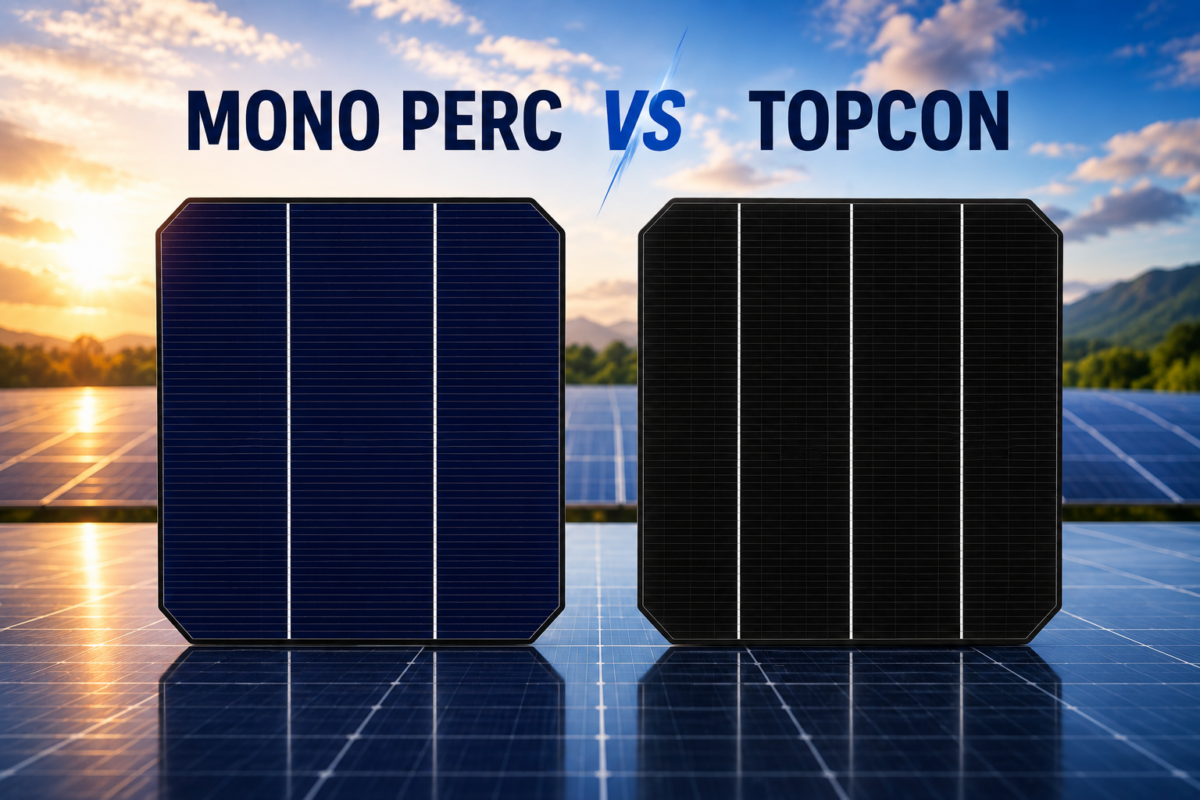
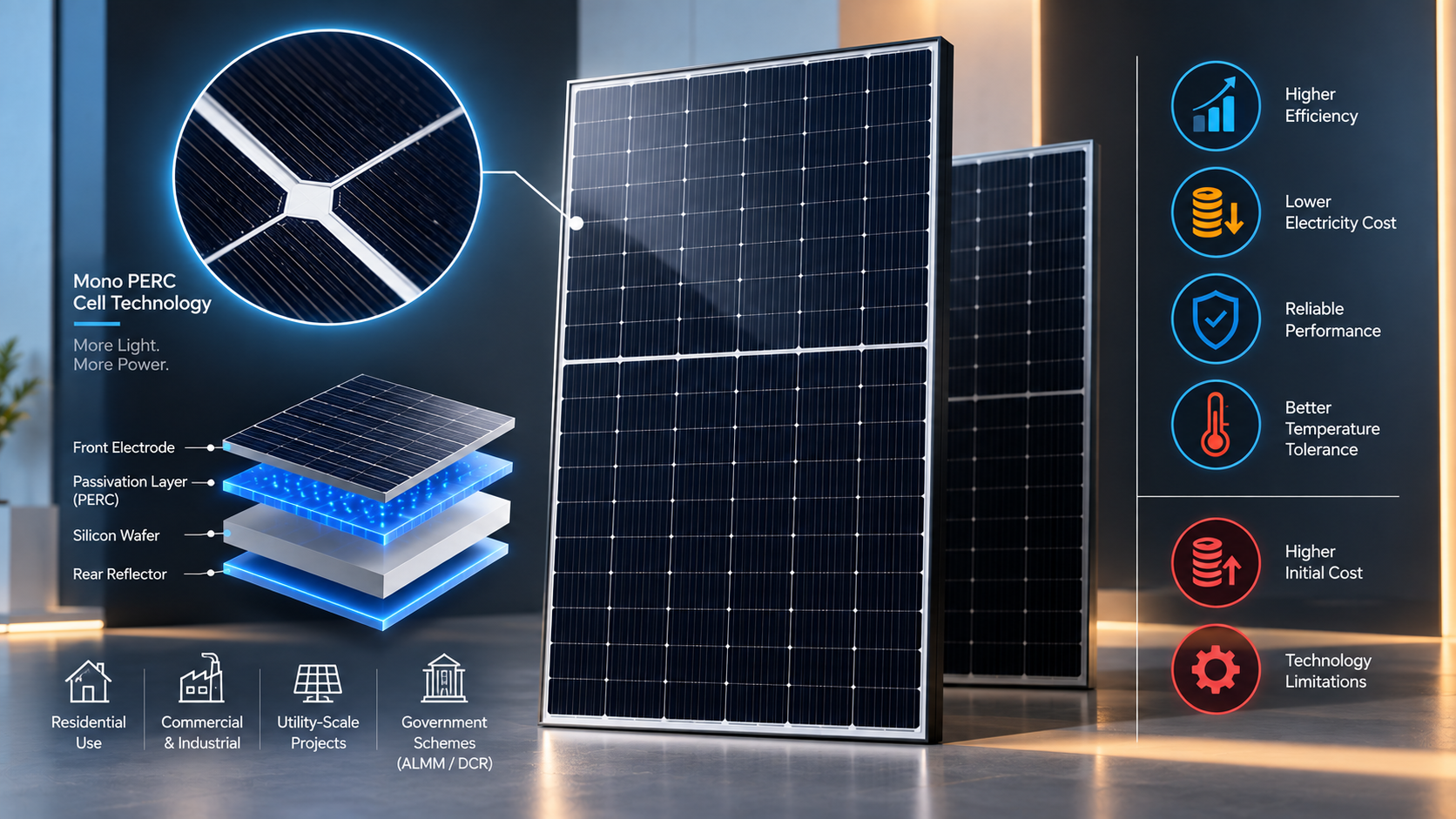
Mono-PERC is the current mainstream commercial technology. A passivation layer on the cell’s rear surface reduces electron recombination, boosting efficiency to 20.5%–22% in M10 bifacial configurations. It represents the best value-for-efficiency balance in the Indian market in 2026, with a mature manufacturing ecosystem, strong ALMM representation, and well-understood long-term degradation behaviour.

TOPCon (Tunnel Oxide Passivated Contact)

TOPCon is an N-type silicon cell technology that adds a thin tunnel oxide layer and a doped poly-silicon layer to the rear of the cell, dramatically reducing recombination losses. Module efficiencies of 22%–24% are achievable. TOPCon cells have lower temperature coefficients (around -0.28%/°C vs -0.35%/°C for PERC) and lower LID/LeTID degradation, making them particularly suited for high-temperature Indian environments.

HJT (Heterojunction Technology)

HJT cells combine crystalline silicon with thin amorphous silicon layers, producing efficiencies of up to 24%–25%. HJT has an exceptional temperature coefficient (around -0.25%/°C) and outstanding low-light performance — useful for cloudy or haze-prone regions. However, HJT manufacturing requires specialised equipment (PECVD systems) and is significantly more capital-intensive, reflecting in higher module pricing.

Head-to-Head Performance Comparison

Efficiency: HJT > TOPCon > Mono-PERC. HJT reaches 24%+, TOPCon reaches 22–24%, Mono-PERC reaches 20.5–22%.

Temperature Coefficient: HJT (-0.25%/°C) > TOPCon (-0.28%/°C) > Mono-PERC (-0.35%/°C). All three perform well, but HJT and TOPCon have an edge in India’s hot summers.

Degradation Rate: Mono-PERC: ~0.45–0.5%/year. TOPCon: ~0.35–0.4%/year. HJT: ~0.25–0.3%/year. Over a 25-year project life, this matters significantly for energy yield forecasting.

Cost (Module Price): Mono-PERC remains most affordable at scale. TOPCon commands a 5–15% premium. HJT carries a 25–40% premium over PERC, limiting its addressable market in price-sensitive Indian government tenders.

ALMM Availability: Mono-PERC has the widest ALMM listing coverage in India. TOPCon listings are growing. HJT ALMM listings are currently limited.

Application-Specific Recommendations

PM Surya Ghar Residential Rooftops (1–3 kW)

Mono-PERC M10 bifacial is the optimal choice — highest ALMM availability, proven residential performance, lowest cost, and compact footprint suitable for small rooftop areas. TOPCon is an alternative for customers seeking premium performance and are willing to pay slightly more.

PM Kusum Component A Ground-Mounted Plants (500 kW–2 MW)

TOPCon modules offer the best balance of high efficiency, lower degradation, and manageable price premium for large ground-mounted installations where land area optimisation and long-term energy yield are critical to project IRR. Bifacial TOPCon modules are particularly effective in open agricultural field settings.

PM Kusum Component B Agricultural Pumps (Standalone)

Mono-PERC M10 remains the practical choice for standalone agricultural pump systems, given cost sensitivity and the non-critical nature of 1–2% efficiency differences in pump applications sized with adequate margin.

What India’s Manufacturing Landscape Offers

India’s domestic solar cell manufacturing is primarily centred on Mono-PERC technology, with TOPCon capacity ramping up rapidly. For an understanding of where Indian solar cell manufacturing is headed, our analysis of the future of solar manufacturing in India covers the technology transition timeline in detail.

Websol Energy System currently manufactures M10 Bifacial Mono-PERC solar cells — the technology that strikes the optimal balance for current Indian government scheme requirements. As a leading solar module manufacturer in India, Websol provides verified, ALMM-eligible modules for PM Surya Ghar and PM Kusum supply chains.

Frequently Asked Questions

Q1: Is TOPCon better than Mono-PERC for Indian solar installations?

TOPCon offers higher efficiency (22–24% vs 20.5–22%) and lower degradation, but at a 5–15% price premium. For PM Surya Ghar residential installations where cost is primary, Mono-PERC remains optimal. For large PM Kusum ground plants where long-term yield matters more, TOPCon is increasingly competitive.

The temperature coefficient of power (Pmax) measures how much panel efficiency drops per degree Celsius above 25°C. HJT (-0.25%/°C) and TOPCon (-0.28%/°C) outperform Mono-PERC (-0.35%/°C) in hot Indian summers, generating more power when temperatures are highest.

HJT modules are technically eligible if ALMM listed, but their significantly higher cost makes them uneconomical for typical PM Surya Ghar residential projects where subsidy-to-system-cost ratios are optimised using Mono-PERC or TOPCon modules.

HJT has the lowest annual degradation rate at approximately 0.25–0.3%/year, followed by TOPCon at 0.35–0.4%/year and Mono-PERC at 0.45–0.5%/year. Lower degradation directly translates to higher cumulative energy yield over the panel’s 25-year life.

Yes, provided the modules are ALMM listed, BIS certified, and meet DCR requirements (domestically manufactured cells and modules). TOPCon’s higher efficiency is particularly advantageous for Component A ground-mounted plants where land area efficiency affects project sizing and bid competitiveness.

Solar Cell Manufacturing in India: How Domestic Production Powers the PM Surya Ghar and PM Kusum Supply Chain

Solar Cell Manufacturing in India: How Domestic Production Powers the PM Surya Ghar and PM Kusum Supply Chain

India’s solar energy ambition is staggering. The government has set a target of 500 GW of renewable energy capacity by 2030, with solar accounting for the bulk of the expansion. Driving this transition is not just installation activity — it is a parallel revolution in domestic solar manufacturing, particularly in solar cell and module production. For distributors and installers serving PM Surya Ghar and PM Kusum, understanding how solar cells are made in India — and which manufacturing steps affect panel quality — is essential for making informed procurement decisions.

The Solar Cell Manufacturing Process: A Step-by-Step Overview

Step 1: Silicon Ingot and Wafer Production

Solar cell manufacturing begins with high-purity polysilicon, which is melted and grown into single-crystal silicon ingots using the Czochralski (CZ) process for monocrystalline silicon. These ingots are then sliced into ultra-thin wafers using diamond wire saws — currently standardised at 182 mm × 182 mm (M10 format) for leading Indian manufacturers.

Step 2: Cell Processing — Diffusion, Passivation, and Metallisation

The wafer undergoes a sequence of chemical and thermal processes: surface texturing to improve light trapping, diffusion to create the p-n junction that drives the photovoltaic effect, and anti-reflection coating (ARC) deposition. For Mono-PERC cells, an additional rear-side passivation layer is applied — this is what defines the PERC (Passivated Emitter and Rear Cell) architecture and accounts for its efficiency advantage over standard BSF (Back Surface Field) cells.

Finally, silver and aluminium contacts are screen-printed and fired at high temperatures to form the cell’s electrical connections. This metallisation step is critical — the precision of silver paste deposition directly affects cell efficiency and long-term degradation rates.

Step 3: Quality Testing and Binning

Every cell is tested under a Solar Simulator under Standard Test Conditions (STC: 1000 W/m², 25°C, AM 1.5G spectrum). Parameters measured include open-circuit voltage (Voc), short-circuit current (Isc), maximum power (Pmax), fill factor (FF), and efficiency (η). Cells are sorted (binned) by power output — typically in 0.1 W bins — to ensure matched cells are used in each module for consistent performance.

What Makes a High-Quality Solar Cell?

Not all solar cells are equal, even from the same manufacturing line. Key quality indicators that distributors should understand include:

Low Light-Induced Degradation (LID): In p-type mono silicon cells, boron-oxygen defects can cause initial efficiency loss of 1–3% in the first weeks of light exposure. Premium manufacturers use LID mitigation techniques including light and elevated temperature annealing processes.

Low Potential Induced Degradation (PID) Resistance: PID can cause significant power loss in field conditions due to leakage current. High-quality cells and encapsulants are designed to resist PID, which is particularly important for large ground-mounted PM Kusum installations where system voltages are high.

Tight Efficiency Distribution: A narrow spread (tight binning) within a production batch ensures consistent module output and minimises mismatch losses in strings and arrays.

India’s Solar Cell Manufacturing Landscape

India’s solar cell manufacturing capacity has grown substantially, with several established manufacturers producing cells across the M6 and M10 wafer formats. For a complete overview of the manufacturers operating in this space, refer to our guide to solar cell manufacturers in India.

Websol Energy System has been manufacturing solar cells in India since 1994 — among the earliest entrants in the Indian solar cell manufacturing space. Operating from its advanced manufacturing facility in Falta, West Bengal, Websol produces M10 Bifacial Mono-PERC cells that serve the quality requirements of both domestic government schemes and export markets. Visit our solar cell manufacturer in India page for technical specifications.

The PLI Scheme and Its Impact on Solar Cell Quality

The Production Linked Incentive (PLI) scheme for solar PV manufacturing — managed by the Ministry of New and Renewable Energy — provides financial incentives to manufacturers who achieve high efficiency thresholds and domestic sourcing percentages. This has driven Indian manufacturers to invest in higher efficiency cell technologies and tighter quality control, ultimately benefiting distributors and installers who source from PLI-participating manufacturers.

To understand the broader trajectory of Indian solar manufacturing, read our analysis of the future of solar manufacturing in India — technology, policy, and growth trends.

Why Domestic Solar Cells Matter for PM Kusum and PM Surya Ghar Installers

Both PM Kusum and PM Surya Ghar prioritise domestically manufactured modules through ALMM compliance and DCR requirements. Sourcing from a domestic solar cell manufacturer directly reduces supply chain risk — no import delays, no customs compliance issues, and full traceability of the manufacturing process for government audits.

Additionally, domestic manufacturers can provide technical support, rapid replacement in warranty situations, and documentation that meets MNRE’s evolving compliance requirements — advantages that imported modules simply cannot match at scale.

Frequently Asked Questions

Q1: What is the difference between a solar cell and a solar module?

A solar cell is the smallest photovoltaic unit that converts sunlight into electricity. A solar module (or panel) is made by connecting multiple solar cells (typically 60, 72, 120, or 144 cells) in a laminated assembly with glass, encapsulant, backsheet, and a frame — forming the finished product installed on rooftops or ground.

PERC stands for Passivated Emitter and Rear Cell. The ‘passivation’ refers to a dielectric layer applied to the rear of the cell that reduces electron recombination, allowing more electrical current to be generated from the same amount of incident sunlight — boosting efficiency by 1–2% absolute compared to standard BSF cells.

Modules are constructed from cells of matched power output. If cells with wide efficiency spread are mixed in a module, the weakest cell limits current flow in its string — a phenomenon called current mismatch. Tightly binned cells minimise mismatch losses, resulting in higher-than-rated real-world energy generation.

LID (Light-Induced Degradation) causes initial efficiency loss in the first weeks of outdoor operation due to boron-oxygen complex formation in p-type cells. In Indian high-irradiance conditions, this can manifest quickly. Premium manufacturers use annealing or alternative cell structures to minimise LID below 1%.

Look for ALMM listing, BIS and IEC certification, M10 Mono-PERC or higher cell technology, tight cell efficiency binning data, warranty documentation, and DCR compliance capability. Established domestic manufacturers with a track record of government scheme supply are strongly preferred.

M10 Bifacial Mono-PERC Solar Cells: Why This Technology Dominates India’s Solar Module Market in 2026

M10 Bifacial Mono-PERC Solar Cells: Why This Technology Dominates India's Solar Module Market in 2026

If you are a solar panel distributor, installer, or procurement manager sourcing modules for Indian government schemes like PM Surya Ghar or PM Kusum, there is one solar cell format that keeps appearing at the top of every supplier’s product sheet: M10 Bifacial Mono-PERC. Understanding why this technology has become the industry standard in India — and why it outperforms alternatives in real-world conditions — is essential knowledge for every solar supply chain professional in 2026.

What Is an M10 Solar Cell?

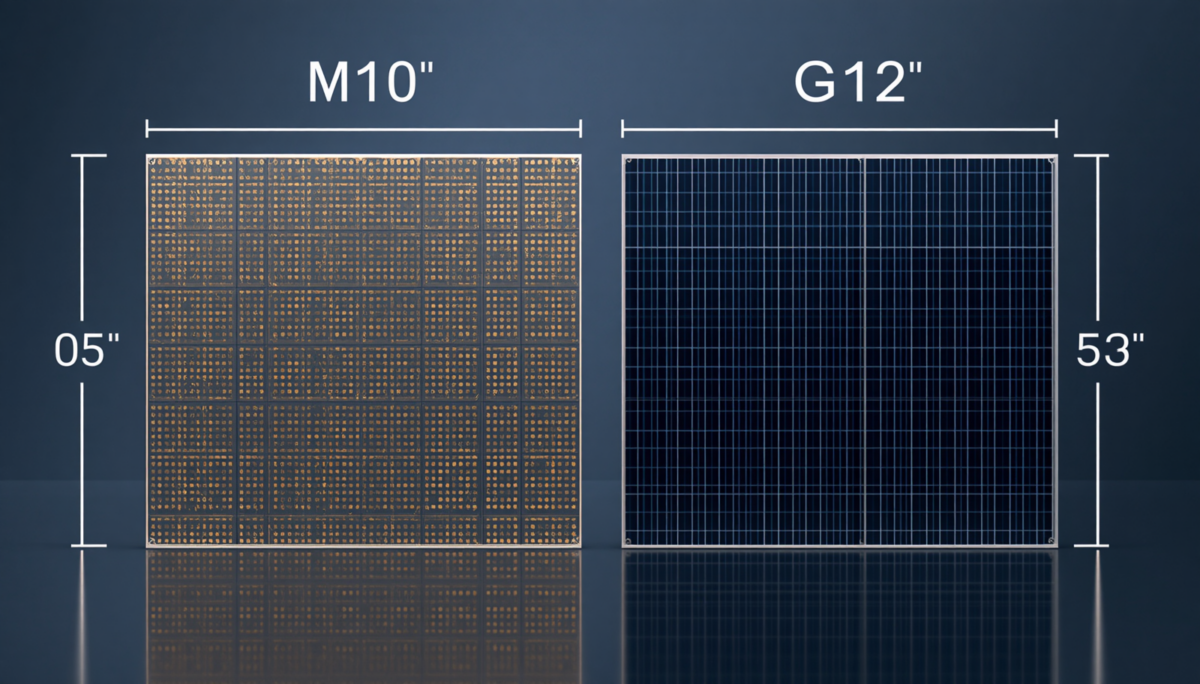
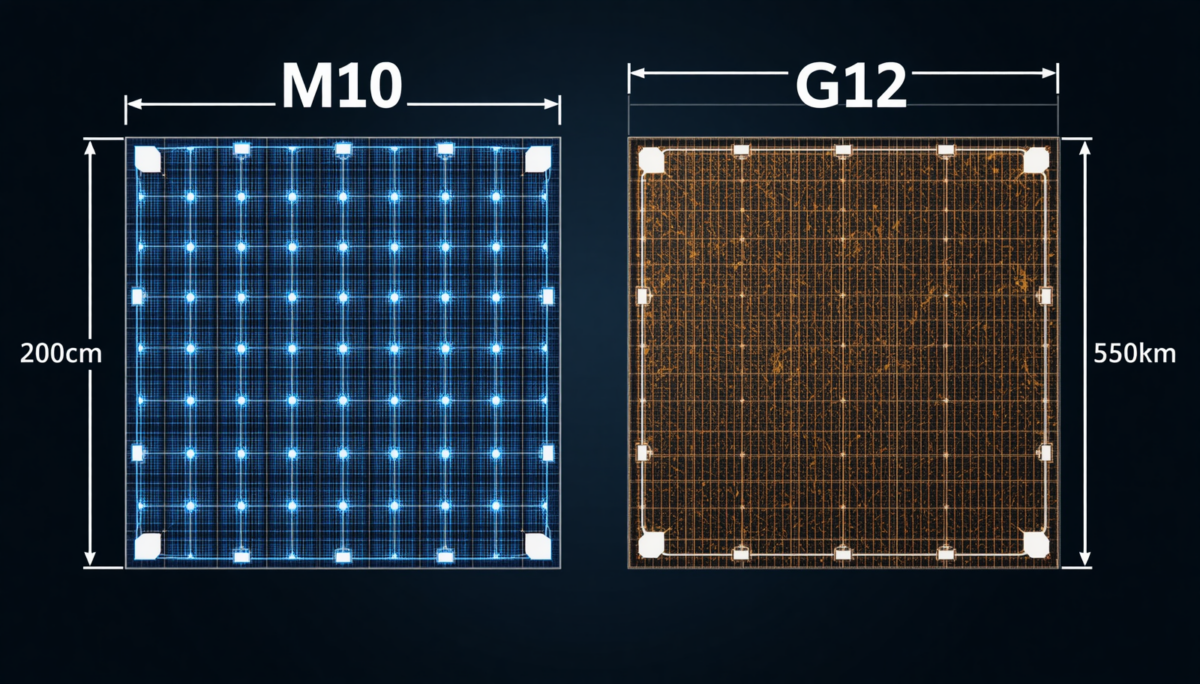
The M10 designation refers to a specific wafer size standard in the solar industry — 182 mm × 182 mm. This wafer size represents a significant step up from the older M6 (166 mm) and G1 (158.75 mm) formats. When paired with Mono-PERC (Passivated Emitter and Rear Cell) technology and a bifacial design — which allows the cell to absorb light from both front and rear surfaces — you get a product that offers some of the most compelling efficiency and output numbers available in crystalline silicon technology today.

For a comprehensive deep-dive into M10 cell efficiency data, output benchmarks, and manufacturing benefits, visit our dedicated page on M10 solar cells — efficiency, output, and manufacturing advantages.

The Technical Advantages of M10 Bifacial Mono-PERC

1. Higher Power Output per Module

Larger wafer area means more photons can be captured per cell. An M10 Mono-PERC module typically delivers 530 Wp to 560 Wp in a standard 60-cell (half-cut, 120-cell) configuration — compared to 375–400 Wp from older M6 cells. This means fewer modules are needed for the same system capacity, reducing balance-of-system (BOS) costs including mounting structures, cables, and labour.

2. Bifacial Gain in Indian Conditions

The bifacial design enables the rear of the panel to absorb reflected albedo light from the ground surface. In Indian rooftop conditions with light-coloured surfaces or elevated mounting, bifacial gains typically range from 5% to 15%. In ground-mounted agricultural installations typical of PM Kusum Component A projects — especially in open, bright fields — rear-side gains can approach 20%, significantly improving energy yield.

3. Half-Cut Cell Architecture

Most M10 modules use half-cut cell technology, which divides each cell into two halves. This reduces resistive losses and improves performance in partial shading conditions — extremely relevant for residential rooftops where shadows from water tanks, antennas, or adjacent structures are common. Half-cut cells also run cooler, extending module lifespan.

4. Excellent Temperature Coefficient

M10 Mono-PERC cells typically exhibit a temperature coefficient of power (Pmax) around -0.35%/°C. Given that module surface temperatures in India can easily reach 60–70°C in summer, a tight temperature coefficient translates directly to preserved energy output during the hottest parts of the day — when electricity demand (and its value) peaks.

Manufacturing Advantages That Benefit Distributors

M10 cells are not only technologically superior — they are also easier to manufacture at high volume and consistent quality due to the maturity of the M10 production ecosystem. Leading solar cell manufacturers in India have invested heavily in M10-compatible production lines, meaning supply reliability is strong.

Websol Energy System, operating as a certified solar cell manufacturer in India, manufactures M10 Bifacial Mono-PERC solar cells at its facility in Falta, West Bengal — equipped with advanced automation and stringent quality control for consistent cell efficiency across production batches.

How M10 Cells Perform Across India’s Solar Applications

PM Surya Ghar Residential Rooftops

For 1 kW–3 kW residential rooftop systems, M10 modules allow system integrators to deliver higher capacity within limited roof space. A typical 3 kW system using M10 540 Wp modules requires only 6 panels — versus 8 panels with older 375 Wp modules — reducing structural load and installation complexity.

PM Kusum Agricultural Installations

In ground-mounted Component A and C installations, M10 bifacial modules deliver measurably better energy yield per square metre of land use. Higher bifacial gain in open agricultural fields further improves project economics, making M10 bifacial the preferred choice for competitive bid pricing.

M10 vs Other Cell Technologies: A Quick Comparison

M10 Mono-PERC Bifacial vs TOPCon: TOPCon offers slightly higher efficiency (22%–24%) but at significantly higher manufacturing cost. For most PM Surya Ghar and PM Kusum applications, M10 Mono-PERC hits the optimal efficiency-cost sweet spot.

M10 Mono-PERC Bifacial vs HJT: HJT (Heterojunction Technology) offers excellent low-light performance but involves higher capital cost and more complex manufacturing. M10 Mono-PERC remains more commercially accessible for Indian government scheme volumes.

For a detailed technology comparison, read our guide on MonoPERC vs N-Type vs M10 solar cell technology selection.

Frequently Asked Questions

Q1: What does M10 mean in solar cells?

M10 refers to the wafer size standard of 182 mm × 182 mm used in solar cell manufacturing. It represents a newer, larger wafer format that enables higher power output per module compared to older M2, M6, and G1 wafer sizes.

M10 Mono-PERC bifacial solar cells typically achieve module efficiencies between 20.5% and 22%, with front-side cell efficiencies commonly in the 21–22.5% range in leading Indian manufacturing facilities.

Yes. M10 bifacial Mono-PERC modules are well-suited for PM Surya Ghar installations, offering higher power output in less roof space, good temperature performance, and compliance with MNRE efficiency standards.

In typical Indian rooftop and open-ground conditions, bifacial gain ranges from 5% to 20% depending on mounting height, tilt angle, and ground surface reflectivity (albedo). Light-coloured or reflective surfaces maximize rear-side energy capture.

Depending on configuration and number of cells, M10 Mono-PERC bifacial modules typically output 525 Wp to 575 Wp per module — significantly higher than older generation 144-cell modules using G1 or M6 wafers.

PM Kusum Yojana for Solar Installers: Component Standards, Sourcing Strategy, and Technical Compliance

PM Kusum Yojana for Solar Installers: Component Standards, Sourcing Strategy, and Technical Compliance


Pradhan Mantri Kisan Urja Suraksha evam Utthaan Mahabhiyan — better known as PM Kusum Yojana — is among the most ambitious agricultural solar schemes in the world. With a combined target of 30.8 GW of solar capacity across its three components and a budget outlay that crosses ₹34,000 crore, this scheme represents a transformative opportunity for solar installers, distributors, and panel suppliers across India.

But capitalising on PM Kusum’s potential requires more than sales — it demands technical knowledge of the scheme’s component structures, power output requirements, panel specifications, and compliance frameworks. This guide provides a practical reference for every stakeholder operating in the PM Kusum solar supply chain.

PM Kusum Yojana: The Three-Component Structure

Component A: Decentralised Ground-Mounted Solar Plants

Component A enables farmers and rural landowners to set up small-scale solar power plants of 500 kW to 2 MW capacity on barren or uncultivable land. The generated power is sold to DISCOMs at a fixed tariff. For solar suppliers in this segment, the focus is on utility-grade, high-efficiency bifacial modules capable of sustained output over 25 years.

Component B: Standalone Solar Powered Agricultural Pumps

Component B replaces diesel-run water pumps with solar-powered pumps of up to 7.5 HP capacity. These are off-grid systems, requiring panels with consistent performance across varying irradiance levels. With over 17.5 lakh pumps targeted, this component alone is a massive market for panel distributors focused on rural and semi-urban geographies.

Component C: Grid-Connected Solar Powered Agriculture Pumps

Component C upgrades existing grid-connected agricultural pumps with solar energy, allowing farmers to consume solar power for irrigation and sell surplus power to the grid. Panels for this segment must be compatible with grid-tie systems and must comply with net-metering regulations set by state electricity regulatory commissions.

Technical Specifications Solar Panels Must Meet Under PM Kusum

Across all three components, MNRE’s technical specifications for solar panels under PM Kusum are stringent. Below are the key benchmarks installers and distributors must verify before procurement.

Module Type and Cell Technology

PM Kusum-approved installations predominantly use crystalline silicon modules — either Mono PERC or poly crystalline. However, given the efficiency advantages, Mono-PERC and M10 bifacial cells are increasingly preferred, especially for Component A solar plants where land-use efficiency is critical.

For a detailed comparison of cell technologies suitable for utility and agricultural solar applications, see our guide on understanding solar cell technologies including TOPCon, bifacial, half-cut, HJT, and Mono PERC.

Power Output and Efficiency

For Component A grid-scale applications, modules with a minimum power output of 375 Wp and efficiency exceeding 20% are standard. For Component B and C pump applications, panel specifications are matched to pump load requirements — typically 1 kW per HP of pump capacity, with a safety margin of 20% additional capacity factored in.

ALMM and BIS Certification

As with PM Surya Ghar, PM Kusum mandates the use of ALMM-listed modules. BIS certification under IS 14286 for crystalline silicon modules is mandatory. Any module failing to meet this standard is ineligible regardless of its price or efficiency claims.

Domestic Content Requirement (DCR) and Its Implications

A critical compliance requirement under PM Kusum’s Component A and B is the Domestic Content Requirement. Under DCR, both solar cells and modules must be manufactured in India. This has significant implications for the supply chain — distributors and installers cannot procure imported Chinese modules and remain compliant.

This is where partnering with a certified solar cell manufacturer in India becomes strategically essential. At Websol Energy System, we manufacture M10 Bifacial Mono-PERC solar cells at our plant in Falta, West Bengal — fully compliant with India’s DCR requirements.

Supply Chain Strategy for PM Kusum Installers

Winning PM Kusum tenders and delivering projects on time requires a robust, compliant supply chain. Here are the strategic priorities for solar distributors and installers:

  1. Lock in manufacturer partnerships early: Government tendering timelines are unpredictable. Securing supply agreements with ALMM-listed, DCR-compliant manufacturers before bid submission prevents last-minute compliance failures.
  2. Maintain documentation in advance: Keep updated copies of the manufacturer’s ALMM certificate, BIS certification, IEC test reports, and product datasheets ready for submission at bid and post-award stages.
  3. Prioritise bifacial modules for Component A: In large ground-mounted projects, bifacial modules can increase yield by 10–15% depending on ground albedo — improving project IRR and making bids more competitive on per-unit generation costs.

Why Indian Solar Manufacturing Matters for PM Kusum Success

India’s solar manufacturing eco system has matured significantly, and working with established domestic manufacturers like Websol — among the earliest solar cell manufacturers in India since 1994 — gives installers access to consistent quality, reliable documentation, and local after-sales support. Explore the complete landscape of solar cell manufacturers in India at our guide to solar cell manufacturers in India.

Frequently Asked Questions

Q1: Is it mandatory to use Indian-made solar panels under PM Kusum?

Yes. Under the Domestic Content Requirement (DCR) applicable to PM Kusum Components A and B, both solar cells and modules must be manufactured in India. Imported modules are not eligible. 

MNRE generally mandates a minimum module efficiency of 18.5% to 20% for PM Kusum ground-mounted plants. Using M10 Mono-PERC bifacial modules with efficiencies above 21% provides a compliance buffer and better project economics.

The standard sizing formula is 1 kW of solar panel capacity per HP of pump capacity, plus a 20% safety margin. A 5 HP pump, for example, requires approximately 6–6.5 kW of solar panels.

Manufacturers must hold BIS certification under IS 14286, IEC 61215 and IEC 61730 certifications, and must appear on MNRE’s ALMM list. DCR-compliance documentation is additionally required.

Yes. Bifacial modules are increasingly used in Component C grid-connected agricultural pump installations as they offer higher yield per installed capacity — improving system ROI for farmers.

How to Qualify Solar Panels for PM Surya Ghar Muft Bijli Yojana: A Distributor’s Technical Guide

How to Qualify Solar Panels for PM Surya Ghar Muft Bijli Yojana: A Distributor's Technical Guide

The Government of India’s PM Surya Ghar Muft Bijli Yojana has created one of the largest demand spikes in the residential solar market in recent history. With a target of electrifying 1 crore households with free solar power by 2027 and subsidies of up to ₹78,000 per household, solar distributors, sellers, and installers operating in this scheme are under immense pressure to source panels that meet strict technical and regulatory requirements.

This guide breaks down every critical technical criterion that solar panels must satisfy to be eligible under the scheme — and how to partner with the right solar cell and module manufacturer in India to stay consistently compliant.

Understanding PM Surya Ghar Muft Bijli Yojana at a Glance

Launched in February 2024, the PM Surya Ghar Muft Bijli Yojana is designed to enable Indian households to install rooftop solar systems of 1 kW to 3 kW capacity and above. The subsidy structure is as follows: ₹30,000 per kW for systems up to 2 kW, ₹18,000 per kW for the third kW, capping at ₹78,000 for 3 kW and above. Beneficiaries can apply through the National Portal for Rooftop Solar at pmsuryaghar.gov.in.

For installers and distributors, compliance with the Ministry of New and Renewable Energy (MNRE) norms — particularly the Approved List of Models and Manufacturers (ALMM) — is not optional. Panels sourced from non-ALMM manufacturers are ineligible for subsidy disbursement, making manufacturer selection a business-critical decision.

The ALMM Compliance Requirement: What Distributors Must Know

The Approved List of Models and Manufacturers (ALMM) is maintained by MNRE and lists solar PV modules certified for use in government-funded solar projects including PM Surya Ghar. To appear on this list, a manufacturer must pass Bureau of Indian Standards (BIS) certification and meet performance benchmarks under IEC 61215 and IEC 61730 standards.

Distributors and installers must always verify that the solar panels they procure appear on the current ALMM list, available at mnre.gov.in. The list is updated quarterly, and any module delisted between order and installation can jeopardise subsidy disbursement.

Key Technical Benchmarks for Panel Eligibility

1. Module Efficiency Standards

MNRE mandates minimum module efficiency levels for subsidised installations. For crystalline silicon (c-Si) modules — which form the backbone of most residential solar installations — the minimum efficiency threshold is typically 19.5% and above for Mono PERC and higher-tier technologies. As a distributor, sourcing panels from a manufacturer using M10 wafer-based Mono-PERC or bifacial cells ensures you are well above the minimum bar.

Understanding the technical differences between cell technologies helps you make informed procurement decisions. Explore our detailed breakdown of MonoPERC, N-Type, and M10 cell technologies at our MonoPERC vs N-Type vs M10 guide to choose the right technology for residential rooftop applications.

2. Temperature Coefficient and Performance in Indian Climates

India’s diverse climate — from humid coastal belts to scorching plains — demands panels with a low temperature coefficient of power (Pmax). A coefficient better than -0.35%/°C is preferred. M10 Mono-PERC bifacial cells perform exceptionally well in high-irradiance, high-temperature conditions typical across India’s solar belt, offering consistent output even as ambient temperatures exceed 40°C.

3. Durability and Warranty Requirements

MNRE-backed scheme installations require modules with at least a 25-year linear power output warranty and a minimum 10-year product warranty. Installers should request manufacturer warranty certificates during procurement and maintain these for audit purposes, as DISCOMs may verify these documents during subsidy processing.

Choosing the Right Manufacturer: Compliance + Capacity

Sourcing panels from a verified domestic solar cell and module manufacturer in India not only ensures ALMM compliance but also supports the government’s Atmanirbhar Bharat manufacturing push. Under the Domestic Content Requirement (DCR) provisions in certain government tenders, domestically manufactured modules are mandatory.

At Websol Energy System, as a leading solar cell manufacturer in India, we manufacture M10 Bifacial Mono-PERC solar cells certified to international quality standards — a technology ideal for the residential and small commercial segments targeted under PM Surya Ghar.

Our solar module manufacturer in India capabilities ensure end-to-end traceability from cell to finished module, with documentation ready for ALMM audit requirements.

Installation Best Practices for Subsidy Disbursement

Even compliant panels can result in subsidy delays if installation standards are not followed. MNRE requires that all PM Surya Ghar installations are connected to the grid through a net-metering arrangement with the local DISCOM. Installers must use approved grid-tie inverters, properly size the system based on the sanctioned load, and submit all documents — including module specifications, ALMM certificates, and installation photographs — through the national portal.

Frequently Asked Questions

Q1: What is ALMM and why is it mandatory for PM Surya Ghar installers?

ALMM (Approved List of Models and Manufacturers) is MNRE's list of certified solar modules eligible for use in government-funded schemes. Any module not on the ALMM list will make the installation ineligible for PM Surya Ghar subsidies, regardless of its technical quality.

Mono PERC and M10 bifacial Mono-PERC cells are the most suitable for residential rooftops due to their high efficiency (19.5%–22%), compact footprint, and strong performance in high-temperature Indian climates.

No. PM Surya Ghar mandates the use of ALMM-listed modules, and many government tenders under the scheme enforce DCR (Domestic Content Requirement), effectively requiring modules manufactured in India.

The ALMM list is updated periodically — typically quarterly — by MNRE. Installers and distributors must check the current list at mnre.gov.in before procuring panels for any government-linked project.

Distributors should collect BIS certification certificates, IEC 61215 and IEC 61730 test reports, module datasheet with efficiency and warranty details, and the ALMM registration number of the manufacturer.

Websol Energy System manufactures M10 Bifacial Mono-PERC cells and modules that meet the technical specifications required under MNRE guidelines. Installers and distributors are encouraged to contact Websol directly for current ALMM status and product documentation.

Why India’s Solar Module Manufacturing Sector Is Gaining Global Attention

Why India's Solar Module Manufacturing Sector Is Gaining Global Attention

The geography of global solar module manufacturing has been remarkably stable for the better part of two decades. China built dominant scale in wafer, cell, and module production through coordinated industrial policy, cheap capital, and a domestic market large enough to justify continuous capacity expansion. The result was a supply chain structure that gave Chinese manufacturers structural cost advantages that were, for most of that period, insurmountable by manufacturers elsewhere.

That picture is changing. A combination of geopolitical risk reassessment, domestic policy support, and genuine manufacturing capability development has positioned India as the most credible alternative PV manufacturing geography outside of China. This is attracting attention from global buyers, project developers, and institutional investors who had previously not engaged seriously with Indian module supply.

Policy Architecture: The Foundation for Manufacturing Scale

India’s solar manufacturing growth is not organic — it has been deliberately engineered through complementary policy instruments. The Production Linked Incentive (PLI) scheme for high-efficiency solar modules, with its initial outlay of approximately ₹4,500 crore and subsequent expansion, has incentivized manufacturers to invest in new cell and module capacity with a focus on high-efficiency technologies.

Simultaneously, the Basic Customs Duty (BCD) of 25% on solar modules and 40% on solar cells (effective April 2022) created a structural cost differential that made domestically produced modules more competitive within the Indian market. The ALMM (Approved List of Models and Manufacturers) requirement for government-tendered projects created a captive demand channel for domestic manufacturers.

These instruments work together: BCD creates domestic demand, PLI funds capacity and quality upgrades, and ALMM ensures that new capacity finds buyers. For manufacturers, the combination has underwritten investment decisions that would have been difficult to justify on market economics alone.

Manufacturing Capability: Beyond Assembly

A significant portion of India’s historical solar ‘manufacturing’ was more accurately described as module assembly — importing Chinese cells and laminating them into modules with Indian frames and junction boxes. This has changed materially. Investment in upstream cell manufacturing capacity means that Indian PV module manufacturers are increasingly offering genuine domestic content, with cells produced on Indian soil.

Manufacturers like Websol Energy System represent the upstream end of this shift — producing solar cells domestically that feed Indian module production lines. This vertical integration, even if not yet complete across the full supply chain (wafer and polysilicon production in India remain limited), substantially increases the domestic value addition in Indian-made modules.

For buyers concerned about supply chain provenance — whether for sustainability reporting, financing requirements, or geopolitical risk management — the ability to trace a module’s cells to an Indian manufacturer matters. It is a diff;erent proposition from a module assembled in India on imported Chinese cells.

Technology Trajectory: Closing the Efficiency Gap

One of the historical criticisms of Indian solar manufacturing was an efficiency gap relative to Chinese producers. This gap has narrowed meaningfully. Indian MonoPERC cell producers are now achieving commercial efficiencies consistent with global peers, and several manufacturers have announced or commenced TOPCon production lines. The efficiency gap that once justified premium pricing for imported cells has shrunk to a range where landed cost, domestic content requirements, and supply chain reliability arguments can tip procurement decisions toward Indian suppliers.

R&D Investment and Technology Partnerships

Several Indian manufacturers have entered technology partnerships with Taiwanese, European, and South Korean equipment and process technology suppliers to accelerate their capability development. These partnerships transfer not just equipment but process knowledge — a critical ingredient in achieving consistent high-efficiency production rather than peak efficiency in controlled conditions.

International Market Access: The Export Dimension

India’s solar module manufacturing ambitions extend beyond the domestic market. With the US Inflation Reduction Act and European supply chain due diligence regulations creating demand for non-Chinese solar supply, Indian manufacturers are positioned as credible alternative suppliers for the first time.

The US market, in particular, has shown appetite for Indian modules. The combination of the IRA’s domestic content and energy community bonus credits, and the ongoing investigation into Southeast Asian transshipment of Chinese cells, has opened a window for Indian producers. Several large Indian manufacturers have announced or are pursuing export commitments to US and European markets, a development that would have been commercially marginal as recently as 2021.

Challenges That Remain

Acknowledging the genuine growth in Indian solar module manufacturing requires equal clarity about the challenges that persist. Polysilicon and silicon wafer production in India is nascent — the upstream supply chain remains significantly import-dependent. Silver paste, a high-value cell production input, is predominantly imported. Logistics costs and infrastructure gaps in some manufacturing clusters add to production cost structures that are not yet at Chinese cost parity.

Quality consistency across the industry also varies. The Indian solar cell manufacturing sector includes manufacturers with world-class process controls alongside smaller operations with less rigorous quality systems. Buyers need to conduct genuine due diligence rather than assuming that ‘Made in India’ is a uniform quality signal.

Conclusion

India’s solar manufacturing sector is attracting global attention for substantive reasons — policy support, genuine capability development, geopolitical tailwinds, and a domestic market large enough to underwrite continued investment. The question is no longer whether Indian solar module manufacturing is serious, but how quickly it can close the remaining cost and quality gaps to become a genuinely competitive global supply source. For buyers building procurement strategies today, building relationships with capable Indian manufacturers now positions them well for a supply chain landscape that will look materially different by 2027.

Frequently Asked Questions

  1. Why is India becoming important in solar manufacturing?

India is expanding solar manufacturing through government policies such as PLI schemes, ALMM regulations, and import duties, encouraging domestic production.

  1. What is the Production Linked Incentive (PLI) scheme?

The PLI scheme is a government initiative that supports solar manufacturers by providing financial incentives for producing high-efficiency solar modules in India.

  1. How does ALMM affect solar manufacturing?

ALMM requires solar projects under government tenders to use modules from approved manufacturers, strengthening domestic solar production.

  1. Are Indian solar modules exported internationally?

Yes. Indian manufacturers are increasingly supplying solar modules to global markets including the United States, Europe, and Southeast Asia.

  1. What challenges does India’s solar manufacturing industry face?

Challenges include dependence on imported wafers and polysilicon, supply chain costs, and competition with large global manufacturers.

  1. What is solar module manufacturing?

Solar module manufacturing involves assembling photovoltaic cells into panels that can generate electricity when exposed to sunlight.

  1. What is the difference between solar cells and solar modules?

Solar cells generate electricity individually, while solar modules connect multiple cells together to form complete solar panels.

What EPC Companies Should Look for in a Solar Cell and Module Manufacturer

What EPC Companies Should Look for in a Solar Cell and Module Manufacturer

EPC companies occupy a unique position in the solar supply chain. Unlike project developers who can take a longer-term view on supplier relationships, EPCs are measured on project delivery — on schedule, on budget, and to the performance specifications that their developer clients have committed to lenders and offtakers. This creates a distinct set of requirements when evaluating upstream solar cell and module manufacturers.

The considerations that matter most to EPCs are not always the same as those prioritized in procurement discussions focused purely on component price. This guide maps out the evaluation criteria that experienced EPC organizations use when shortlisting and qualifying solar cell and module manufacturers.

Supply Reliability and Allocation Management


The most expensive outcome for an EPC is a module delivery delay that pushes a project commissioning beyond a deadline tied to tariff eligibility, grid curtailment windows, or penalty provisions. A manufacturer’s track record on on-time delivery is therefore a primary evaluation criterion — and it is poorly correlated with the manufacturer’s headline capacity.

Large capacity does not guarantee reliable allocation. Manufacturers who are heavily over-subscribed may push smaller EPC buyers to the back of the queue during demand spikes. Understanding a manufacturer’s customer concentration — what percentage of their output is committed to long-term supply agreements with large buyers — gives insight into how much production flexibility they can offer to project-based buyers.

EPCs with recurring project pipelines are better positioned to negotiate allocation security through framework agreements that provide volume commitments in exchange for supply priority. For EPC companies without a predictable pipeline, qualifying multiple manufacturers reduces concentration risk.

Product Quality Consistency, Not Just Peak Specifications


Module datasheets present peak performance under Standard Test Conditions (STC) — 1000 W/m² irradiance, 25°C cell temperature, AM 1.5 spectrum. Field conditions in India, where ambient temperatures routinely reach 40–45°C and cell temperatures can exceed 70°C, are substantially different. The performance characteristics that matter for Indian installations include temperature coefficient (lower is better), low-light performance, and actual degradation rates rather than warranty coverage language.

Quality consistency across a production batch is a separate question from peak specification. EPCs installing modules at scale need to know that the power output distribution within a delivery lot falls within a tight range. High variance within a batch creates stringing and mismatch challenges that reduce system performance below modeled yield. Request flash test data distributions — not just nominal values — when evaluating module manufacturers.

For EPCs that source cells and operate their own or partner module production lines, the same principle applies at the cell level. Tight efficiency binning from manufacturers like Websol, which produces solar cells as a focused upstream operation, is a meaningful value driver for module production yields.

Bankability and Third-Party Certification


Lender technical advisors (LTAs) representing project finance institutions conduct their own assessments of module manufacturers during due diligence. A manufacturer that is not recognized as bankable by major LTAs — including firms like DNV, Black & Veatch, and Bureau Veritas — can create financing complications that delay financial close.

Beyond bankability classification, specific certifications matter. IEC 61215 (module design qualification), IEC 61730 (module safety), and PID resistance testing are baseline. For projects in coastal or high-humidity environments, IEC 61701 (salt mist corrosion) is relevant. Understanding which certifications a manufacturer holds — and ensuring they cover the specific product variant being procured, not just a different product family — is part of thorough qualification.

Technical Support and Warranty Service Infrastructure


A module warranty is only as valuable as the manufacturer’s ability to honor it. EPCs evaluating manufacturers should assess the warranty terms specifically — not just headline warranty duration but the degradation guarantee structure (linear vs. step-down), the claim process, and the manufacturer’s financial standing relative to the warranty obligations they are underwriting.

Technical support during installation is separately important. Access to manufacturer engineers during commissioning, remote performance monitoring support, and clear escalation paths for technical issues are differentiators that are difficult to assess from procurement documents but highly relevant during project execution.

ALMM Compliance and Regulatory Alignment


For EPC companies working on government-tendered projects in India — SECI, NTPC, state DISCOM tenders — procuring from ALMM-listed manufacturers is not optional. Verifying that the specific module model (not just the manufacturer) is listed on the current ALMM version before procurement locks in a specification is a practical step that avoids late-stage compliance complications.

The ALMM list is updated periodically, and models can be added or removed. EPCs managing multi-year procurement cycles should build ALMM verification into their procurement calendar rather than performing a one-time check at tender qualification.

Integrated Cell and Module Supply: An Underappreciated Advantage


EPCs specifying modules should understand the cell sourcing strategy of their module suppliers. Modules assembled from cells produced by a manufacturer with strong upstream control — where cell quality inputs, bifaciality factors, and efficiency distributions are tightly managed — offer more predictable and consistent module performance than those assembled from spot-market cell procurement.

India’s integrated solar cell and module manufacturing sector — where manufacturers produce both cells and finished modules under unified quality control — is growing. Engaging with manufacturers that offer this integration provides EPCs with supply chain transparency that is increasingly demanded by sophisticated project finance structures.

Conclusion


EPC companies that treat solar module procurement as a commodity buying exercise consistently encounter problems that project-focused procurement processes avoid. Quality consistency, supply reliability, bankability, and technical support are the criteria that determine whether a manufacturer is a genuine execution partner or simply a source of risk. India’s growing solar manufacturing ecosystem includes manufacturers that meet serious EPC qualification standards — identifying and building relationships with them is a competitive advantage in project delivery.

Frequently Asked Questions


  1. What does an EPC company do in solar projects?

EPC companies design, procure, and construct solar power systems, managing the entire project lifecycle from engineering to installation.

  1. Why is manufacturer reliability important for EPC companies?

Reliable manufacturers ensure timely delivery of solar modules and consistent product quality, which helps EPC contractors meet project deadlines.

  1. What certifications should EPC companies check?

EPC companies should verify certifications such as IEC standards, ISO quality systems, and ALMM approval.

  1. Why does product consistency matter for solar installations?

Consistent module performance reduces mismatch losses and improves overall solar system efficiency.

  1. How does bankability affect solar projects?

Bankable manufacturers are trusted by lenders and investors, which helps solar projects secure financing.

  1. What is solar EPC?

Solar EPC stands for Engineering, Procurement, and Construction — the process of designing and building solar power plants.

  1. What is bankability in solar manufacturing?

Bankability refers to the financial credibility and reliability of a solar manufacturer from the perspective of investors and lenders.

The Future of Solar Manufacturing in India: Technology, Policy & Growth Trends

The Future of Solar Manufacturing in India: Technology, Policy & Growth Trends

India’s solar manufacturing sector is at an inflection point. The policy foundations have been laid, initial capacity has been built, and the first generation of domestically manufactured modules has demonstrated its ability to meet project requirements at scale. The next phase — scaling from 10 GW of annual cell and module production toward the 50+ GW that India’s own installation targets imply — will require sustained investment, continued technology development, and supply chain deepening that reaches upstream into wafer and polysilicon production.

For manufacturers, developers, investors, and policymakers, understanding where this sector is headed is essential for making decisions that will shape India’s energy infrastructure for decades. This analysis examines the technology, policy, and market dynamics likely to define Indian solar manufacturing through 2030.

Technology Evolution: From P-Type to N-Type at Scale

The technology transition from P-type MonoPERC to N-type architectures — primarily TOPCon but with HJT as a longer-term contender — is the defining manufacturing investment decision of the current period. Chinese manufacturers have already made this transition at scale: TOPCon now accounts for the majority of new capacity additions in China, with efficiency levels exceeding 24% in commercial production.

Indian manufacturers face a choice: invest in N-type transition now, while P-type equipment depreciation is not yet complete, or wait for further technology maturation and risk falling behind on efficiency competitiveness. The manufacturers that navigate this transition well — whether through greenfield N-type investment or PERC-to-TOPCon retrofit — will define the technology positioning of India’s sector through 2028.

Beyond TOPCon, perovskite-silicon tandem cells represent the next step-change in efficiency potential, with laboratory efficiencies exceeding 33%. Commercial production of perovskite tandems is likely 5–7 years away from volume manufacturing readiness, but manufacturers with R&D capabilities are beginning to position for this transition. Indian research institutions and manufacturers will need to engage with this technology roadmap to remain competitive in the decade after 2030.

Capacity Scale: What India Needs to Build

India’s National Solar Mission and subsequent policy revisions have set installation targets that require domestic manufacturing capacity far beyond current levels. A 500 GW renewable energy target by 2030, with solar as the primary contributor, implies annual installation rates of 50–60 GW per year by the late 2020s. If India’s domestic content requirements remain in force, this implies a corresponding requirement for 50+ GW of annual domestic module production capacity.

Current capacity is approximately 35–40 GW of module assembly and 8–10 GW of cell production. The gap is substantial, particularly in cells, where domestic production currently covers only a fraction of domestic module manufacturing’s requirements. Closing this gap requires significant investment in greenfield cell production — investment that the PLI scheme has begun to incentivize but has not yet fully catalyzed.

Supply Chain Deepening: Wafer and Polysilicon

India’s solar manufacturing supply chain remains heavily import-dependent at the upstream end. Silicon wafers — the substrate for all crystalline silicon cells — are predominantly imported from China. Polysilicon, the raw material for wafers, has no meaningful Indian production capacity. This dependency is a strategic vulnerability: disruptions in Chinese wafer supply, or policy changes affecting Chinese exports, would propagate directly into Indian cell and module production.

Several Indian industrial groups have announced intentions to develop domestic polysilicon and wafer capacity. The economics are challenging: polysilicon production is capital-intensive and energy-intensive, and Indian electricity costs are not yet competitive with the power purchase arrangements available to Chinese producers. Government support — either through direct subsidy, preferential power tariffs, or customs duty on imported wafers — will likely be necessary to make domestic wafer production economically viable.

Export Market Development

The most significant near-term growth opportunity for Indian solar cell and module manufacturers may lie outside India’s borders. The combination of US Inflation Reduction Act incentives for non-Chinese supply, European supply chain due diligence legislation, and similar policies in other developed markets has created structural demand for modules with verified non-Chinese cell content.

Indian manufacturers producing solar cells domestically — including established cell producers like Websol Energy System — are positioned to supply module manufacturers targeting US and European markets who require non-Chinese cell sourcing. This export opportunity could provide the volume and margin to fund the technology investments that domestic market competition alone may not fully justify.

Policy Continuity and Regulatory Risk

India’s solar manufacturing growth has been policy-dependent, which creates regulatory risk that pure market-driven sectors do not face. BCD rates, ALMM requirements, PLI disbursement timelines, and land acquisition policies for manufacturing facilities all affect the investment environment. Manufacturers and investors must assess the durability of current policy instruments across election cycles and fiscal constraints.

The historical pattern of Indian solar policy — punctuated by sudden changes, safeguard duties that were later modified, and delayed subsidy disbursements — counsels against investment plans that rely on specific policy outcomes remaining fixed. Manufacturers with genuine cost competitiveness and technology differentiation will be more resilient to policy volatility than those whose business cases depend primarily on regulatory protection.

The Role of Integrated Manufacturers

As India’s solar manufacturing sector scales, integrated manufacturers — those with capabilities spanning cells and modules — will likely capture share from pure-play assemblers. Integration enables quality control across the full product stack, faster technology transitions, and more defensible supply chain differentiation in export markets where cell provenance is verified. Indian solar cell manufacturers investing in downstream module capabilities, or module manufacturers investing upstream in cell production, are building the integration depth that characterizes the most competitive global solar manufacturers.

Conclusion

India’s solar manufacturing future is genuinely promising, but it is not inevitable. The path from current capacity to a globally competitive, vertically integrated manufacturing ecosystem requires sustained investment, technology upgrading, supply chain development, and export market penetration — all simultaneously. Manufacturers that are building for this future now, rather than optimizing for current market conditions, will be the ones that define India’s role in the next decade of global solar energy development.

Frequently Asked Questions

  1. What is the future of solar manufacturing in India?

India is expanding solar manufacturing capacity rapidly to support renewable energy targets and reduce dependence on imports.

  1. Why is N-type solar technology important for the future?

N-type technologies such as TOPCon and HJT offer higher efficiency and lower degradation, making them the next generation of solar cells.

  1. How much solar capacity does India plan to install?

India aims to achieve 500 GW of renewable energy capacity by 2030, with solar expected to contribute the majority.

  1. What challenges does India’s solar industry face?

Key challenges include wafer supply dependence, manufacturing costs, and global competition.

  1. How will solar manufacturing support India’s energy goals?

Domestic manufacturing improves supply chain resilience and supports the country’s transition toward clean energy.

  1. What is solar cell manufacturing?

Solar cell manufacturing is the process of converting silicon wafers into photovoltaic cells capable of generating electricity from sunlight.

  1. What technologies will shape the future of solar cells?

Emerging technologies include TOPCon, HJT, bifacial cells, and perovskite tandem solar cells.

Privacy Policy

We at Websol Energy System Limited respect the privacy of everyone who visits this website and are committed to maintain the privacy and security of the personal information of all visitors to this website.

Our policy on the collection and use of personal information and other information is outlined below.

In case of visiting this website to read or download information, it must be known that Websol Energy System Limited collects and stores a standard set of internet-related information, such as an Internet Protocol (IP) address, the date and time, the type of browser and operating system used, the pages(s) visited. All information is collected to help Websol Energy System Limited for making this site more useful to its customer(s) and only used for statistical purposes.

Websol Energy System Limited collects and uses information such as name, telephone number, email address, etc. in order to:

  • 1. Respond to queries and requests submitted by you
  • 2. Process bids etc.

Except as set out in this privacy policy, Websol Energy System Limited will not disclose any personally identifiable information without permission, unless Websol Energy System Limited is legally entitled or required to do so or if Websol Energy System Limited believes that it is necessary to protect and/or defend it’s rights, property or personal safety etc.

Change of Privacy Policy

Websol Energy System Limited reserves the full rights to change/alter/amend/modify the contents of the privacy policy from time to time without any prior notice or intimation.

Terms and Conditions

VISITORS TO THIS WEB SITE ARE BOUND BY THE FOLLOWING TERMS AND CONDITIONS (“TERMS”). SO, PLEASE READ THE TERMS CAREFULLY BEFORE CONTINUING TO USE THIS SITE. IF YOU DO NOT AGREE WITH ANY OF THESE TERMS, PLEASE DO NOT USE THIS SITE.

The use of this website is subject to the following terms of use:

  • The content of the pages of this website is for your general information and use only. It is subject to change without notice.
  • This website uses cookies to monitor browsing preferences. If you do allow cookies to be used, personal information may be stored by us for use by third parties.
  • Neither Websol Energy System Limited nor any third parties provide any warranty or guarantee as to the accuracy, timeliness, performance, completeness or suitability of the information and materials found or offered on this website for any particular purpose. You acknowledge that such information and materials may contain inaccuracies or errors and we expressly exclude liability for any such inaccuracies or errors to the fullest extent permitted by law.
  • Your use of any information or materials on this website is entirely at your own risk, for which Websol Energy System Limited shall not be liable. It shall be your own responsibility to ensure that any products, services or information available through this website meet your specific requirements.
  • This website contains material which is owned by or licensed to us. This material includes, but is not limited to, the design, layout, look, appearance and graphics. Reproduction is prohibited other than in accordance with the copyright notice, which forms part of these terms and conditions.
  • The  trade mark “” and all products and logos denoted with trade mark are trademarks of Websol Energy System Limited. This trade mark may not be used in connection with any product or service that is not a Websol Energy System’s product, functions or service.

  • Unauthorized use of this website may give rise to a claim for damages and/or be a criminal offence.
  • From time to time this website may also include links to other websites. These links are provided for your convenience to provide further information. They do not signify that Websol Energy System Limited endorse the website(s).
  •  
  • Applicable Law and Jurisdiction of this WEBSITE are governed by and to be interpreted in accordance with laws of India, without regard to the choice or conflicts of law provisions of any jurisdiction. The user/site visitor agrees that in the event of any dispute arising in relation to this Disclaimer or any dispute arising in relation to the web site whether in contract or tort or otherwise, to submit to the jurisdiction of the courts located at Kolkata (W.B.) only for the resolution of all such disputes.

Legal Disclaimer​

Copyright Notice

Websol Energy System Limited retains copyright on all the text, contents, graphics and trademarks displayed on this site. All the text, graphics and trademarks displayed on this site are owned by Websol Energy System Limited.

General Information Disclaimer

The information on this site has been included in good faith and is for general purpose only and should not be relied upon for any specific purpose. The user shall not distribute text or graphics to others without the express written consent of Websol Energy System Limited. The user shall also not, without Websol Energy System Limited’s  prior permission, copy and distribute this information on any other server, or modify or reuse text or graphics on this or any another system.

Accuracy of Information

Although Websol Energy System Limited tries to ensure that all information and recommendations, whether in relation to the products, services, offerings or otherwise (hereinafter “information”), provided as part of this website is correct at the time of inclusion on the web site, Websol Energy System Limited does not guarantee the accuracy of the Information. Websol Energy System Limited makes no representations or warranties as to the completeness or accuracy of Information. Certain links in this site connect to other Web Sites maintained by third parties over whom Websol Energy System Limited has no control. Websol Energy System Limited makes no representations as to the accuracy or any other aspect of information contained in such other Web Sites.

Third-Party Links

Certain links in this site connect to other websites maintained by third parties over whom Websol Energy System Limited has no control. Websol Energy System Limited makes no representations as to the accuracy or any other aspect of information contained in such other websites.

Warranty Disclaimer

Websol Energy System Limited hereby disclaims all warranties and conditions with regard to this information, including all implied warranties and conditions of merchantability, fitness for any particular purpose, title and non-infringement.

Limitation of Liability

In no event will Websol Energy System Limited, agents or employees thereof be liable for any decision made by the user and/or site visitor for any inference or action taken in reliance on the information provided in this site or for any consequential, special or similar damages.

Applicable Law and Jurisdiction

Applicable Law and Jurisdiction of this Disclaimer are governed by and to be interpreted in accordance with laws of India, without regard to the choice or conflicts of law provisions of any jurisdiction. The user/site visitor agrees that in the event of any dispute arising in relation to this Disclaimer or any dispute arising in relation to the website whether in contract or tort or otherwise, to submit to the jurisdiction of the courts located at Kolkata (West Bengal) (India) only for the resolution of all such disputes.

Forward-Looking Statements

Except for the historical information herein, statements in this website, which include words or phrases such as “will”, “aim”, “will likely result”, “would”, “believe”, “may”, “expect”, “will continue”, “anticipate”, “estimate”, “intend”, “plan”, “contemplate”, “seek to“, “future”, “objective”, “goal”, “likely”, “project”, “should”, “potential”, “will pursue”, and similar expressions or variations of such expressions may constitute “forward-looking statements”. These forward-looking statements involve a number of risks, uncertainties and other factors that could cause actual results to differ materially from those suggested by the forward-looking statements. These risks and uncertainties include, but are not limited to our liability to successfully implement our strategy, our growth and expansion plans, obtain regulatory approvals, our provisioning policies, technological changes, investment and business income, cash flow projections, our exposure to the market risks as well as other risks. The company does not undertake any obligation to update forward-looking statements to reflect events or circumstances after the date thereof.