How Automation is Reducing Solar Production Costs

How Automation is Reducing Solar Production Costs

The dramatic decline in solar panel prices over the past fifteen years—from over $4 per watt in 2010 to well under $0.30 per watt today—stems from multiple factors. While silicon price reductions, manufacturing scale, and technological improvements all contributed, factory automation has been among the most significant yet least visible drivers of this cost revolution.

The Manual Manufacturing Legacy

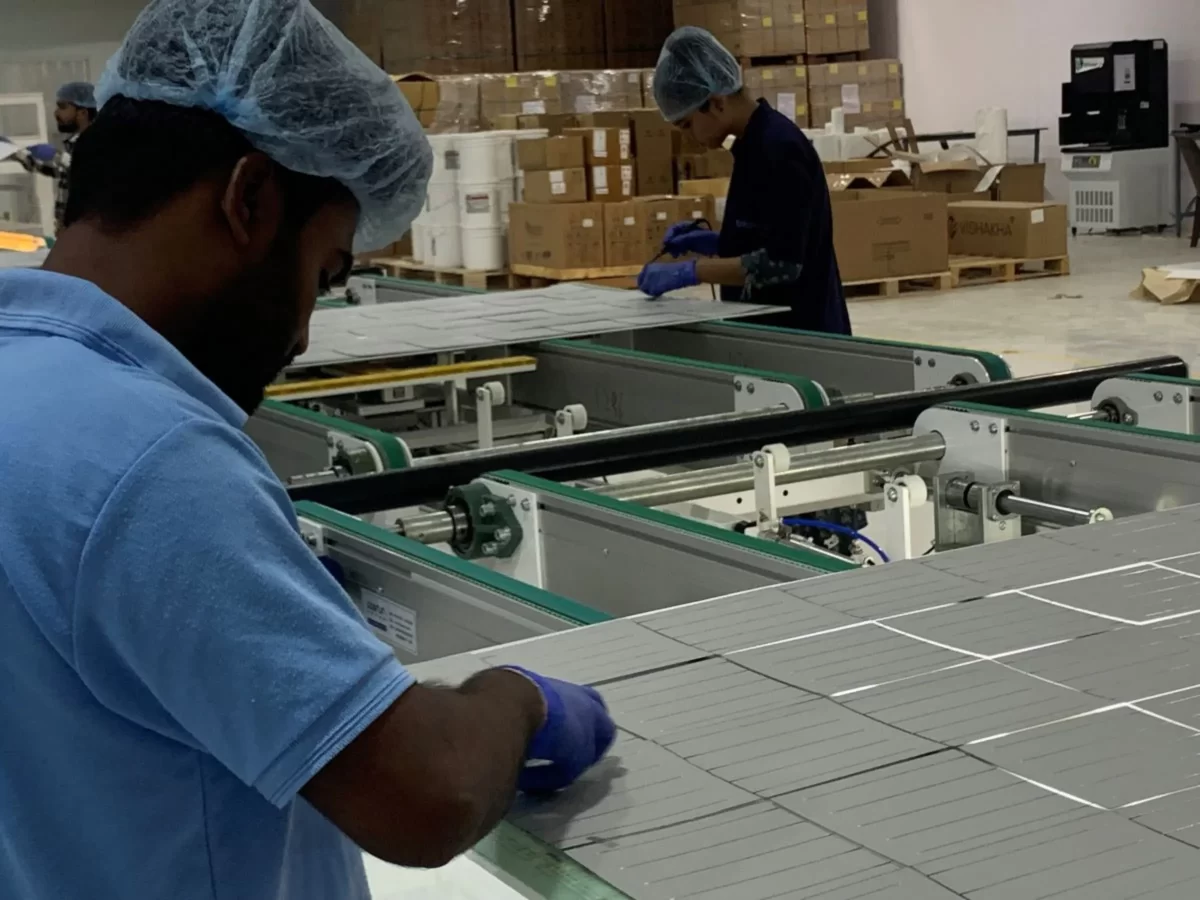
Early solar panel production relied heavily on manual labor. Workers hand-loaded silicon wafers into processing equipment, visually inspected cells for defects, manually applied solder connections, and assembled modules through labor-intensive processes. This approach worked for small-scale production but created bottlenecks as the industry scaled.

Manual processes introduced variability. Human workers, regardless of skill, produce inconsistent results. A solder connection made at hour one of a shift differs slightly from one made at hour seven. Visual inspections miss defects or flag false positives. Loading and unloading cycles create micro-damage to fragile silicon wafers. This variability translated directly into quality variations and yield losses.

Labor costs in manual manufacturing created geographical constraints. Factories gravitated toward low-wage regions to maintain cost competitiveness. However, even in low-wage environments, labor represented 15-25% of total manufacturing costs—a substantial margin that automation could compress.

The Automation Revolution

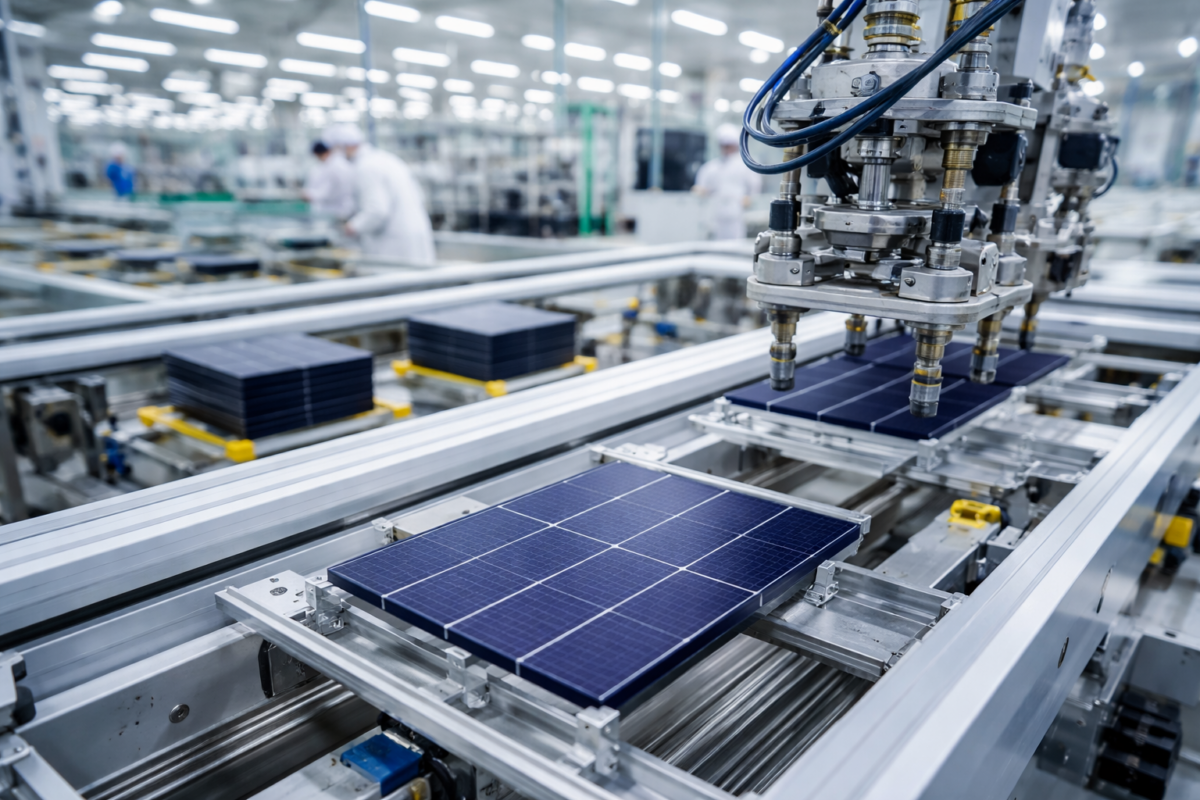
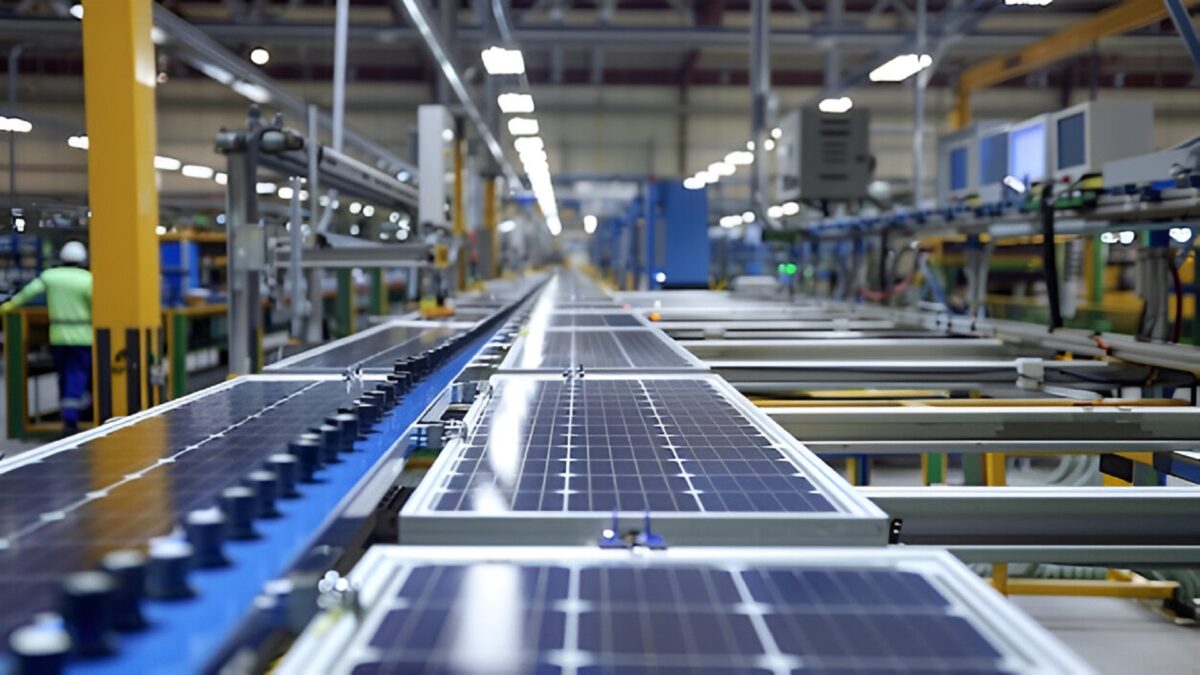
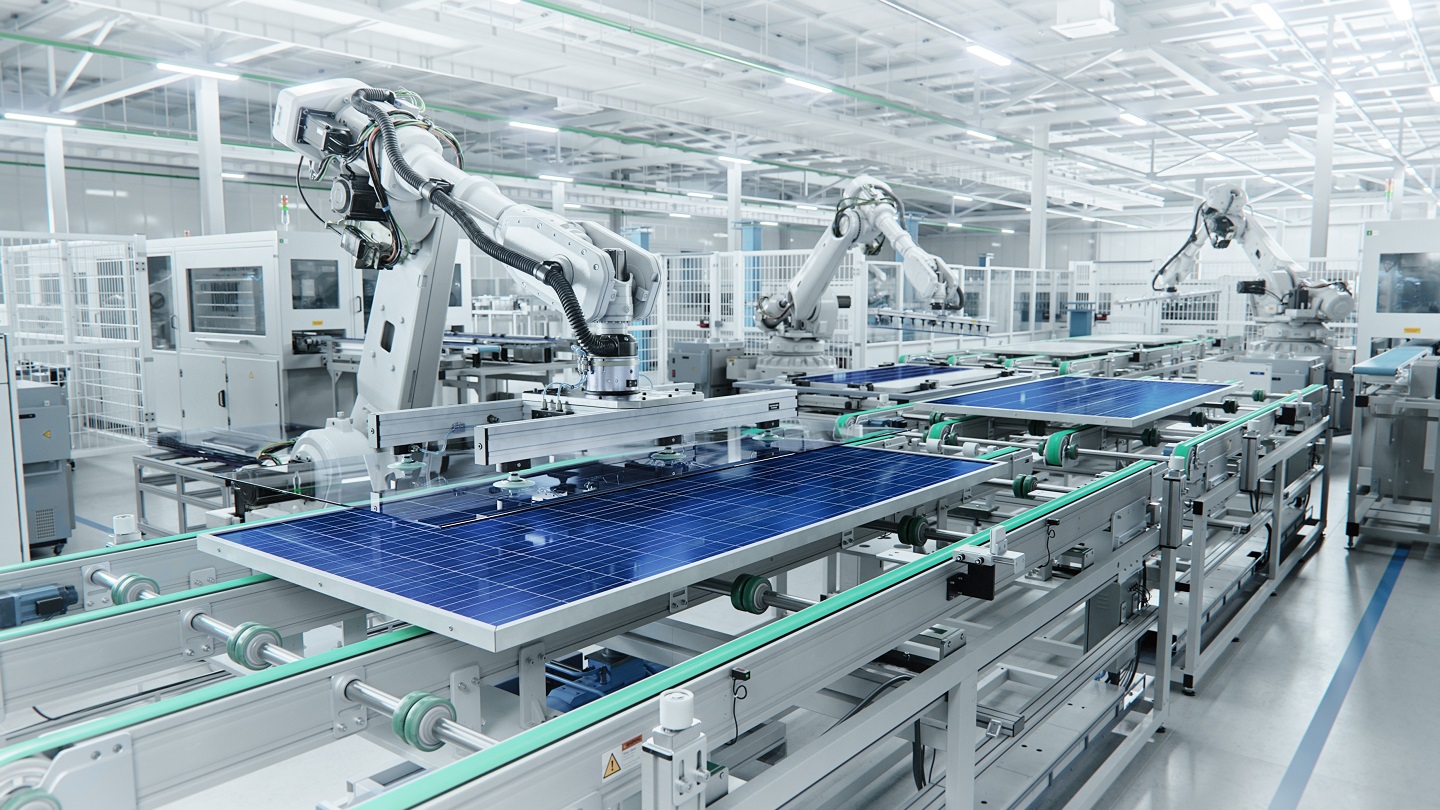
Modern solar manufacturing facilities barely resemble their predecessors. Wafers flow through production lines untouched by human hands, moving between processing stations on automated tracks. Machine vision systems inspect every cell for defects too subtle for human eyes. Robots apply precise soldering patterns, assemble modules, and conduct quality testing with microscopic accuracy.

This transformation happened gradually, then suddenly. Early automation focused on the most repetitive, easily mechanized tasks. As technology matured and equipment costs declined, automation expanded to increasingly sophisticated operations. Today’s cutting-edge facilities approach near-complete automation, with human oversight focused on process monitoring rather than direct production involvement.

The cost implications are profound. According to the International Renewable Energy Agency, manufacturing facilities with high automation levels achieve 20-35% lower production costs per watt compared to facilities with manual processes, even accounting for higher initial capital investment in automated equipment.

Yield Improvements Through Consistency

Automation’s most immediate impact appears in production yield—the percentage of inputs that become sellable outputs. In manual operations, breakage rates for thin silicon wafers often exceeded 5-8%. Cell processing yield losses added another 3-5%. These losses directly inflated per-unit costs, as failed products still consumed expensive raw materials and processing energy.

Automated handling systems reduce wafer breakage to under 1%. Robotic systems apply precisely calibrated force, eliminating the variation inherent in human handling. Vacuum grippers and sophisticated sensors detect micro-cracks before they propagate. This gentle, consistent handling dramatically reduces mechanical yield losses.

Process automation similarly improves chemical and thermal treatment yields. Automated systems maintain exact temperatures, precise chemical concentrations, and optimal treatment durations. This consistency minimizes defect rates from process variations that manual operations struggle to control. Leading solar cell manufacturers now achieve cell production yields exceeding 98%, with most losses occurring in raw silicon quality rather than manufacturing processes.

Speed and Throughput Advantages

Automation enables cycle times impossible for human operators. Modern automated cell production lines process thousands of wafers per hour, with each wafer undergoing dozens of treatment steps. This throughput, combined with 24/7 operation capability, dramatically increases facility output without proportionally increasing costs.

Consider solar module assembly as an example. Manual assembly might produce 15-20 modules per shift per assembly station. Automated lines produce 60-80 modules per hour continuously. This 10-15x throughput increase translates directly to lower fixed costs per unit, as building costs, utilities, and administrative overhead spread across far more production volume.

The speed advantage extends beyond simple throughput. Faster processing reduces work-in-progress inventory, freeing working capital and reducing risk of damage to partially finished goods. Shorter production cycles enable faster response to market demand shifts and reduce inventory carrying costs.

Quality Consistency and Performance Optimization

Automated manufacturing infrastructure produces remarkably consistent products. When every cell undergoes identical processing parameters, power output variation between cells decreases substantially. This consistency matters for module performance—tighter cell matching reduces resistive losses and improves overall module efficiency.

Machine vision inspection systems identify defects invisible to human inspectors. Micro-cracks, uneven doping, imperfect edge isolation, and cell thickness variations all get caught before defective cells enter production. This quality control extends to module assembly, where automated optical inspection verifies proper cell alignment, complete solder joints, and correct encapsulation.

The performance impact is measurable. Modules from highly automated facilities typically show tighter power tolerances—often +/- 3% compared to +/- 5% for less automated production. This consistency benefits system designers and installers, reducing the sorting and selection needed to create balanced arrays.

Labor Cost Reduction and Skilled Workforce Evolution

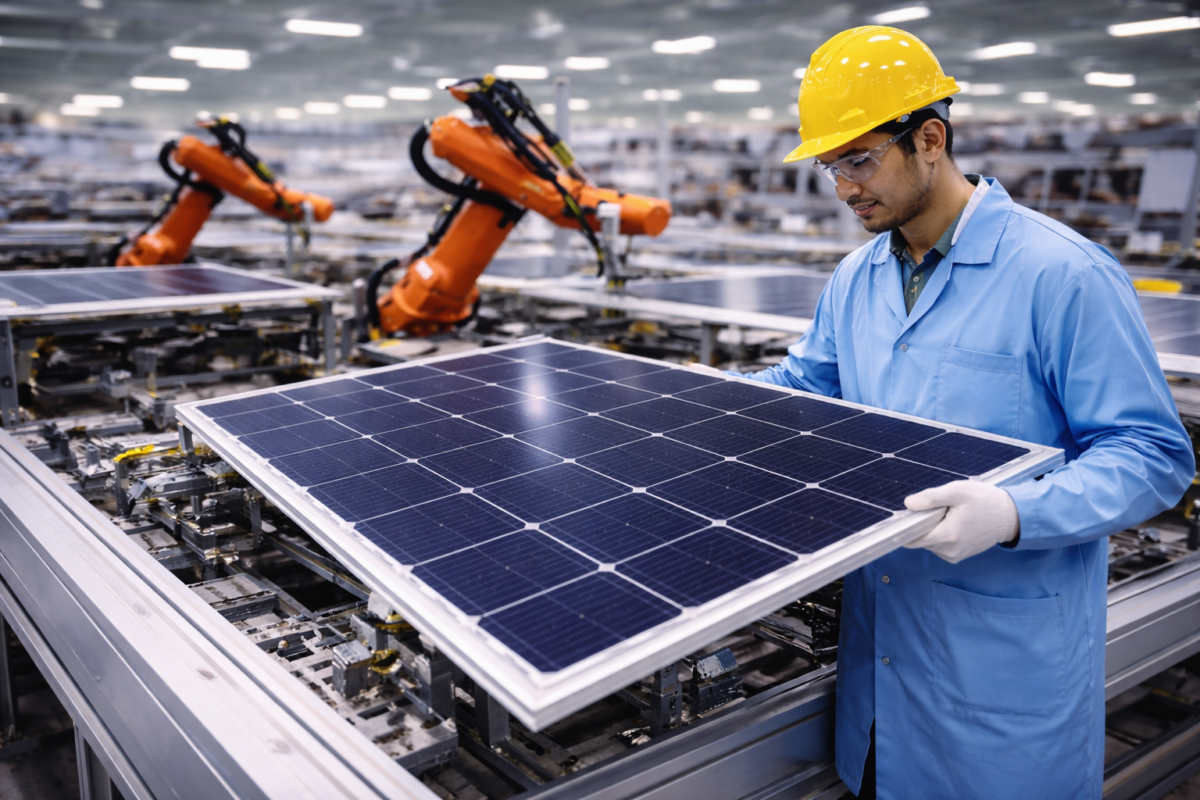
While automation reduces direct labor requirements, it doesn’t eliminate human involvement—it transforms it. Modern factories employ fewer workers per unit output but require higher-skilled personnel. Process engineers, automation specialists, and data analysts replace assembly line workers.

This workforce transformation affects regional competitiveness. Countries with high labor costs but strong engineering capabilities become more competitive as direct labor becomes less significant. India’s growing technical workforce positions the country well for this transition, potentially offsetting traditional labor cost advantages other manufacturing regions enjoyed.

Interestingly, automation also reduces the argument for relocating production based purely on labor costs. When direct labor represents only 5-7% of manufacturing costs in highly automated facilities, the case for producing near consumption markets strengthens. Transportation costs, supply chain reliability, and intellectual property protection become relatively more important.

Energy Efficiency and Environmental Benefits

Automated systems optimize energy consumption in ways manual operations cannot. Precise process control minimizes energy waste. Batch processing optimization ensures equipment operates at peak efficiency. Waste heat recovery and intelligent power management reduce utility costs while shrinking environmental footprints.

For energy-intensive processes like silicon purification and crystal growing, automation enables process optimization that reduces kilowatt-hours per kilogram of output. These efficiency improvements compound throughout the production chain, making each panel slightly less energy-intensive to produce—improving the carbon payback period of solar installations.

The Technology Investment Challenge

Automation’s benefits come with substantial upfront costs. A fully automated solar cell production line costs $50-100 million, while a manual line might cost $20-30 million. This capital intensity creates barriers to entry, favoring large manufacturers with access to patient capital and disadvantageting smaller players.

For developing manufacturing sectors, including India’s growing solar industry, automation investment represents both opportunity and challenge. Companies that invest in modern automated equipment gain long-term cost competitiveness and quality advantages. However, the capital requirements concentrate manufacturing among well-financed players rather than distributing it widely.

Government policies supporting manufacturing must recognize this capital intensity. Low-interest financing, accelerated depreciation, and infrastructure support help offset automation’s high initial costs, enabling domestic manufacturers to compete with established international players operating at massive scale.

Artificial Intelligence and the Next Automation Wave

The current automation generation focuses on mechanical consistency and process control. The next wave incorporates artificial intelligence for predictive maintenance, real-time quality optimization, and adaptive processing. Machine learning algorithms analyze sensor data to predict equipment failures before they occur, minimizing costly downtime.

AI-powered quality control goes beyond simple defect detection to identify subtle patterns indicating process drift before defect rates increase. This predictive capability reduces waste and maintains tighter quality control. Process parameter optimization using machine learning finds efficiency improvements human engineers might miss, continuously reducing energy consumption and improving yields.

These advanced automation technologies remain in early deployment but promise further cost reductions. Companies adopting AI-enhanced automation will likely establish cost leadership over competitors relying on conventional automation, creating new competitive dynamics in global solar manufacturing.

The Path Forward

Automation’s role in reducing solar costs continues expanding. As equipment becomes more sophisticated and less expensive, automation penetrates additional production steps. Human involvement shifts further toward engineering, data analysis, and strategic decision-making rather than direct manufacturing.

For the solar industry, this automation trajectory promises continued cost reductions even as silicon prices and other material costs stabilize. Manufacturing efficiency improvements offer pathways to lower costs without requiring breakthrough materials or revolutionary technologies.

The ultimate goal—solar electricity cheaper than any fossil fuel alternative everywhere—depends substantially on manufacturing automation continuing to improve productivity, quality, and efficiency. The factories producing today’s solar panels would astonish industry pioneers from just fifteen years ago. The facilities coming online in the next decade will push automation even further, making today’s cutting-edge seem primitive by comparison.

Grid Stability Challenges: Integrating Solar at Scale in India

Grid Stability Challenges: Integrating Solar at Scale in India

India’s solar capacity has exploded from just 2.6 GW in 2014 to over 80 GW today, with ambitious targets pushing toward 280 GW by 2030. This remarkable growth showcases falling solar costs and policy commitment to renewable energy. However, it also exposes fundamental challenges in integrating variable solar generation into electrical grids designed for predictable, dispatchable power sources. The technical and operational hurdles of managing high solar penetration levels are reshaping how India thinks about grid infrastructure and energy management.

The Variability Challenge

Unlike coal or gas plants that generate steady, controllable output, solar generation fluctuates with weather, time of day, and seasonal patterns. A cloud passing overhead can drop solar output by 60-80% within minutes. Morning generation ramps up rapidly as sunrise progresses, then drops to zero at sunset regardless of electricity demand.

This variability creates operational headaches for grid operators accustomed to forecasting demand and adjusting thermal plant output accordingly. With solar in the mix, operators must now forecast both demand and supply simultaneously—a far more complex task. Forecast errors translate directly into frequency deviations, voltage issues, and potential grid instability.

The famous “duck curve” phenomenon observed in California is appearing in solar-heavy Indian states. Midday solar generation suppresses electricity prices and displaces conventional generation. Then, as evening approaches and solar output plummets while demand peaks, the grid must rapidly ramp up conventional generation to fill the gap. This steep evening ramp creates stress on thermal plants not designed for such rapid response.

Frequency Regulation and Inertia Loss

Power grids maintain stability through frequency regulation—matching generation to consumption in real-time to keep frequency at 50 Hz in India. Conventional generators provide “inertia” through their massive spinning turbines, which naturally resist frequency changes and give operators time to respond to imbalances.

Solar installations, being electronic inverter-based systems, provide no such inertia. As solar displaces conventional generation, total grid inertia decreases, making frequency more volatile and rapid fluctuations more likely. During high solar generation periods when conventional plants back down, available inertia drops to concerning levels.

Modern solar inverters can provide synthetic inertia and fast frequency response through sophisticated control algorithms. However, regulatory frameworks and technical standards haven’t universally required these capabilities. Upgrading grid codes to mandate frequency support from solar installations represents a necessary but complex regulatory evolution.

Transmission Bottlenecks and Curtailment

Solar generation concentrates in regions with excellent solar resources—Rajasthan, Gujarat, Karnataka—while demand centers lie elsewhere. This geographical mismatch requires substantial transmission capacity to move power from generation to consumption areas.

India’s transmission infrastructure, built for centralized thermal and hydro plants, struggles with the distributed nature of renewable generation. Transmission lines from solar-rich regions face congestion during peak generation hours, forcing operators to curtail solar output despite abundant sunshine. This curtailment wastes clean energy and reduces project economics, creating frustration among solar developers.

Building transmission capacity takes years and requires massive investment. The country needs an estimated $200-250 billion in grid infrastructure investment by 2030 to handle planned renewable capacity. However, regulatory uncertainty around cost recovery and right-of-way challenges slow transmission development, creating an infrastructure gap that constrains solar integration.

Voltage Management in Distribution Networks

Distribution-level solar installations—rooftop systems and small ground-mounted projects—create voltage management challenges distinct from utility-scale integration. When solar generation on a distribution feeder exceeds local consumption, power flows backward toward the substation, raising voltage beyond acceptable limits.

These overvoltage conditions can damage consumer equipment and violate grid standards. Distribution system operators, particularly in urban areas with high rooftop solar penetration, must invest in voltage regulation equipment, active network management systems, and smart inverters to maintain stable voltages despite bidirectional power flows.

Rural networks face even greater challenges. Designed for one-way power delivery with minimal voltage regulation, these networks struggle when small solar projects inject power. Upgrading rural distribution infrastructure for solar integration requires massive investment that financially stressed distribution utilities struggle to finance.

The Energy Storage Imperative

Energy storage represents the most direct solution to solar variability. Battery systems can absorb excess midday solar generation and discharge during evening peak demand, smoothing the duck curve and reducing rapid ramping requirements on conventional plants.

However, storage economics remain challenging despite falling battery costs. Lithium-ion batteries have dropped 90% in cost over the past decade, but storage still adds $100-200 per kWh of capacity to project costs. For projects penciling out at thin margins, storage requirements can tip economics from viable to uneconomical.

India’s energy storage market is developing slowly compared to solar deployment. Tender sizes have increased and more projects now include storage requirements, but total deployed storage remains a fraction of what’s needed for high renewable penetration levels. According to the International Energy Agency, India needs approximately 40-50 GW of storage capacity by 2030 to support renewable targets, but deployment lags far behind this trajectory.

Flexible Conventional Generation

Making the grid more flexible requires conventional power plants capable of rapid ramping, frequent cycling, and low minimum generation levels. However, India’s coal fleet consists largely of aging plants designed for baseload operation at steady output. These plants suffer efficiency losses, increased maintenance, and higher costs when operated flexibly to balance solar variability.

Upgrading coal plants for flexibility requires substantial investment in modified boiler systems, advanced controls, and more robust turbines. Plant owners resist these investments, particularly when facing long-term displacement by renewable energy. This creates a paradox: the coal plants needed for backup become less economically viable as solar grows, yet without flexible backup, solar integration becomes problematic.

Gas plants offer superior flexibility but face fuel availability and pricing challenges in India. Natural gas infrastructure remains limited, and LNG imports carry costs that make gas generation expensive compared to coal. Building gas infrastructure for occasional backup duty presents questionable economics when utilization rates would be low.

Forecasting and Scheduling Improvements

Better forecasting reduces uncertainty and enables grid operators to plan more effectively for solar variability. Advanced weather modeling, satellite imagery, machine learning algorithms, and real-time sensor networks are improving solar forecasts from day-ahead to intraday time frames.

India’s grid operators are implementing sophisticated forecasting systems, with penalties for significant deviations incentivizing better predictions from solar generators. However, inherent forecast uncertainty remains—weather is fundamentally chaotic, and perfect solar prediction is impossible. Operational systems must accommodate this irreducible uncertainty through flexibility and redundancy.

Shorter scheduling intervals help too. Moving from hourly to 15-minute or even 5-minute scheduling allows closer matching of dispatch to actual solar output, reducing imbalances. This change requires sophisticated market systems and faster communication between operators and generators—infrastructure improvements underway but not yet fully deployed across India.

Regional Cooperation and Broader Market Integration

Geographical diversity reduces aggregate solar variability. When clouds reduce generation in one region, sunny conditions elsewhere partially offset the loss. This smoothing effect requires transmission capacity to move power between regions and market mechanisms enabling economic sharing.

India’s push toward a national electricity market with wider regional cooperation directly addresses this need. Cross-border transmission with neighboring countries offers additional diversity benefits. However, regulatory differences, political sensitivities, and infrastructure gaps limit current cooperation levels below their technical potential.

Demand Response and Smart Loads

Making demand more flexible provides an alternative to storage for balancing supply variability. Industrial loads that can shift consumption to midday solar generation hours—water pumping, cold storage, some manufacturing processes—help absorb excess solar output.

Agricultural pump loads represent a particularly promising opportunity in India. Currently, these pumps often run on subsidized or free electricity without time-of-use considerations. Converting agricultural feeders to solar-powered daytime operation aligns consumption with generation naturally. While politically sensitive due to subsidy implications, this alignment could substantially ease grid integration challenges.

Electric vehicle charging offers future flexibility potential as EV adoption grows. Smart charging systems could concentrate charging during midday solar generation excess, providing a large controllable load that helps balance the grid while reducing charging costs.

The Path Forward

Successfully integrating solar at scale requires coordinated progress across multiple dimensions. Transmission expansion must accelerate through streamlined approvals and clear cost recovery mechanisms. Storage deployment needs policy support and innovative financing to overcome current economic barriers. Conventional plants require flexibility upgrades or replacement with flexible resources.

Market design must evolve to properly value flexibility, frequency support, and ramping capability—attributes solar doesn’t naturally provide but that become increasingly valuable as solar grows. Regulatory frameworks need updating to require grid-supporting capabilities from new installations while incentivizing upgrades to existing projects.

Most fundamentally, the grid must transform from passive infrastructure carrying one-way power flows to an active, intelligent system managing complex bidirectional flows from millions of distributed sources. This transformation requires not just hardware but also data systems, control algorithms, and operational practices suited to a renewable-heavy future.

India’s grid stability challenges aren’t unique—every country pursuing high renewable penetration faces similar issues. However, India’s combination of rapid growth, infrastructure constraints, and institutional complexity makes the challenge particularly acute. Success requires sustained commitment to infrastructure investment, regulatory evolution, and operational innovation.

The alternative—limiting solar deployment to avoid grid challenges—contradicts both climate imperatives and economic opportunity. Solar energy is too affordable and abundant to constrain. The grid must adapt to accommodate it, however complex that adaptation proves.

Bifacial Solar Panels: Worth It for Indian Conditions?

Bifacial Solar Panels: Worth It for Indian Conditions?

Bifacial solar technology has emerged as one of the most discussed innovations in the photovoltaic industry, promising energy generation from both sides of the panel. While the concept sounds compelling, the critical question for Indian buyers remains: does the additional cost translate into meaningful returns under our specific climatic and installation conditions?

Understanding Bifacial Technology

Unlike conventional solar panels that only capture sunlight on their front surface, bifacial modules feature photovoltaic cells that can generate electricity from both sides. The rear side captures reflected light, also known as albedo, from surrounding surfaces. This dual-sided generation can theoretically increase total energy output by 5-30%, depending on various environmental and installation factors.

Modern bifacial panels typically use glass-glass construction rather than the traditional glass-backsheet design. This configuration allows light to pass through to the rear cells while providing enhanced durability and moisture resistance. The transparent rear surface is key to the technology’s functionality, though it does add weight and cost compared to standard modules.

The Albedo Factor in Indian Installations

The effectiveness of bifacial panels heavily depends on albedo—the reflectivity of the surface beneath and around the installation. White surfaces reflect up to 80-90% of light, while dark soil might reflect only 10-20%. This variation dramatically affects the economic case for bifacial technology.

In India’s diverse installation scenarios, albedo varies considerably. Rooftop installations on white membrane or light-colored tiles offer excellent reflectivity. Ground-mounted systems on sandy soil or with white gravel provide good albedo. However, installations over dark roofs, vegetation, or water feature poor reflectivity, substantially reducing the bifacial advantage.

Desert regions in Rajasthan and Gujarat, with light-colored sandy soil, present ideal conditions for bifacial installations. Agricultural land with light-colored soil also works well. Conversely, Kerala’s laterite soil or installations over green farmland in Punjab offer minimal rear-side gains, making the bifacial premium difficult to justify economically.

Installation Considerations and Costs

Maximizing bifacial panel performance requires specific installation practices that add complexity and cost. Panels must be mounted higher off the ground or roof surface—typically 1-2 meters—to allow reflected light to reach the rear surface effectively. This increased mounting height requires sturdier, more expensive structures to handle wind loads.

The optimal tilt angle for bifacial installations differs from monofacial arrays. While monofacial panels in India typically install at 10-15 degree tilts for rooftops and 20-25 degrees for ground mount, bifacial arrays often perform better at slightly steeper angles that balance front-side optimization with rear-side exposure.

These installation requirements translate to 15-25% higher balance-of-system costs compared to standard monofacial installations. When combined with the 10-20% premium for bifacial modules themselves, the total system cost increase can reach 12-20%, depending on project scale and specifications.

Real-World Performance in Indian Climate

India’s intense sunlight and high ambient temperatures create a unique performance environment. Bifacial panels, with their glass-glass construction, typically exhibit better temperature coefficients than standard glass-backsheet modules. They lose less efficiency as temperatures climb, which provides a hidden advantage in India’s hot climate.

Several utility-scale projects in India have reported bifacial gains of 8-15% in optimal conditions. The Bhadla Solar Park in Rajasthan, with its desert environment and high albedo, has shown bifacial installations outperforming monofacial arrays by approximately 12-14%. However, rooftop installations in urban areas with typical dark surfaces show gains closer to 4-7%, making the economic case less compelling.

Monsoon season performance presents an interesting dynamic. Wet surfaces generally have higher reflectivity than dry ones, potentially boosting bifacial gains during rainy periods. However, cloud cover reduces overall generation, so this benefit remains marginal in the annual energy equation.

Financial Analysis and ROI Considerations

For large utility-scale projects, the bifacial premium often pencils out favorably. A 10% boost in energy generation from a 12% increase in total system cost typically delivers positive returns, especially when factoring in the improved degradation rates and durability of glass-glass construction.

Commercial and industrial installations require more nuanced analysis. Projects with favorable albedo conditions, adequate space for elevated mounting, and long-term ownership horizons generally benefit from bifacial technology. However, smaller systems with budget constraints or suboptimal albedo might find better value in simply adding more conventional panels to achieve the same total capacity.

Residential rooftop installations rarely justify the bifacial premium in India. Space constraints limit the ability to mount panels at optimal heights, dark roof surfaces reduce albedo benefits, and the higher upfront costs impact already tight residential project economics. For most homeowners, investing the additional budget in system capacity using conventional high-efficiency panels delivers better financial returns.

Tracking Systems and Bifacial Synergy

Single-axis tracking systems paired with bifacial panels create a powerful combination for utility-scale installations. The tracking mechanism optimizes front-side generation throughout the day, while the elevated, rotating panels capture reflected light from multiple angles. According to the National Renewable Energy Laboratory, bifacial panels on single-axis trackers can achieve 25-35% more energy than fixed-tilt monofacial systems.

India’s utility-scale solar sector is increasingly adopting this combination, particularly in land-abundant regions with good solar resources. However, tracking systems add significant cost and complexity, making this option primarily viable for large projects where economies of scale offset the additional investment.

Maintenance and Durability Aspects

The glass-glass construction of bifacial panels offers inherent durability advantages. Without the polymer backsheet vulnerable to UV degradation and moisture ingress, these panels typically carry superior long-term warranties and lower degradation rates. This durability factor, independent of bifacial generation gains, adds value that often goes unaccounted in simple payback calculations.

Maintenance requirements differ slightly from conventional panels. Both sides accumulate dust and debris, though the rear side typically collects less soiling due to its angled position. In dust-heavy regions like North India, cleaning protocols must consider both surfaces to maintain optimal performance, though rear-side soiling impacts performance less severely than front-side accumulation.

Making the Decision

The bifacial question doesn’t have a universal answer for Indian conditions. Projects should evaluate several factors: albedo of installation surface, available mounting height, project scale, ownership timeline, and specific climate conditions. Large ground-mounted projects in high-albedo regions present the strongest case. Rooftop installations with favorable conditions offer moderate benefits. Small residential systems rarely justify the premium.

As bifacial technology matures and cost premiums narrow, the economic case will strengthen. Current trends suggest bifacial panels may become the default choice for utility-scale installations within a few years, while distributed generation applications will likely remain dominated by conventional panels unless albedo conditions strongly favor bifacial designs.

For now, Indian buyers should approach bifacial technology with careful analysis rather than blanket adoption or rejection. Companies like Websol Energy System and other manufacturers are continuously improving bifacial technologies, but the decision ultimately depends on site-specific conditions where advantages can overcome cost premiums.

Why Solar Manufacturing Strengthens India’s Energy Independence

Why Solar Manufacturing Strengthens India's Energy Independence

Energy independence isn’t just a nice slogan—it’s a strategic imperative for India’s future. And solar manufacturing sits at the heart of achieving it. The connection between making solar panels domestically and securing India’s energy future might not be immediately obvious, but it’s profound and worth understanding.

The Import Trap We’re Escaping

Let’s start with where we were. For decades, India imported over 90% of its crude oil and 80% of industrial coal. Every price spike in global energy markets sent shockwaves through the Indian economy. Foreign exchange reserves drained paying for energy imports. Trade deficits ballooned. Economic growth stayed hostage to decisions made in distant capitals and unpredictable global market dynamics.

Solar energy breaks this pattern, but only if we manufacture locally. Importing solar panels instead of oil just shifts the dependency—better for carbon emissions, but not fundamentally transformative for energy security. Building domestic manufacturing capacity? That changes everything.

India’s solar module manufacturing capacity has exploded from just 2.3 gigawatts in 2014 to over 100 gigawatts in 2024. This isn’t just growth—it’s a strategic repositioning that reduces vulnerability to supply chain disruptions and international price volatility.

Building the Complete Value Chain

Energy independence requires more than assembling panels from imported components. It demands controlling the entire value chain—from raw materials through finished products. This is where India’s solar manufacturing story gets really interesting.

The sector has progressed from importing cells and assembling them into modules, to manufacturing cells domestically, to gradually developing upstream capabilities in wafers and polysilicon. Each step up the value chain strengthens independence and captures more economic value domestically.

India’s recently inaugurated solar cell manufacturing facilities represent huge leaps forward. When you can produce high-efficiency solar cells domestically at scale, you’re no longer dependent on imports for the critical component. Supply security improves dramatically. Price volatility decreases. Strategic control increases.

The journey isn’t complete—India still imports significant amounts of polysilicon and specialized materials. But the direction is clear and momentum is building. Investments in upstream manufacturing are accelerating. The complete domestic value chain is emerging, piece by piece.

The Employment Multiplication Effect

Manufacturing creates jobs—lots of them. But solar manufacturing creates particularly valuable jobs because they’re knowledge-intensive, relatively high-paying, and geographically distributed. This isn’t just employment; it’s economic development.

A gigawatt-scale solar module facility employs hundreds directly and thousands indirectly through supply chains. These are skilled jobs requiring training and expertise—exactly the kind of employment that builds middle classes and drives economic growth. And unlike service sector jobs, manufacturing jobs have large multiplier effects throughout the economy.

The sector has already created hundreds of thousands of jobs, from infrastructure construction to factory operations to research and development. As capacity continues expanding toward 200+ gigawatts over the next few years, employment will multiply further.

These jobs can’t be outsourced. They’re physically located in India, contributing to local economies, paying taxes that fund public services, and creating consumer demand that ripples through retail, housing, and services sectors. Manufacturing’s economic impact extends far beyond the factory gates.

Technology Development and Innovation

When you manufacture at scale, you don’t just replicate existing technology—you improve it. Problems encountered in production drive innovation. Optimization opportunities emerge. Process improvements compound over time. Manufacturing capability enables technology development in ways that importing never can.

Indian solar manufacturers are increasingly innovating, not just copying. Improvements in cell efficiency, module durability, and manufacturing processes originate domestically. Patents are being filed. Proprietary technologies are being developed. The sector is moving up the innovation ladder.

This technology development strengthens energy independence in subtle but crucial ways. It reduces dependence on foreign technology licenses. It creates bargaining power in technology partnerships. It enables customization for Indian conditions. It positions India as a technology leader, not just a follower.

The feedback loop between manufacturing and research is particularly powerful. Lab innovations move to production quickly because manufacturers can iterate rapidly. Production challenges inform research priorities. The proximity of research institutions to manufacturing facilities accelerates the innovation cycle.

Price Discovery and Cost Control

Relying on imports means accepting whatever price international markets dictate. Manufacturing domestically gives you price discovery and negotiating power. Domestic competition drives costs down. Economies of scale compound savings. Strategic pricing becomes possible.

India’s solar module prices have fallen more steeply than global averages in recent years, partly because domestic competition intensified. Multiple manufacturers vying for market share drives efficiency improvements and cost reduction. Consumers benefit from lower prices that reflect actual production costs, not market manipulation.

This cost control extends beyond just module prices. Balance of system components manufactured locally—inverters, mounting structures, junction boxes—similarly benefit from domestic competition and optimization for local conditions. The entire system cost structure improves when manufacturing is local.

For project developers, domestic manufacturing provides cost predictability that imports can’t match. Exchange rate fluctuations don’t matter when you’re buying in rupees. Import duty changes don’t affect domestic suppliers. Long-term contracts with domestic manufacturers provide cost certainty that supports project financing.

Strategic Security Considerations

Energy independence has security dimensions beyond economics. Dependence on foreign energy supplies creates vulnerabilities that adversaries can exploit. Disruptions—whether intentional or accidental—can cause crises. Domestic energy generation backed by domestic manufacturing eliminates these vulnerabilities.

Solar power generation is inherently distributed and resilient. Thousands of installations across the country can’t all be disrupted simultaneously. But this resilience only translates to security if the supply chain is also domestic. If you depend on foreign suppliers for panels, that’s still a vulnerability.

Military and strategic installations have recognized this. Critical facilities increasingly rely on solar power using domestically manufactured components. The CSR initiatives around border area electrification similarly prioritize domestic supply chains. Energy security and national security intertwine.

Climate change itself represents a security threat—water scarcity, agricultural disruption, climate migration. Transitioning to renewable energy mitigates these threats, but only if the transition itself doesn’t create new dependencies. Domestic manufacturing ensures the clean energy transition strengthens rather than weakens national security.

Foreign Exchange and Trade Balance

India’s energy import bill has historically been massive—over $100 billion annually. Solar power generation displaces imported fossil fuels, directly improving trade balance. But to maximize this benefit, solar equipment must also be manufactured domestically.

Every solar installation using domestic panels represents both reduced energy imports and avoided equipment imports—a double benefit for foreign exchange. As installations scale to hundreds of gigawatts, the cumulative foreign exchange savings reach tens of billions of dollars annually.

These savings are real money that can be invested elsewhere—infrastructure, education, healthcare, research. Instead of transferring wealth to oil exporters or equipment manufacturers abroad, resources stay within the Indian economy, multiplying through domestic spending.

The improvement extends beyond trade balance to overall economic stability. Reduced exposure to global energy price volatility makes the economy more resilient. Foreign exchange reserves aren’t drained by energy import payments. Macroeconomic management becomes simpler when energy imports shrink.

Building Ecosystem Resilience

Manufacturing creates ecosystems—networks of suppliers, service providers, logistics companies, and ancillary industries. These ecosystems have their own momentum and resilience. They enable rapid scaling and adaptation to changing conditions.

India’s solar manufacturing ecosystem is maturing rapidly. Raw material suppliers are emerging. Specialized equipment manufacturers are setting up shop. Training institutions are graduating skilled workers. Research facilities are conducting cutting-edge development. The ecosystem extends beyond any single company or product.

This ecosystem resilience matters enormously for long-term energy independence. If one manufacturer struggles, others can scale up. If supply chain challenges emerge, ecosystem players collaborate on solutions. The diversity and depth of the ecosystem provides stability that concentrated dependence on foreign supplies can never match.

Ecosystem development also creates optionality. When domestic capabilities mature, you can choose: continue manufacturing domestically, export to international markets, or some combination. Dependence on imports offers no such choices—you take what’s available at whatever price.

The Atmanirbhar Bharat Vision

The Atmanirbhar Bharat—self-reliant India—vision isn’t about autarky or cutting off international trade. It’s about building capabilities that provide strategic autonomy and negotiating power. Solar manufacturing exemplifies this vision in action.

Policy measures like the Production Linked Incentive scheme and Approved List of Models and Manufacturers aren’t protectionist—they’re strategic. They build domestic capabilities that reduce vulnerabilities while creating globally competitive industries. The goal isn’t isolation but strength.

Solar manufacturing strengthens India’s position in international climate negotiations. When you manufacture solar technology, you’re not just consuming it—you’re enabling global decarbonization. This creates diplomatic leverage and positions India as a clean energy leader rather than just a large market.

The vision extends beyond solar to energy technologies broadly—batteries, green hydrogen, wind turbines. But solar manufacturing is furthest along this path, demonstrating what’s possible and providing a template for other technologies to follow.

Challenges Still to Address

Let’s be realistic about remaining obstacles. Upstream integration—polysilicon, specialized chemicals, advanced manufacturing equipment—still depends largely on imports. Technology licensing for cutting-edge cells involves foreign partnerships. Cost competitiveness without policy support remains challenging for some segments.

These challenges aren’t insurmountable. They’re simply the next stage of the journey. Investments in upstream manufacturing are accelerating. Technology partnerships are increasingly collaborative rather than dependent. Cost curves continue improving as scale increases.

Addressing these challenges requires sustained policy support, continued investment in research and development, and patience as capabilities mature. But the trajectory is unmistakable—each year, India’s solar manufacturing becomes more capable, more competitive, and more strategically valuable.

The Path to True Independence

Energy independence isn’t a destination you reach and then stop—it’s an ongoing process of building capabilities and reducing vulnerabilities. Solar manufacturing is central to this process because solar will dominate India’s energy mix in coming decades.

The manufacturing capacity already online—100+ gigawatts—supports India’s near-term deployment targets. But to hit 500 gigawatts of non-fossil fuel capacity by 2030, and power a growing economy beyond that, manufacturing must continue scaling. The capacity buildout happening now creates the foundation for long-term energy security.

Each new solar module rolling off production lines in India represents incremental progress toward true energy independence. It’s a panel that won’t be imported. It’s jobs that can’t be outsourced. It’s value captured domestically. It’s one small step in a journey of millions of steps toward strategic autonomy.

Why This Matters to Everyone

Energy independence might sound like an abstract policy goal, but it affects everyone’s daily life. Stable electricity prices. Reduced vulnerability to international crisis. Air quality improvements. Job creation in your community. Economic growth that provides opportunities.

When India manufactures its solar technology domestically, these benefits compound and multiply. It’s not just about panels—it’s about building an economy that’s resilient, sustainable, and capable of controlling its own destiny. Every Indian benefits when the country shifts from importing energy to generating it domestically using domestically manufactured equipment.

The solar manufacturing surge happening now isn’t just industrial policy—it’s nation-building. It’s creating the material foundation for energy independence that will define India’s trajectory for decades. The panels being made today will generate clean power long after we’ve forgotten the debates that led to building this manufacturing capacity.

Solar manufacturing strengthens India’s energy independence in ways both obvious and subtle. It reduces import dependence directly. It captures economic value domestically. It builds strategic capabilities. It creates resilient ecosystems. It enables technology development. It provides cost control. It improves trade balance. It enhances national security.

Most importantly, it makes the clean energy transition sustainable in every sense—economically, strategically, and politically. India isn’t just installing solar capacity—it’s building the manufacturing foundation to power its future with technology it controls, made by its workers, generating clean energy for its citizens. That’s energy independence. That’s the power of solar manufacturing. And that’s why it matters.

Understanding Cell Efficiency: What It Really Means for Power Output

Understanding Cell Efficiency: What It Really Means for Power Output

You’ve probably seen the numbers—17% efficient, 20% efficient, 22% efficient—splashed across solar panel specifications. But what do these percentages actually mean? More importantly, how do they translate to the electricity flowing to your home or business? Let’s break down cell efficiency in a way that actually makes sense and helps you make better decisions.

The Fundamental Definition

Solar cell efficiency is beautifully simple in concept: it’s the percentage of sunlight energy that gets converted into electrical energy. Shine 1000 watts of sunlight on a 20% efficient panel, and you get 200 watts of electricity out. The other 800 watts? Some reflects off the surface, some turns into heat, some gets lost to the fundamental physics of how solar cells work.

This might sound disappointing—only 20% conversion? But consider this: photosynthesis, the process plants use to convert sunlight to chemical energy, is typically around 3-6% efficient. Solar cells are remarkably good at extracting usable energy from sunlight compared to most natural processes.

That 20% figure is measured under standard test conditions—1000 watts per square meter of irradiance, 25 degrees Celsius cell temperature, and a specific light spectrum. These standardized conditions let us compare different cells fairly, though real-world conditions vary considerably.

Why Every Percentage Point Counts

Here’s where the math gets interesting. Imagine you have a 100 square meter installation space. At 17% efficiency, you capture 17 kilowatts peak power. At 22% efficiency, you’re looking at 22 kilowatts. That 5 percentage point difference translates to 29% more power from the same space.

Now think about what that means practically. If your installation generates 17,000 kilowatt-hours per year with standard cells, the same installation with high-efficiency cells might generate 22,000 kilowatt-hours. That’s 5,000 additional kilowatt-hours annually—real electricity that offsets grid consumption, reduces carbon emissions, and saves money.

Multiply this across thousands of installations and the efficiency differences compound into massive aggregate impact. Those percentage points aren’t academic minutiae—they’re the difference between meeting energy targets and falling short, between profitable and marginal projects, between energy independence and continued imports.

The Real-World Performance Gap

Standard test conditions don’t reflect reality, which complicates efficiency discussions. Real panels experience temperature variations, dust accumulation, shading, and non-optimal sun angles. How does efficiency translate to actual power output under these messy real-world conditions?

Temperature is particularly important and often misunderstood. Solar panels actually lose efficiency as they heat up. A panel rated at 20% efficiency at 25 degrees Celsius might drop to 17-18% efficiency when the panel temperature reaches 65 degrees—common on hot summer days in India.

This temperature effect is described by the temperature coefficient, typically around -0.4% to -0.5% per degree Celsius for standard panels. Better solar cells might have coefficients around -0.3%. This difference seems small but accumulates significantly over thousands of operating hours.

The Losses Beyond the Cell

Panel efficiency specifications describe the cell’s performance under ideal conditions. But the actual power reaching your home or feeding into the grid is lower due to various system losses.

Inverter efficiency typically ranges from 95-98%, meaning 2-5% of the DC power from panels is lost converting to AC. Wiring losses account for another 1-2%. Dust, dirt, and bird droppings on panels can reduce output by 2-5% without regular cleaning. Shading from trees, buildings, or even panel self-shading causes losses that vary by installation.

A realistic system might deliver 75-85% of the theoretical maximum power calculated from panel efficiency and available sunlight. This “system efficiency” or “performance ratio” accounts for all the real-world factors that degrade performance below theoretical potential.

Understanding these system-level losses helps set realistic expectations. A 400-watt panel doesn’t deliver 400 watts continuously—it delivers that power only under optimal conditions, which occur relatively rarely. Actual average output might be 50-100 watts, depending on location, season, and weather.

Efficiency Versus Area Versus Cost

There’s a crucial three-way relationship between efficiency, area, and cost that determines optimal system design. High-efficiency panels cost more per panel but require less space. Lower-efficiency panels are cheaper but need more space.

In space-constrained situations—rooftops, for example—high-efficiency panels often make sense even at premium prices. You simply can’t fit enough standard panels to meet energy needs. The extra cost per watt is justified by the impossibility of alternative configurations.

In space-abundant situations—large ground-mounted installations—the calculation changes. If land is cheap and available, lower-efficiency panels might provide better overall economics despite requiring more area. The balance of system costs scale with panel count, but land costs scale with area.

The sweet spot depends on specific project parameters. Urban rooftop installations almost always favor high-efficiency panels. Rural utility-scale projects might optimize around mid-efficiency panels with lowest overall system cost. Commercial installations fall somewhere between, depending on roof constraints and energy needs.

The Durability-Efficiency Connection

High-efficiency cells often correlate with better long-term durability, though this isn’t automatic. The advanced materials and manufacturing processes that enable high efficiency also tend to produce more robust cells that degrade more slowly.

Degradation rate—how much efficiency the panel loses each year—significantly impacts lifetime energy production. A panel degrading at 0.5% annually retains about 88% of original capacity after 25 years. One degrading at 0.3% annually retains 93%—a meaningful 5% difference in year-25 output.

Over a full 25-year operational life, lower degradation compounds into substantially more total energy production. A panel generating 400 watts initially might produce 350 watts after 25 years with high degradation, or 370 watts with low degradation. That 20-watt difference accumulates to thousands of additional kilowatt-hours over system lifetime.

Efficiency in Different Conditions

Solar panels don’t perform uniformly across all conditions. Efficiency varies with temperature, light intensity, and spectrum. Some cell technologies handle non-ideal conditions better than others.

Low-light performance matters for locations with frequent cloudy conditions. Some high-efficiency cell designs maintain better performance under diffuse light than standard cells. This characteristic can be particularly valuable in coastal areas or during monsoon season.

Spectral response—how cells respond to different wavelengths of light—varies between technologies. Some cells are optimized for direct sunlight but perform less well under cloudy skies when the spectrum shifts. Others maintain more consistent performance across spectrum variations.

For India’s diverse climate zones, these variations matter. A cell optimized for desert conditions in Rajasthan might not be optimal for coastal conditions in Kerala or high-altitude installations in Ladakh. Matching cell characteristics to local conditions maximizes real-world performance.

The Manufacturing Quality Factor

Efficiency ratings assume perfect manufacturing with no defects. Real-world manufacturing introduces variations. Quality control ensures these variations stay within acceptable ranges, but there are still performance spreads even within the same product line.

A panel rated at 400 watts might actually produce anywhere from 395 to 405 watts, depending on where it falls within manufacturing tolerances. Premium manufacturers maintain tighter tolerances—their “400 watt” panels more consistently deliver close to 400 watts. Budget manufacturers might have wider spreads.

This manufacturing quality also affects long-term reliability. High-quality solar modules maintain their efficiency better over time. Lower-quality ones might show accelerated degradation or higher failure rates. The nameplate efficiency is only part of the story—manufacturing quality determines how well that efficiency holds up.

Comparing Across Technologies

Different solar cell technologies achieve efficiency through different mechanisms. Monocrystalline silicon cells, currently dominant in the market, achieve 20-23% efficiency through high-purity crystalline structure. Polycrystalline cells reach 16-18% with less pure, more affordable silicon. Thin-film technologies like CIGS or CdTe achieve 12-15% with very different materials and manufacturing.

Emerging technologies like perovskites are achieving 20%+ efficiency in labs, with some perovskite-silicon tandems exceeding 30%. These technologies aren’t yet commercially available at scale but demonstrate that the efficiency ceiling keeps rising.

For practical decision-making today, monocrystalline technology offers the best balance of efficiency, cost, and reliability for most applications. But the rapid pace of innovation means what’s optimal today might shift within a few years as new technologies reach commercial maturity.

Modeling and Predictions

Predicting actual power output from efficiency specifications requires sophisticated modeling accounting for location-specific solar irradiance, temperature patterns, panel orientation, shading, and system losses.

Software tools like PVWatts, SAM, or Homer can simulate system performance based on historical weather data and system specifications. These models provide realistic estimates of annual energy production accounting for all the factors that standard efficiency ratings ignore.

A well-designed system in a good location might achieve 1,400-1,700 hours of full-power-equivalent operation annually. This “capacity factor” means a 1-kilowatt system produces 1,400-1,700 kilowatt-hours per year—far less than if it operated at full power all 8,760 hours. But this is realistic, accounting for night, weather, and losses.

The Investment Perspective

From an investment standpoint, efficiency determines the revenue-generating capacity of your solar asset. Higher efficiency means more kilowatt-hours produced, which means more electricity bill savings or more energy sold to the grid.

The payback calculation depends on efficiency-driven energy production, system cost, electricity prices, and available incentives. In many scenarios, spending 10% more for 15% higher efficiency provides excellent return on that incremental investment. The additional energy production over 25 years far exceeds the extra upfront cost.

But this calculation is site-specific and financially complex. Discount rates, escalation assumptions, and financing costs all factor in. What makes financial sense for one project might not for another, even with identical efficiency panels.

Practical Decision-Making

So how should you think about efficiency when making solar decisions? Start by understanding your constraints. If space is limited, efficiency becomes crucial—you need high-efficiency panels to meet energy needs within available area. If space is abundant, cost per watt of delivered energy matters more than nameplate efficiency.

Consider real-world conditions at your location. High temperatures argue for cells with better temperature coefficients. Frequent cloudy conditions might favor cells with good low-light performance. Local climate characteristics should influence technology choices beyond just efficiency numbers.

Look at total lifetime production, not just peak ratings. A panel with 22% efficiency degrading at 0.5% annually might produce less total energy over 25 years than a 21% panel degrading at 0.3%. The slower degradation compounds into better long-term value despite lower initial efficiency.

Factor in quality and reliability. Efficiency specifications from reputable manufacturers with strong quality control mean more than slightly higher numbers from unknown manufacturers with questionable track records. Real-world performance requires both good design and good manufacturing.

The Bigger Picture

Cell efficiency is one specification among many that determine solar system performance. It’s important but not all-important. System design, installation quality, maintenance, and operational practices all impact actual power delivery.

The most efficient panel poorly installed will underperform a standard panel professionally installed and maintained. Context matters enormously. Efficiency provides the potential for high performance, but realizing that potential requires attention to many other factors.

As the solar industry matures, efficiency continues improving while other aspects—durability, cost, manufacturability—also advance. The best systems optimize across all these dimensions rather than maximizing any single metric.

Understanding what efficiency really means—how it connects to power output under real conditions, how it trades off against other factors, how it impacts economic returns—enables better decision-making. The numbers on specification sheets are starting points for analysis, not endpoints. Real understanding comes from digging deeper into what those numbers mean in practice, in your specific situation, under your particular constraints. That’s when efficiency specifications transform from abstract percentages into practical tools for capturing sunlight and converting it into the electricity that powers our lives.

Towards a Greener Earth: Embracing Eco-Friendly Innovation

Towards a Greener Earth: Embracing Eco-Friendly Innovation

There’s something profound happening in the way we think about energy and innovation. For decades, we operated under the assumption that progress meant consumption—more factories meant more pollution, more growth meant more environmental degradation. But what if that’s changing? What if the most innovative companies today are the ones finding ways to grow while giving back to the planet?

Innovation That Actually Makes Sense

Let me paint you a picture. A factory in Gujarat hums with activity, manufacturing thousands of solar modules each day. But here’s the twist—the energy powering that factory? It comes from the sun. The product being made helps others do the same. It’s innovation eating its own tail in the best possible way.

This isn’t just feel-good environmentalism. It’s smart business. Indian companies have realized that incorporating sustainability from the ground up isn’t a constraint—it’s an opportunity. Between April 2024 and January 2025, solar power accounted for 86% of new renewable energy additions in India. That’s not happening because companies are being forced to go green; it’s happening because it makes economic and strategic sense.

The Real Cost of Progress

Here’s something most people don’t realize: traditional manufacturing carries hidden costs that rarely show up on balance sheets. The pollution. The health impacts. The environmental degradation that someone, somewhere, somehow has to pay for eventually. Eco-friendly innovation isn’t just about being responsible—it’s about accounting for these real costs upfront rather than pushing them onto future generations.

Take solar manufacturing as an example. Yes, producing solar panels requires energy and resources. But modern facilities are designed with circularity in mind. Materials are recycled. Waste is minimized. Water usage is optimized. The infrastructure supporting these operations is built to be efficient from day one, not as an afterthought.

Technology Meeting Responsibility

The innovations happening in clean energy aren’t small tweaks—they’re fundamental reimaginings of how we produce, distribute, and consume power. Consider the evolution of solar cell efficiency. Just a few years ago, converting 15% of sunlight to electricity seemed pretty good. Today, we’re regularly seeing efficiencies above 22%, with some advanced technologies pushing even higher.

But efficiency isn’t the only game in town. Durability matters. Reliability matters. The environmental impact of production matters. The best solar cells aren’t just efficient—they’re built to last decades while maintaining their performance. That longevity is innovation too, even if it doesn’t make for flashy headlines.

Beyond Just Solar Panels

When we talk about eco-friendly innovation, solar is the obvious star. But the transformation goes deeper. It’s in the inverters that manage power more intelligently. It’s in the mounting systems designed to minimize land disturbance. It’s in the monitoring systems that help optimize performance and catch issues before they become problems.

India’s manufacturing capabilities have matured dramatically. The sector has moved from simply assembling imported components to developing indigenous technology. This matters because it means innovation is happening locally, tailored to Indian conditions and needs. The intense sunlight and heat, the monsoon patterns, the dust—these aren’t obstacles to overcome but parameters to design around.

The Human Element

Here’s where eco-friendly innovation gets really interesting: it’s not just about technology, it’s about people. Companies embracing sustainability aren’t just installing solar panels on their roofs and calling it a day. They’re rethinking operations, training workers in new skills, and building communities around sustainable practices.

The CSR initiatives around clean energy often go unnoticed, but they’re creating real impact. Rural electrification projects. Skills training for local communities. Educational programs about energy conservation. These aren’t just nice-to-haves—they’re integral to making the green transition work for everyone, not just those who can afford it.

Making Green Accessible

One of the biggest breakthroughs in eco-friendly innovation isn’t technological—it’s economic. Solar used to be expensive. Prohibitively so for most people. But costs have plummeted by 80% over the past decade. This democratization of clean energy technology is perhaps the most important innovation of all.

When rooftop solar becomes accessible to middle-class homeowners, when small businesses can afford to install panels, when farmers can power irrigation pumps with sunshine—that’s when real transformation happens. It’s not top-down anymore; it’s grassroots.

The Business Case for Green

Let’s be brutally honest: companies don’t embrace eco-friendly innovation out of pure altruism. They do it because it makes business sense. Energy costs are predictable with solar. Brand value increases with sustainability credentials. Regulatory compliance becomes simpler. Employee morale improves when people feel they’re part of something meaningful.

But here’s the beautiful part: the reasons why companies go green don’t actually matter that much. What matters is the outcome—less pollution, lower carbon emissions, more sustainable practices. The alignment of profit and planet is what makes this transition sustainable in the long run.

The Innovation Pipeline

Look at what’s coming down the pipeline and you’ll see even more exciting developments. Perovskite solar cells promising higher efficiencies. Building-integrated photovoltaics that turn entire structures into power generators. Energy storage solutions that smooth out the intermittency of renewable sources. Each innovation builds on the last, creating momentum that’s hard to reverse.

Manufacturing processes themselves are getting cleaner. The energy used to produce solar panels is increasingly coming from renewable sources. The materials are being sourced more responsibly. Waste streams are being captured and recycled. It’s a comprehensive approach to sustainability, not just lip service.

Challenges That Push Innovation Forward

Let’s not pretend it’s all smooth sailing. Eco-friendly innovation faces real challenges. Scaling up production while maintaining sustainability standards. Balancing cost pressures with environmental responsibility. Managing supply chains responsibly. Training workforces in new technologies.

But these challenges are actually driving innovation. When you can’t take shortcuts, when you have to find solutions that work both economically and environmentally, that’s when real creativity emerges. That’s when you get breakthrough thinking rather than incremental improvements.

A Global Opportunity

India’s position in the global clean energy landscape is fascinating. The country has abundant solar resources, a massive and growing energy need, and increasingly sophisticated manufacturing capabilities. This combination creates opportunities not just for domestic growth but for becoming a global hub for sustainable energy technology.

The investments pouring into renewable energy—$18 billion in the first nine months of 2025 alone—reflect global confidence in India’s green trajectory. Companies worldwide are looking at India not just as a market but as a potential leader in eco-friendly innovation.

What This Means for the Future

The shift towards eco-friendly innovation isn’t a trend that will fade. It’s a fundamental restructuring of how we approach energy, manufacturing, and development. The companies and countries that embrace this shift aren’t being altruistic—they’re being strategic. They understand that the future belongs to those who can grow sustainably.

For India specifically, this represents an incredible opportunity. The country can leapfrog the dirty industrialization path that developed nations took and build a modern economy on clean foundations from the start. It’s not about sacrifice; it’s about smart choices that pay dividends for decades.

Making It Personal

If you’re wondering how this affects you, the answer is: profoundly. The clean energy transition is creating jobs—green jobs that didn’t exist a decade ago. It’s improving air quality in cities. It’s providing reliable power to areas that never had it. It’s giving individuals and businesses control over their energy costs and sources.

Every time you see solar panels on a rooftop, every time a business announces its shift to renewable energy, every time a new clean energy manufacturing facility opens—that’s progress you can see and touch. It’s not abstract; it’s real and immediate.

The path towards a greener earth isn’t paved with sacrifice and hardship. It’s paved with innovation, opportunity, and yes, profit. The smartest minds in business and technology aren’t trying to figure out how to minimize environmental damage while pursuing growth. They’re figuring out how to harness environmental responsibility as a driver of growth.

That’s the real revolution happening right now. Eco-friendly innovation isn’t the constraint that holds us back—it’s the catalyst that propels us forward. And in India, with its unique combination of needs, resources, and capabilities, that revolution is accelerating. The future isn’t just green—it’s bright, innovative, and surprisingly close at hand.

The Rise of Bifacial Technology: Why It Matters for India’s Solar Growth

The Rise of Bifacial Technology: Why It Matters for India's Solar Growth

Picture a solar panel that doesn’t just capture direct sunlight but also harvests light reflected from the ground beneath it. It sounds almost too simple, too obvious. Yet bifacial technology—solar panels that generate power from both sides—represents one of the most significant innovations in solar energy today. And for India’s explosive solar growth, it’s becoming increasingly crucial.

The Clever Simplicity of Two Sides

The concept behind bifacial panels is beautifully straightforward. Traditional solar panels have an opaque backing—they capture sunlight from the front and that’s it. Bifacial panels use transparent or reflective backings that allow them to capture light hitting the rear surface as well.

This rear-side light comes from reflection—sunlight bouncing off the ground, nearby structures, or even other panels. In the right conditions, this can boost total energy generation by 5-30% compared to conventional single-sided panels. That’s significant additional output without requiring more installation space or complexity.

The technology isn’t brand new—researchers have been working on bifacial designs for years. What’s changed is manufacturing maturity bringing costs down while improving performance. Bifacial panels have moved from exotic specialty products to increasingly mainstream options that make economic sense for many applications.

Why India’s Conditions Are Perfect

India’s geography and climate create particularly favorable conditions for bifacial technology. The country receives abundant solar irradiation—about 6.5 kilowatt-hours per square meter daily on average. Much of this high-intensity sunlight reflects off surfaces, creating substantial rear-side illumination.

Ground-mounted solar parks in Rajasthan, Gujarat, and other states often have light-colored soil or sand that reflects sunlight effectively. This albedo effect—the proportion of light reflected by a surface—can reach 20-40% for common ground surfaces, providing substantial rear-side illumination for bifacial panels.

Even in states with less ideal ground conditions, the intensity of Indian sunlight means significant reflected light reaches panel backsides. Commercial rooftops with reflective white coatings or industrial areas with concrete surfaces provide excellent rear-side reflection. The specific conditions in India amplify the advantages bifacial technology offers.

The Economics Keep Improving

Here’s where bifacial technology gets really interesting from a business perspective: the cost premium compared to conventional panels has narrowed dramatically while the performance gap has widened.

Just a few years ago, bifacial panels might cost 10-15% more than equivalent conventional panels. Today, that premium has shrunk to single-digit percentages in many cases—sometimes bifacial options are nearly price-competitive with standard panels. Meanwhile, the additional energy generation remains substantial.

Do the math: if bifacial panels cost 5% more but generate 15-20% more energy over their lifetime, the return on that additional investment is excellent. The payback period shrinks and total lifetime energy production increases significantly. For project developers focused on lowest levelized cost of energy, bifacial is increasingly the obvious choice.

Installation Matters More

With bifacial panels, installation details that were minor considerations with conventional panels become crucial optimization opportunities. The height of the panels above the ground, the ground surface characteristics, the tilt angle, and even the mounting structure design all impact rear-side gain.

Panels mounted higher capture more reflected light because there’s more surface area visible to the backside. Ground surfaces can be optimized—white stones or reflective materials under panels can significantly boost rear-side illumination. Even the choice of mounting structure impacts performance, as some designs shade the rear surface more than others.

This installation sophistication means infrastructure planning becomes more important with bifacial technology. But it also means there’s room for optimization and improvement as the industry gains experience. Early bifacial installations might achieve 10% rear-side gain; optimized installations with attention to these details can push toward 25-30%.

Durability Advantages

Beyond the performance benefits, bifacial panels often offer durability advantages. The glass-glass construction common in bifacial designs—glass on both front and back instead of glass on front and polymer backing—provides better protection against potential-induced degradation, a common failure mode in traditional panels.

This glass-glass construction also handles temperature cycling better, important in India’s climate with wide temperature variations between day and night, summer and winter. Better moisture resistance, improved structural strength, and resistance to environmental stressors mean bifacial panels often carry longer warranties—sometimes 30 years versus 25 for conventional panels.

The durability matters enormously over the multi-decade lifespan of solar installations. Fewer failures mean lower maintenance costs and more consistent energy production. When you’re planning projects that need to perform reliably for 25-30 years, these durability factors are as important as initial performance.

Perfect for India’s Scaling Solar Parks

India’s strategy of building large-scale solar parks plays directly to bifacial technology’s strengths. These parks typically involve thousands of panels installed on open ground—exactly where bifacial advantages are maximized.

A 500-megawatt solar park using bifacial technology instead of conventional panels could generate 75-100 additional megawatts of power—equivalent to a substantial additional plant—without requiring any more land or significantly more investment. That’s a massive boost in output density and power per acre.

For a country with India’s land use pressures and massive energy needs, this efficiency gain is extremely valuable. Getting more power from the same land means fewer hectares needed for solar parks, leaving more land available for agriculture, conservation, or other uses. It’s a direct answer to concerns about land availability constraining solar growth.

The Manufacturing Angle

Indian manufacturers have been quick to embrace bifacial technology. The manufacturing process for bifacial solar modules is more complex than conventional panels, but the complexity is manageable with modern equipment and training.

India’s solar manufacturing sector, which crossed 100 gigawatts of capacity in 2024, includes significant bifacial production capability. Major domestic manufacturers have invested in bifacial-capable production lines, recognizing that bifacial technology will likely become the mainstream choice within a few years.

This domestic manufacturing capacity is crucial for cost competitiveness and supply chain resilience. When bifacial panels can be sourced domestically rather than imported, installation costs drop while ensuring reliable supply. It also means Indian manufacturers capture value from the technology shift rather than ceding it to foreign suppliers.

Different Applications, Different Benefits

Bifacial technology doesn’t provide uniform benefits across all applications—the advantages vary based on installation conditions.

Utility-scale ground-mounted installations see the largest benefits. The optimal mounting height, favorable ground conditions, and large scale all contribute to maximizing rear-side gain. This is where bifacial technology really shines.

Commercial rooftops can also benefit significantly, especially those with reflective roof coatings. The limited available space on rooftops makes the additional energy generation particularly valuable. Industrial facilities with large rooftop areas are natural candidates for bifacial installations.

Residential rooftops offer more modest benefits. Close-mounting to roofs limits rear-side illumination. However, even modest gain percentages are worth having, especially as the cost premium shrinks. As bifacial becomes cost-competitive with conventional panels, there’s little reason not to choose bifacial even in residential applications.

Technical Considerations

Bifacial technology does introduce some technical considerations that installers and operators need to understand. Conventional solar design and modeling tools don’t always accurately account for rear-side generation. Specialized simulation tools are needed to properly estimate bifacial system performance.

Electrical design also needs attention. The additional rear-side current means string configurations may need adjusting compared to conventional panels. Inverter sizing must account for the higher output potential. Monitoring systems should ideally track rear-side contribution separately to verify system performance.

These technical requirements aren’t barriers—they’re simply aspects that the industry is learning to handle. As bifacial installations become more common, installer expertise grows and the technical challenges become routine rather than novel.

The Performance Data Is In

Early bifacial installations in India are now providing real-world performance data, and the results validate the technology’s promise. Properly installed bifacial systems are indeed generating 15-25% more energy than equivalent conventional systems would produce.

Some installations are exceeding even optimistic projections. A utility-scale bifacial installation in Rajasthan, for instance, is consistently generating over 20% additional energy compared to baseline calculations for conventional panels. This real-world validation is driving rapid adoption.

As more data accumulates, installation practices improve and performance becomes more predictable. The industry is learning which site conditions maximize bifacial advantages and how to optimize installations accordingly. This knowledge is being incorporated into system design and deployment, pushing performance higher.

Market Transformation Underway

The solar panel market is experiencing a clear shift toward bifacial technology. What was specialty technology in 2020 has become mainstream by 2025. Major tenders and auctions increasingly specify bifacial panels. Developers default to bifacial designs unless site conditions specifically argue against them.

This market transformation is accelerating. As manufacturing scales up, costs fall further. As installation expertise grows, performance improves. As more projects demonstrate bifacial advantages, adoption increases. It’s a reinforcing cycle that’s gaining momentum.

Within a few years, conventional single-sided panels may become the specialty product, chosen only in specific applications where bifacial advantages don’t apply. The default assumption will flip—bifacial becomes standard, conventional becomes the alternative.

Integration with Other Technologies

Bifacial technology combines well with other solar innovations. Trackers that follow the sun throughout the day provide even larger benefits with bifacial panels than conventional ones. The rear-side illumination changes as panel orientation changes, and trackers can optimize for both front and rear capture.

Energy storage paired with bifacial generation provides particularly strong economics. The higher energy production from bifacial panels means more excess energy to store during midday hours for evening use. The storage system gets fed more energy to work with, improving overall system economics.

Advanced cell technologies like PERC and TOPCon work well in bifacial configurations. High-efficiency bifacial cells capture even more energy from both sides. The innovations stack, creating systems with substantially better performance than standard panels from just a few years ago.

The Path Forward

For India’s solar sector, bifacial technology represents more than an incremental improvement—it’s a meaningful step function in what’s possible. The combination of India’s favorable conditions, rapid manufacturing scale-up, and proven performance benefits creates a strong case for accelerated bifacial adoption.

The technology helps address some of solar’s key constraints in the Indian context. Land availability? Bifacial panels generate more power from the same land. Cost competitiveness? The LCOE advantages are clear. Performance reliability? The durability benefits are real.

As India pushes toward 500 gigawatts of non-fossil fuel capacity by 2030, bifacial technology will likely account for an increasing share of new installations. The advantages are too substantial to ignore, the economics too compelling to overlook.

Making It Practical

For developers, investors, and anyone involved in solar projects, bifacial technology deserves serious consideration. The days of dismissing it as too expensive or too complicated are over. The cost premium has shrunk while the performance premium remains robust.

The key is proper system design accounting for site-specific conditions. Understand the ground reflectance. Optimize mounting height. Use appropriate modeling tools. Work with experienced installers who understand bifacial requirements. Get these factors right and the performance benefits are substantial and reliable.

The rise of bifacial technology in India’s solar sector isn’t hype—it’s a fundamental shift in how solar installations are designed and deployed. It matters because it directly addresses the challenge of extracting maximum value from limited resources—land, space, and investment capital. In a country racing to deploy solar at unprecedented scale, every efficiency gain matters. Bifacial technology delivers real, measurable, consistent improvements that add up to transformative impact across the sector. That’s why it matters. That’s why it’s rising. And that’s why it will likely define the next phase of India’s solar growth.

The Future of Solar in India: Trends Shaping the Next Decade

The Future of Solar in India: Trends Shaping the Next Decade

Stand on any rooftop in an Indian city today, and you’ll notice something different from just five years ago. Solar panels, once rare sightings, are becoming commonplace. But what you’re seeing isn’t just a trend—it’s the beginning of a transformation that will define the next decade of Indian energy.

The Numbers Are Just the Beginning

Let’s start with what we know. India added over 30 gigawatts of solar capacity in 2024—more than doubling from the 12.5 gigawatts added in 2023. That’s not incremental growth; that’s exponential acceleration. Between January and September 2025 alone, another 29.5 gigawatts came online. At this pace, India isn’t just meeting targets—it’s blowing past them.

But numbers only tell part of the story. What’s really interesting is where this growth is coming from and where it’s heading. The solar landscape of 2035 will look radically different from today’s, shaped by technologies we’re just beginning to deploy and business models that are still evolving.

Decentralization Is the Name of the Game

Forget massive solar parks in deserts (though those aren’t going away). The future is distributed, localized, and incredibly diverse. Rooftop solar grew 53% in 2024, and that’s just the start. Every office building, factory, school, and home with available roof space is a potential power station.

This decentralization fundamentally changes the game. Instead of power flowing from large, centralized plants through transmission lines to consumers, we’re moving toward a model where power is generated where it’s consumed. The implications are enormous—reduced transmission losses, greater resilience, and individual energy independence.

The solar modules of the future will be designed with this distributed model in mind. Lighter, more efficient, easier to install, and increasingly integrated into building materials themselves. Building-integrated photovoltaics aren’t science fiction—they’re happening now and will be mainstream within the decade.

Technology Evolution Is Accelerating

Here’s where things get really exciting. Solar cell efficiency has been steadily climbing, and we’re approaching theoretical limits for traditional silicon technology. But that’s not the end of the story—it’s the beginning of a new chapter.

Advanced cell technologies are moving from labs to production lines. Multi-junction cells, perovskite tandem structures, and other innovations are pushing efficiencies higher. More importantly, they’re doing so while driving down costs. The sweet spot isn’t the highest efficiency at any cost—it’s the best balance of efficiency, durability, and affordability.

What does this mean practically? The same roof space that generates X amount of power today will generate significantly more in five years. The payback period for solar installations will shrink. The financial case for going solar will become overwhelming even in scenarios where it’s marginal today.

Manufacturing Maturity Changes Everything

India crossed 100 gigawatts of solar module manufacturing capacity in 2024, up from just 2.3 gigawatts in 2014. But capacity is only part of the equation. What’s more significant is the maturity of that manufacturing base—the move from assembly to genuine domestic production of components, including cells.

This manufacturing depth matters tremendously for the next decade. It means shorter supply chains, better quality control, and rapid iteration on design improvements. When infrastructure for production is local, innovation happens faster because the feedback loop between manufacturing and deployment tightens.

We’re also seeing vertical integration—companies controlling everything from raw materials to finished panels. This integration will drive down costs further while improving quality and reliability. The result: Indian solar products that compete globally not just on price but on performance.

Bifacial Technology Becomes Standard

Right now, bifacial panels—those that capture sunlight on both sides—are considered premium technology. Within five years, they’ll be the baseline. The economics simply make too much sense to ignore.

Bifacial panels can generate 5-30% more electricity than traditional panels, depending on installation conditions. As manufacturing scales and costs come down, the price differential becomes negligible. Why would anyone choose single-sided panels when bifacial offers significantly more output for essentially the same cost?

This shift will ripple through the entire value chain. Installation practices will evolve to maximize rear-side gain. Ground surfaces will be optimized for reflection. Monitoring systems will track both-sides performance. The entire ecosystem adapts and improves collectively.

Storage Solves the Intermittency Puzzle

Solar’s Achilles heel has always been intermittency—the sun doesn’t shine at night, and clouds interfere during the day. But battery storage technology is advancing rapidly while costs are plummeting. The next decade will see solar-plus-storage become the standard configuration rather than a special case.

This changes everything. With storage, solar isn’t just cheap power when the sun shines—it’s reliable, dispatchable power available on demand. The objections that held back solar adoption in certain sectors dissolve when you can guarantee 24/7 availability.

Commercial and industrial installations will lead this trend. The ability to store midday solar power for evening peak usage makes the economics incredibly attractive. As costs continue falling, even residential installations will routinely include battery backup.

AI and IoT Transform Operations

The solar installations of the next decade won’t just generate power—they’ll optimize themselves continuously. Artificial intelligence and Internet of Things sensors will monitor performance in real-time, predict maintenance needs before failures occur, and adjust operations to maximize output.

This isn’t futuristic speculation; it’s already happening in advanced installations. The difference is that what’s cutting-edge today will be standard within five years. Every solar cell will be part of an intelligent, connected system that learns and improves over time.

Predictive maintenance alone will significantly improve system economics. Instead of scheduled maintenance or reactive repairs, systems will alert operators precisely when and where intervention is needed. Downtime drops. Performance improves. Total cost of ownership falls.

New Business Models Emerge

The way people access solar is changing as dramatically as the technology itself. Traditional models—buy your system outright or take a loan—are being supplemented by subscription services, power purchase agreements, and community solar programs.

These new models remove barriers to entry. Don’t have capital for upfront costs? Subscribe to solar power. Don’t have a suitable roof? Join a community solar project. The flexibility makes solar accessible to populations that couldn’t participate before.

For businesses, particularly small and medium enterprises, these models are game-changing. Instead of massive capital expenditure, solar becomes an operating expense with immediate savings. The financial hurdle disappears, and adoption accelerates.

Policy Evolution Supports Growth

Government policy has been crucial in getting India to this point, and it will remain important in the next decade. But the nature of that policy support is evolving. Early subsidies are giving way to smarter interventions—streamlined permitting, grid integration standards, net metering regulations, and manufacturing incentives.

The Production Linked Incentive scheme for high-efficiency solar modules is driving billions in investment. The Approved List of Models and Manufacturers ensures quality standards. These aren’t temporary crutches—they’re strategic interventions building long-term competitiveness.

As the sector matures, policy will focus less on boosting solar deployment (which is happening anyway) and more on managing the transition—grid upgrades, workforce development, and just transition for communities dependent on fossil fuels.

Export Opportunities Expand

India’s solar story isn’t just domestic. The country is emerging as a significant exporter, with exports rising 20% year-over-year to $668 million in the first half of FY26. This trend will accelerate as Indian manufacturers establish quality credentials and cost competitiveness globally.

The “China Plus One” strategy that many countries are pursuing plays directly to India’s strengths. Countries looking to diversify their solar supply chains see India as an attractive alternative. For Indian manufacturers, this represents enormous growth potential beyond the already massive domestic market.

Challenges That Need Addressing

Let’s be realistic about obstacles. Grid integration at scale isn’t trivial—the electricity infrastructure needs significant upgrades to handle distributed generation. Land availability for utility-scale projects faces constraints in densely populated regions. Financing models need continued refinement.

Skilled workforce development is critical. The solar sector is creating hundreds of thousands of jobs, but those jobs require specific skills. Training programs need to scale up to match industry growth. Quality control across the expanding manufacturing base demands attention.

These challenges aren’t insurmountable—they’re merely the next set of problems to solve. And solving them will create opportunities for innovation and improvement.

The Human Impact

Behind all the technology and statistics are human stories. Families seeing their electricity bills drop to near-zero. Farmers powering irrigation pumps with sunshine instead of expensive diesel. Communities getting reliable power for the first time. Small businesses cutting operational costs and improving competitiveness.

The next decade of solar in India isn’t just about gigawatts and terawatt-hours. It’s about millions of people gaining access to clean, reliable, affordable energy. It’s about children studying under solar lights. It’s about businesses growing without being constrained by energy costs or availability.

What This Means Looking Forward

The trajectory is clear. Solar will dominate India’s energy additions in the next decade. Costs will continue falling. Technology will improve. Access will broaden. The question isn’t whether solar will be central to India’s energy future—that’s already decided. The question is how quickly and how comprehensively the transition happens.

Current trends suggest it’ll be faster and more comprehensive than even optimistic projections from just a few years ago. Solar module manufacturing capacity that seemed ambitious in 2020 was exceeded by 2024. Installation targets that seemed stretch goals are being treated as baselines.

The next decade will see solar move from significant to dominant. From alternative to mainstream. From something special to something expected. And through all of this, innovation won’t slow—it’ll accelerate, driven by scale, competition, and the virtuous cycle of investment and improvement.

The future of solar in India isn’t a distant promise. It’s unfolding right now, shaped by decisions being made today, technologies being deployed this year, and policies being implemented this quarter. The trends are converging, the momentum is building, and the destination is clear: a solar-powered future that seemed impossible just a decade ago but now appears inevitable. The only question left is how quickly we get there.

Solar Energy Myths vs Reality: What Consumers Should Know

Solar Energy Myths vs Reality: What Consumers Should Know

Let’s be honest—solar energy has an image problem. Not because the technology doesn’t work, but because myths and misconceptions have spread faster than facts. I’ve heard everything from “solar panels cause cancer” to “they don’t work when it’s cloudy.” Time to set the record straight with what consumers actually need to know.

Myth 1: Solar Is Too Expensive

This is probably the most persistent myth, and it’s fascinating because it’s exactly backwards from current reality. Solar costs have plummeted over 80% in the last decade. In India, solar tariffs are now 40-50% cheaper than conventional grid electricity in many areas.

Here’s the reality: a typical household installation might cost ₹60,000-80,000 per kilowatt installed. With subsidies and incentives, this drops further. Your electricity savings begin immediately. Most consumers see payback within 5-7 years, after which you’re essentially getting free power for the next 18-20 years.

Think about it this way—you’re paying for electricity anyway. With solar, you’re paying upfront for 25 years of power at today’s rates, locking in costs and avoiding future price increases. When grid electricity costs inevitably rise, your solar system keeps generating at the same zero marginal cost.

Financing options have exploded too. Loans, leases, power purchase agreements—multiple paths let you go solar with little or no upfront capital. Some models let you save money from day one, where your loan payment is less than your previous electricity bill.

Myth 2: Panels Don’t Work in Hot Climates

This one’s ironic because people see solar thriving in India and still believe heat ruins panels. Yes, solar panels do lose a bit of efficiency as they heat up—that’s physics. But they still work, and they work well.

Modern solar cells are designed for hot conditions. They’re tested at 65+ degrees Celsius. Indian manufacturers specifically engineer products for Indian climate conditions—the intense sunlight, high temperatures, humidity, dust, and monsoons.

Here’s the reality check: solar panels in Rajasthan, where summer temperatures exceed 45 degrees Celsius, generate massive amounts of electricity. The slight efficiency loss from heat is overwhelmingly compensated by the abundant sunshine. Cities with moderate temperatures like Bangalore aren’t necessarily better for solar than hotter locations—what matters is total solar irradiation.

Temperature coefficient is a specification to compare, not a barrier to overcome. Better panels lose less efficiency with heat, but even standard panels perform excellently in hot conditions. If heat stopped solar panels from working, India wouldn’t have 127 gigawatts of installed capacity and growing rapidly.

Myth 3: Solar Doesn’t Work During Monsoons or Cloudy Weather

Rain and clouds reduce output—that’s true. But they don’t eliminate it. Solar panels generate electricity from daylight, not just direct sunshine. Diffuse light on cloudy days still produces power, typically 10-25% of clear-day output depending on cloud density.

Germany, which has far less sunshine than India, is a global solar leader. How? Because solar works year-round, in all weather conditions, just at varying output levels. India receives about 300 sunny days annually—plenty to make solar economically viable despite monsoon seasons.

There’s also a hidden benefit to rain: it cleans your panels. Dust accumulation is a bigger performance killer in Indian conditions than occasional cloudy weather. Rain washes away dust, restoring panels to near-peak performance without manual cleaning.

The economics account for monsoon-season reduced output. When calculating system payback and returns, we factor in annual energy production including lower monsoon generation. Solar still provides excellent returns because the high-production months more than compensate.

Myth 4: Panels Require Constant Maintenance

This myth probably stems from experience with other technologies. Engines need oil changes. Batteries need replacement. Solar panels? They sit there silently generating power with almost zero maintenance.

The reality: solar installations require minimal maintenance—primarily periodic cleaning to remove dust. In areas with regular rainfall, even this is often unnecessary. No moving parts mean nothing to break or wear out. Inverters might need replacement once during system lifetime, but panels themselves are essentially maintenance-free.

Professional cleaning two to four times annually is typically sufficient. Some commercial installations even forgo this, accepting slightly reduced performance rather than spending on cleaning. The economics still work because the technology is so robust.

Modern monitoring systems alert you to any issues immediately. Most problems are caught before they significantly impact production. The reliability of solar technology has improved dramatically—failures are rare, and warranties reflect manufacturer confidence in longevity.

Myth 5: Solar Doesn’t Work Without Net Metering

Net metering is helpful but not required for solar to make economic sense. Net metering lets you export excess power to the grid, receiving credits against future consumption. It’s nice, but not necessary.

Many installations don’t have net metering and still provide excellent returns. The power you generate and consume directly—offsetting grid electricity—is where most value comes from. This self-consumption is valuable regardless of whether you can export excess.

Battery storage increasingly provides an alternative to net metering. Generate excess power during the day? Store it for evening use. This gives you energy independence without depending on grid interaction policies. As battery costs fall, self-consumption with storage becomes more economically attractive.

Off-grid systems work perfectly fine without any grid connection at all. Rural areas and remote facilities have been using solar without grid interaction for years. Net metering is one model, but far from the only viable approach to solar economics.

Myth 6: You Need Huge Roof Space

This misconception stops many urban homeowners from even investigating solar. Reality: a typical household needs surprisingly little space for meaningful solar installations.

A 1-kilowatt system—enough to significantly reduce bills for a modest household—requires only about 100 square feet. That’s roughly 3×3 meters. Most homes have more unused roof space than they realize. Even apartments with shared roofs can participate in community solar arrangements.

High-efficiency solar modules have dramatically reduced space requirements. You get more power from less area. A roof that couldn’t accommodate sufficient standard panels five years ago might fit high-efficiency panels producing enough power today.

Elevated mounting structures can go above existing roof elements, creating additional installation area. Solar canopies over parking areas or terraces serve dual purposes—power generation and shade. Creative installation approaches multiply the effective available space.

Myth 7: Solar Panels Don’t Last Long

This myth probably persists because solar is relatively new in mainstream consciousness. Reality: solar panels are among the most durable consumer products you’ll ever buy.

Standard warranties are 25 years on performance, 10-12 years on manufacturing defects. But panels don’t suddenly stop working after 25 years—they continue operating, just at slightly reduced output. Many panels from the 1980s still function today, four decades later.

Degradation is gradual and predictable, typically 0.5% per year. A 400-watt panel might produce 350 watts after 25 years—still generating substantial power. The 25-year warranty period reflects economics, not physical lifetime. Panels often last 30-40 years with minimal degradation.

Compare this to most technology products. Your phone is obsolete in three years. Your car needs major maintenance by ten years. Solar panels quietly produce power decade after decade with essentially zero attention. The longevity is actually remarkable.

Myth 8: Manufacturing Solar Panels Pollutes More Than They Save

This is a particularly pernicious myth because it sounds plausible—manufacturing anything requires energy and materials. But the math is clear: solar panels pay back their manufacturing energy within 1-3 years of operation, then continue generating clean power for another 20+ years.

The energy payback period—time to generate as much clean energy as was used in manufacturing—has fallen dramatically as production efficiency improved. Modern panels hit energy break-even very quickly, after which they’re pure environmental benefit.

Lifecycle analyses accounting for all manufacturing, transport, installation, operation, and disposal consistently show solar has lower environmental impact than fossil fuel power. It’s not even close. The carbon footprint per kilowatt-hour from solar is a fraction of coal or natural gas.

Manufacturing processes themselves are getting cleaner as infrastructure is powered increasingly by renewable energy. Many modern solar factories run on solar power—the product powers its own production. The industry is committed to minimizing manufacturing footprint.

Myth 9: Solar Only Makes Sense in Rural Areas

Urban solar is thriving, actually. Rooftop installations on apartments, commercial buildings, and industrial facilities are growing faster than rural installations in many regions. Urban areas have advantages rural locations lack.

Grid electricity is often more expensive in cities, making solar savings larger. Roof space on multi-story buildings, though limited per household, aggregates to significant total area. Urban buildings often have better structural capacity for installations.

Commercial and industrial urban consumers have high daytime electricity demand perfectly matching solar production. Factories, offices, and shops use power when the sun shines, maximizing self-consumption value. This alignment makes urban commercial solar particularly attractive.

Aesthetic concerns that once deterred urban adoption have largely disappeared. Modern installations look sleek and professional. Some buildings treat solar as a design feature, not something to hide. Urban solar isn’t a compromise—it’s a natural fit.

Myth 10: Government Schemes Are Too Complex

Yes, navigating subsidy programs and incentives can feel overwhelming. But the reality is simpler than perceived, and assistance is readily available.

Most residential installations qualify for straightforward government subsidies—₹18,000 per kilowatt for systems up to 3 kilowatts in many states. The installer handles paperwork in most cases. You benefit from the subsidy without drowning in bureaucracy.

Many schemes have been streamlined specifically to reduce complexity. Online applications, single-window clearance, and standardized procedures have improved dramatically. The government wants solar adoption to succeed and has worked to remove procedural barriers.

Professional installers and solar companies know the system intimately. They guide customers through requirements, handle applications, and ensure compliance. You’re not navigating alone—you’re working with experts who process these applications daily.

What Consumers Really Need to Know

Strip away the myths and here’s the reality: solar technology works, it’s affordable, it’s reliable, and it provides genuine financial and environmental benefits. The payback is real. The longevity is proven. The environmental benefits are substantial.

Concerns that were legitimate ten or fifteen years ago have been addressed through technology improvements, cost reductions, and market maturation. The solar industry has grown up. Products are better. Installation quality has improved. Financing is accessible. Support infrastructure is robust.

Does this mean solar is perfect for everyone in every situation? No. Heavily shaded locations don’t make sense. Some building structures can’t support installations. Certain financial situations don’t favor the capital investment. But these are specific constraints, not general barriers.

For most Indian consumers—homeowners, businesses, industries, institutions—solar makes compelling sense today. The myth that held you back five years ago isn’t true anymore. The concern that stopped your neighbor from installing isn’t valid. The skepticism your friend expresses is based on outdated information.

Solar energy isn’t perfect. No technology is. But the gap between myth and reality is vast. The myths are largely wrong. The reality is remarkably positive. Solar works, it pays, and it’s accessible to far more people than most realize.

The solar revolution isn’t coming—it’s here. It’s happening on rooftops across India, in solar parks dotting the landscape, in the investments pouring into manufacturing and deployment. The question isn’t whether solar is viable—that’s settled. The question is whether you’ll participate in this transformation or watch from the sidelines.

Every day delayed is energy not generated, savings not realized, emissions not avoided. The myths have held people back long enough. It’s time to look at reality—solar is ready, mature, and accessible. The only thing standing between most consumers and clean, cheap solar power is information—replacing myths with facts, misconceptions with understanding. Now you have the facts. What you do with them is up to you.

Powering Tomorrow: How Sustainable Energy Is Shaping India’s Future

Powering Tomorrow: How Sustainable Energy Is Shaping India's Future

The morning sun rises over India, and with it, a revolution is unfolding. From rooftops in Mumbai to vast solar parks in Rajasthan, something extraordinary is happening. We’re not just generating electricity—we’re rewriting our energy story, one solar panel at a time.

The Numbers Tell an Inspiring Story

India added nearly 25 gigawatts of solar capacity in 2024 alone, pushing the total solar installations past 97 gigawatts. To put that in perspective, that’s enough clean energy to power millions of homes without burning a single lump of coal. But here’s what really matters: this isn’t some distant dream anymore. It’s happening right now, in our cities, on our farms, and across our industrial landscape.

The transformation has been nothing short of remarkable. India’s renewable energy capacity surged from about 81 gigawatts before 2014 to 250 gigawatts by September 2025—a three-fold jump that positions India as the fourth-largest renewable energy powerhouse globally.

Why This Matters to Every Indian

Walk through any Indian city today, and you’ll notice something different. Solar panels gleaming on apartment complexes. Businesses proudly announcing their shift to green energy. Even your neighborhood shop might be running on sunshine now. This isn’t about following a trend—it’s about survival, progress, and leaving something better for the next generation.

The real beauty of sustainable energy lies in its democratic nature. Solar panel costs have dropped by over 80% in the last decade, making clean energy accessible to households that once thought it was beyond reach. Farmers are installing panels on their land. Schools are teaching under solar-powered lights. Hospitals are ensuring uninterrupted power supply through renewable sources.

The Ripple Effect Across Industries

Manufacturing is where the rubber meets the road. Quality matters immensely when we’re talking about panels that need to perform for 25 years. India’s solar module manufacturing capacity has exploded from just 2.3 gigawatts in 2014 to 100 gigawatts today, and this growth is creating thousands of jobs while reducing our dependence on imports.

This manufacturing boom touches everything. When you install solar panels today, you’re not just cutting your electricity bill—you’re supporting local jobs, contributing to India’s energy security, and helping the country meet its climate commitments. The infrastructure behind this transformation has become incredibly sophisticated, ensuring that quality and reliability aren’t compromised in the race for scale.

The Technology That’s Changing the Game

Solar technology has come a long way from those clunky panels of the past. Modern solar cells are marvels of engineering—efficient, durable, and surprisingly elegant. The efficiency gains might seem small on paper, but they translate to real differences in your energy bills and carbon footprint.

What’s particularly exciting is how quickly innovation is happening. New cell technologies are pushing efficiency boundaries while manufacturers are figuring out ways to make production more sustainable. It’s a virtuous cycle: better technology drives down costs, making solar more attractive, which drives more investment in research, leading to even better technology.

Beyond Just Electricity

The impact of sustainable energy extends far beyond just keeping the lights on. Think about what happens when rural communities get reliable power for the first time. Children can study after sunset. Small businesses can operate machinery. Healthcare centers can refrigerate medicines. It’s transformative in ways that go far beyond megawatts and kilowatt-hours.

The rooftop solar sector grew by 53% in 2024, adding 4.59 gigawatts of new capacity, much of it driven by government schemes that make solar accessible to regular households. This democratization of energy is perhaps the most powerful aspect of the solar revolution.

The Road Ahead

The government’s target of 500 gigawatts of non-fossil fuel capacity by 2030 isn’t just ambitious—it’s necessary. But here’s the encouraging part: we’re actually on track. India achieved 50% of its installed electricity capacity from non-fossil fuel sources by July 2025, five years ahead of its Paris Agreement commitment.

This isn’t happening by accident. It’s the result of coordinated policy, massive investments, and most importantly, people believing in and choosing renewable energy. Every solar module installed, every commitment to green energy made by businesses, and every household that switches to solar contributes to this momentum.

What It Means for You

If you’re reading this and wondering what role you play in this transformation, the answer is: a crucial one. Whether you’re a homeowner considering rooftop solar, a business owner looking to cut energy costs, or simply someone who cares about the kind of country we’re building—your choices matter.

The economics make sense. The technology works. The impact is real and measurable. And perhaps most importantly, you’re not alone in this journey. Millions of Indians are making the same choice, collectively building an energy system that’s cleaner, more resilient, and genuinely sustainable.

The Promise of Tomorrow

As we look toward the future, sustainable energy isn’t just about environmental responsibility—though that’s certainly important. It’s about energy independence, economic growth, and ensuring that every Indian has access to reliable, affordable power. It’s about creating jobs that can’t be outsourced and building industries that will define the next century.

The morning sun that rises over India tomorrow will light up solar panels that weren’t there yesterday. And the day after that, there will be even more. This is how revolutions happen—not in dramatic leaps, but in steady, consistent progress that compounds over time.

The transition to sustainable energy is shaping India’s future in profound ways. The question isn’t whether this transformation will happen—it’s already happening. The question is how quickly we can accelerate it and how inclusive we can make it. From where we stand today, looking at the remarkable progress of the past decade, the future looks bright. Literally.

Every solar panel installed today is a small victory. Every business that switches to renewable energy is making a statement. Every household that generates its own clean power is claiming independence. Together, these small acts are building the India of tomorrow—powered by sunshine, sustained by innovation, and driven by the collective will of millions who believe in a cleaner, brighter future.

The transformation is real. The momentum is building. And the future? It’s being powered by the choices we make today.

Privacy Policy

We at Websol Energy System Limited respect the privacy of everyone who visits this website and are committed to maintain the privacy and security of the personal information of all visitors to this website.

Our policy on the collection and use of personal information and other information is outlined below.

In case of visiting this website to read or download information, it must be known that Websol Energy System Limited collects and stores a standard set of internet-related information, such as an Internet Protocol (IP) address, the date and time, the type of browser and operating system used, the pages(s) visited. All information is collected to help Websol Energy System Limited for making this site more useful to its customer(s) and only used for statistical purposes.

Websol Energy System Limited collects and uses information such as name, telephone number, email address, etc. in order to:

  • 1. Respond to queries and requests submitted by you
  • 2. Process bids etc.

Except as set out in this privacy policy, Websol Energy System Limited will not disclose any personally identifiable information without permission, unless Websol Energy System Limited is legally entitled or required to do so or if Websol Energy System Limited believes that it is necessary to protect and/or defend it’s rights, property or personal safety etc.

Change of Privacy Policy

Websol Energy System Limited reserves the full rights to change/alter/amend/modify the contents of the privacy policy from time to time without any prior notice or intimation.

Terms and Conditions

VISITORS TO THIS WEB SITE ARE BOUND BY THE FOLLOWING TERMS AND CONDITIONS (“TERMS”). SO, PLEASE READ THE TERMS CAREFULLY BEFORE CONTINUING TO USE THIS SITE. IF YOU DO NOT AGREE WITH ANY OF THESE TERMS, PLEASE DO NOT USE THIS SITE.

The use of this website is subject to the following terms of use:

  • The content of the pages of this website is for your general information and use only. It is subject to change without notice.
  • This website uses cookies to monitor browsing preferences. If you do allow cookies to be used, personal information may be stored by us for use by third parties.
  • Neither Websol Energy System Limited nor any third parties provide any warranty or guarantee as to the accuracy, timeliness, performance, completeness or suitability of the information and materials found or offered on this website for any particular purpose. You acknowledge that such information and materials may contain inaccuracies or errors and we expressly exclude liability for any such inaccuracies or errors to the fullest extent permitted by law.
  • Your use of any information or materials on this website is entirely at your own risk, for which Websol Energy System Limited shall not be liable. It shall be your own responsibility to ensure that any products, services or information available through this website meet your specific requirements.
  • This website contains material which is owned by or licensed to us. This material includes, but is not limited to, the design, layout, look, appearance and graphics. Reproduction is prohibited other than in accordance with the copyright notice, which forms part of these terms and conditions.
  • The  trade mark “” and all products and logos denoted with trade mark are trademarks of Websol Energy System Limited. This trade mark may not be used in connection with any product or service that is not a Websol Energy System’s product, functions or service.

  • Unauthorized use of this website may give rise to a claim for damages and/or be a criminal offence.
  • From time to time this website may also include links to other websites. These links are provided for your convenience to provide further information. They do not signify that Websol Energy System Limited endorse the website(s).
  •  
  • Applicable Law and Jurisdiction of this WEBSITE are governed by and to be interpreted in accordance with laws of India, without regard to the choice or conflicts of law provisions of any jurisdiction. The user/site visitor agrees that in the event of any dispute arising in relation to this Disclaimer or any dispute arising in relation to the web site whether in contract or tort or otherwise, to submit to the jurisdiction of the courts located at Kolkata (W.B.) only for the resolution of all such disputes.

Legal Disclaimer​

Copyright Notice

Websol Energy System Limited retains copyright on all the text, contents, graphics and trademarks displayed on this site. All the text, graphics and trademarks displayed on this site are owned by Websol Energy System Limited.

General Information Disclaimer

The information on this site has been included in good faith and is for general purpose only and should not be relied upon for any specific purpose. The user shall not distribute text or graphics to others without the express written consent of Websol Energy System Limited. The user shall also not, without Websol Energy System Limited’s  prior permission, copy and distribute this information on any other server, or modify or reuse text or graphics on this or any another system.

Accuracy of Information

Although Websol Energy System Limited tries to ensure that all information and recommendations, whether in relation to the products, services, offerings or otherwise (hereinafter “information”), provided as part of this website is correct at the time of inclusion on the web site, Websol Energy System Limited does not guarantee the accuracy of the Information. Websol Energy System Limited makes no representations or warranties as to the completeness or accuracy of Information. Certain links in this site connect to other Web Sites maintained by third parties over whom Websol Energy System Limited has no control. Websol Energy System Limited makes no representations as to the accuracy or any other aspect of information contained in such other Web Sites.

Third-Party Links

Certain links in this site connect to other websites maintained by third parties over whom Websol Energy System Limited has no control. Websol Energy System Limited makes no representations as to the accuracy or any other aspect of information contained in such other websites.

Warranty Disclaimer

Websol Energy System Limited hereby disclaims all warranties and conditions with regard to this information, including all implied warranties and conditions of merchantability, fitness for any particular purpose, title and non-infringement.

Limitation of Liability

In no event will Websol Energy System Limited, agents or employees thereof be liable for any decision made by the user and/or site visitor for any inference or action taken in reliance on the information provided in this site or for any consequential, special or similar damages.

Applicable Law and Jurisdiction

Applicable Law and Jurisdiction of this Disclaimer are governed by and to be interpreted in accordance with laws of India, without regard to the choice or conflicts of law provisions of any jurisdiction. The user/site visitor agrees that in the event of any dispute arising in relation to this Disclaimer or any dispute arising in relation to the website whether in contract or tort or otherwise, to submit to the jurisdiction of the courts located at Kolkata (West Bengal) (India) only for the resolution of all such disputes.

Forward-Looking Statements

Except for the historical information herein, statements in this website, which include words or phrases such as “will”, “aim”, “will likely result”, “would”, “believe”, “may”, “expect”, “will continue”, “anticipate”, “estimate”, “intend”, “plan”, “contemplate”, “seek to“, “future”, “objective”, “goal”, “likely”, “project”, “should”, “potential”, “will pursue”, and similar expressions or variations of such expressions may constitute “forward-looking statements”. These forward-looking statements involve a number of risks, uncertainties and other factors that could cause actual results to differ materially from those suggested by the forward-looking statements. These risks and uncertainties include, but are not limited to our liability to successfully implement our strategy, our growth and expansion plans, obtain regulatory approvals, our provisioning policies, technological changes, investment and business income, cash flow projections, our exposure to the market risks as well as other risks. The company does not undertake any obligation to update forward-looking statements to reflect events or circumstances after the date thereof.